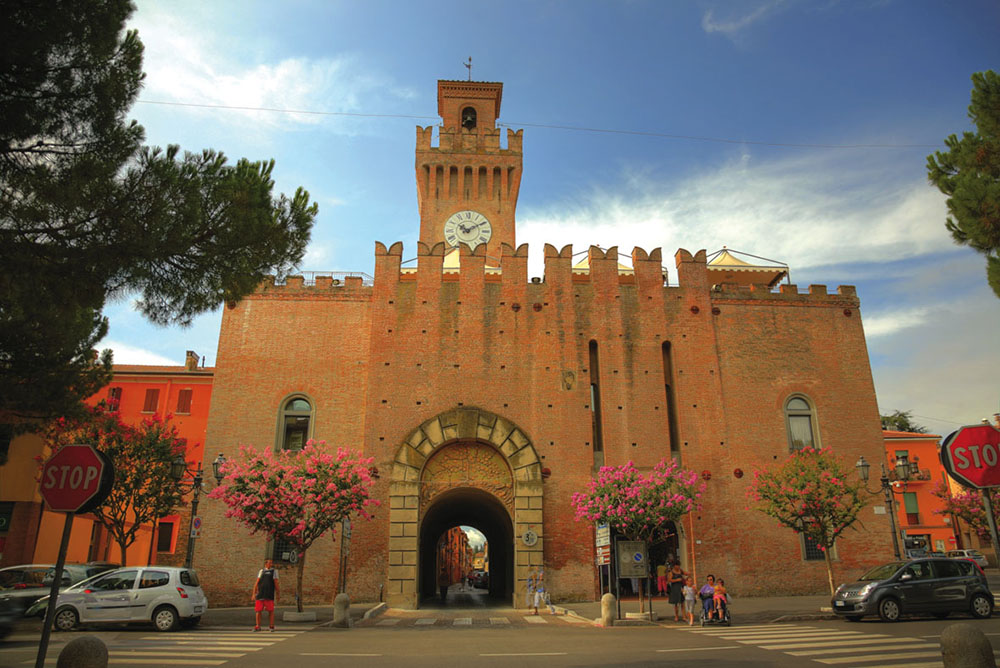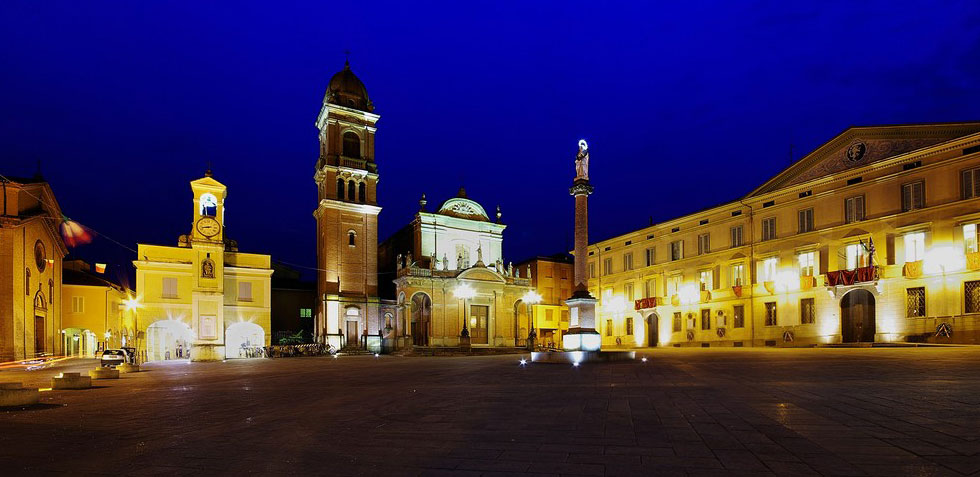





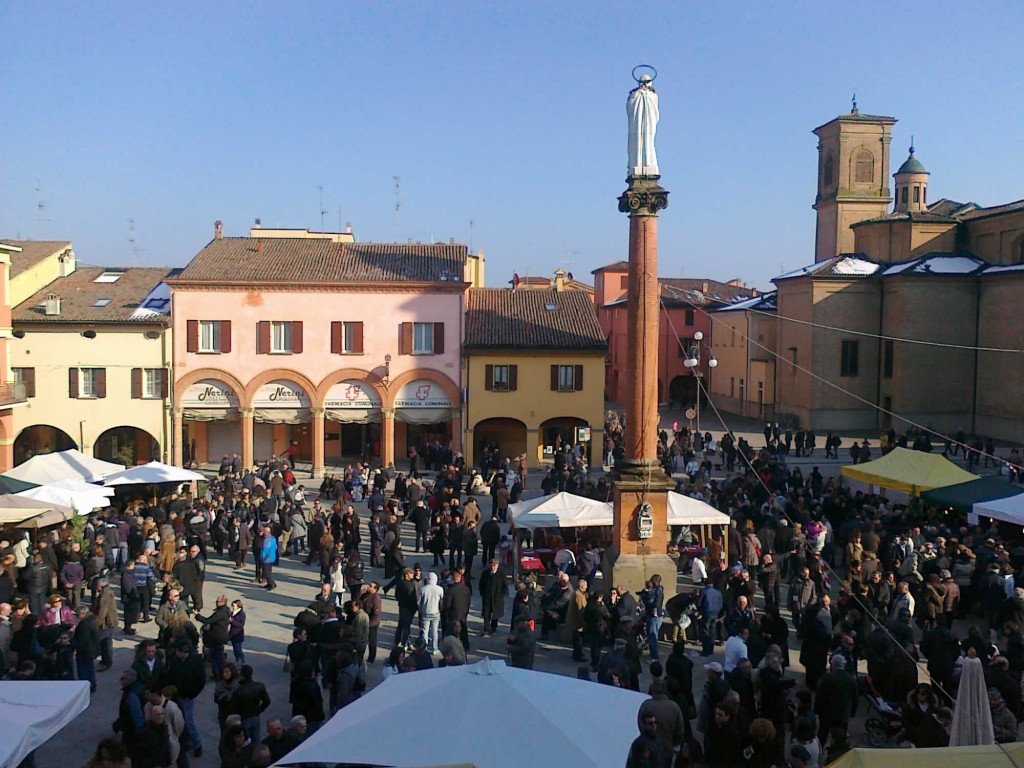
Although numerous archaeological discoveries have given us evidence of very ancient Villanovan and Roman settlements, the real "life" for Castel San Pietro Terme began eight hundred years ago, in 1199, following the Battle of Legnano. Bologna, in fact, in order to defend its peace and autonomy, ordered that fortified castles be built at various points in the territory. Among these, particularly important, both for its geographical position and for the historical events that saw it as a protagonist, was precisely Castel San Pietro Terme. On the Cassero it can still be read that the podestà of Bologna "commanded that this castle be made in the countryside of Bologna to keep peace there." But peace was destined to remain only a hope for the castellans. Wars, occupations, and destruction characterized Castel San Pietro Terme from the earliest years of its foundation, which had a period of tranquility only in the 14th century, when it was twice, in 1306 and 1338, the seat of the University, since Bologna had been interdicted by a papal excommunication. In 1410 Castel San Pietro Terme was chosen as a refuge to escape the plague raging in Bologna, by antipope John XXIII. Four years later, Braccio da Montone occupied and davsted the town. In 1421 the enterprise was renewed by Angelo della Pergola. In 1501 Castel San Pietro Terme was sacked by Cesare Borgia; in 1505 it was crossed by the troops of Pope Julius II; a few years later it was ravaged by the army of Charles Bourbon, bound for Rome. The passages of soldiers continued throughout the 17th century, making the economic conditions of the now exhausted town increasingly critical. This led to the period of the French Revolution; on June 22, 1796, the Liberty Tree was raised in the square of Castel San Pietro Terme. French and Germans, in a whirlwind of victories and defeats, continued to rage. In the Risorgimento, Castel San Pietro Terme gave passionate support to the cause of Italian independence. During the last war events, Castel San Pietro Terme, involved in the long stay of the Gothic Line, was half-destroyed by the fury of German troops and contributed, with a high price of blood, to the Resistance struggle. Castel San Pietro Terme is located at the foot of the Tuscan-Emilian Apennines, and for this reason its territory is mixed: on the one hand the expanses of cultivated fields that stretch as far as the eye can see, on the other hand the gentle, wooded hills alternate with the harsher badlands that nevertheless offer unique views and are much appreciated by cyclists and motorcyclists who choose to ride its winding and picturesque roads.Calanques are a particular geomorphological phenomenon of the terrain, which erodes due to water runoff on mostly clayey rocks. The valley of the Sillaro, the stream that originates in Tuscany, crosses Emilia, feeds Castel San Pietro Terme and flows into the Reno, offers truly breathtaking views of badlands. Already known in 1337, the first real spa in Castel San Pietro then "of Emilia" was built in 1870. It was a large, modern and somewhat advanced establishment for the time. The wartime events of World War II razed it to the ground, and the current construction dates back to the 1955 makeover. The Baths of Castel San Pietro use sulfurous and bromine and iodine-salt waters for the treatment of respiratory, osteoarticular and vascular diseases; within the vast park there is an ancient sulfurous spring open to the public.