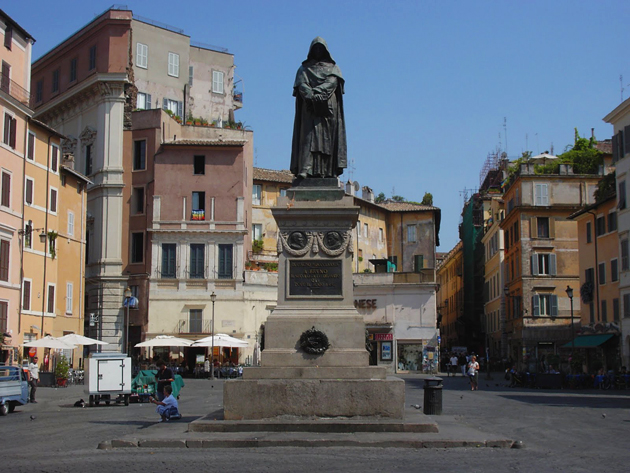

The history of the Piazza begins in ancient Rome, when the area was considered one of the most unrefined places in the city. It was used as a shed for the teams of Aurighi, or those who led the chariots in the races of the Circus Maximus. This was confirmed by the fact that, some time later, the remains of the sheds were found in the surrounding areas.
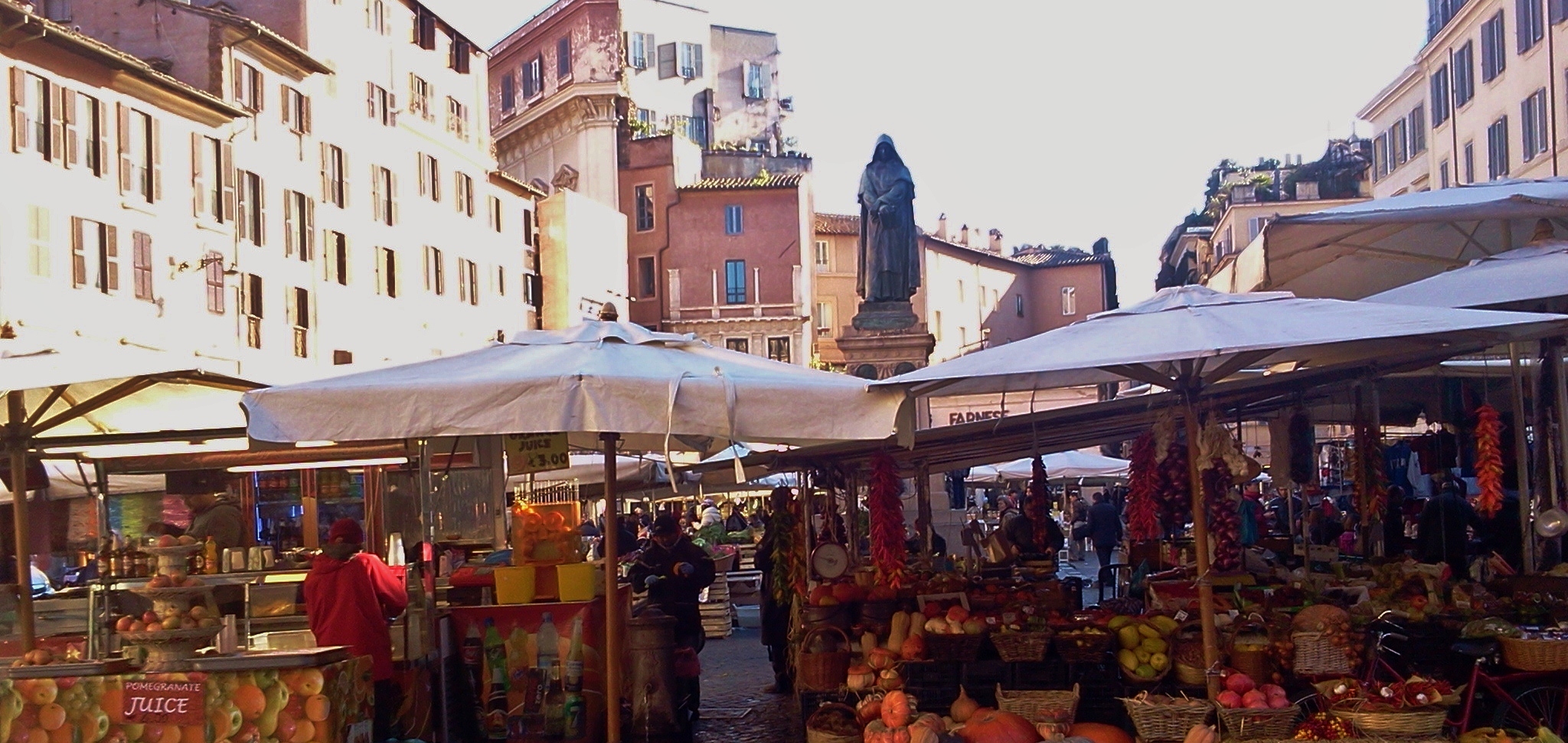
The Piazza di Campo de' Fiori, which during the Middle Ages was reduced to an abandoned meadow (this is where the name comes from), was officially urbanized by the popes at the end of 1400, as the only way to the Vatican from the south. The first road to be redeveloped was Via del Pellegrino, so called because it was the main route of pilgrimages to the Vatican. The Via already existed before Pope Alexander IV Borgia took charge of the renovation. The inscriptions and the Papal coat of arms on the first house on the left testify to this.
The change of Campo de' Fiori was achieved at the beginning of the 16th century, with the reclamation of the area through the construction of sewers and essential services. The Piazza finally took on an aspect worthy of a public place. It became a meeting point for discussions and public announcements, here were also posted bubbles and papal proclamations against heretics, the market was held and was a place of papal passages. Campo de' Fiori became a place of taverns, every building in the Piazza included one as well as the adjacent streets, and a place of commerce and crafts. The small streets that converged in the square, initially narrow and widened during the processes of Reclamation in the 500', now became a symbol of commercial activities. Via dei Baullari, which grouped the stores of the manufacturers of trunks and suitcases, Via dei Giubbonari, manufacturers of jackets, and so for Via degli Straderari, Cappellari, Giubbonari, Chiodaroli. Palo del Supplizio in Campo de' Fiori - 1700
Facebook Twitter Google+ Pinterest Tumblr Gmail Yahoo Mail Print Text Only
Palo del Supplizio in Campo de' Fiori - 1700
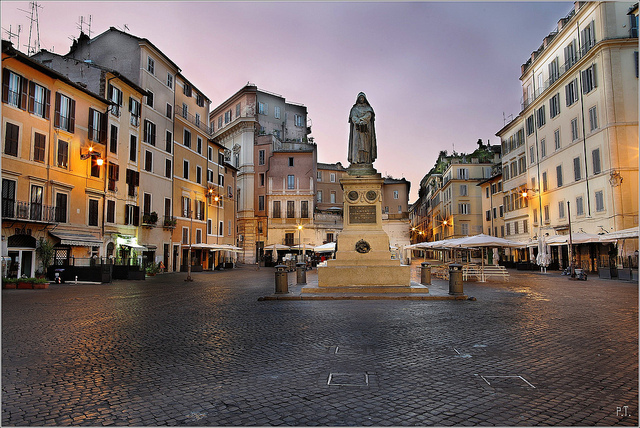
The shining aspect of Campo de' Fiori, also showed its dark side, as a place of public executions. An example is the burning of Giordano Bruno on February 17, 1600, for his philosophical conception considered heretical. Today, as a testimony to one of the most famous public executions of the Renaissance, there is a statue of the philosopher in the square, made of bronze by the sculptor Ettore Ferrari. Giordano Bruno is shown turning his face in the direction of the Vatican City, as a sign of warning to the Church. Until 1798 the square was dominated by a high gallows, which was used for crimes considered "minor". The culprits were tortured by suspending their arms and dislocating their shoulder blades. As evidence of "The Torment of the Rope" there is Via della Corda, so called not for the art of the Rope makers. Historical and folkloristic market by day, Campo de 'Fiori becomes the nerve center of nightlife in the evening. The square, crowded with people in the morning wandering among the fruit and vegetable stalls, at night opens its doors to restaurants and entertainment.