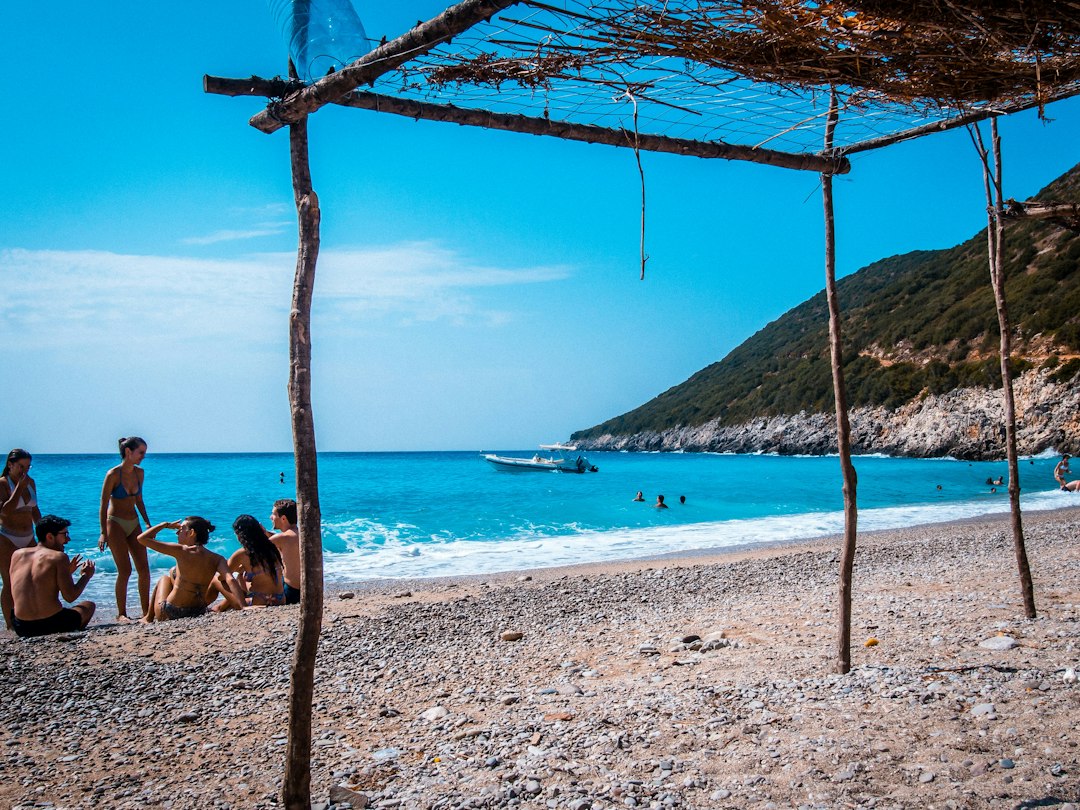

Forty minutes of walking through a limestone canyon, with the walls narrowing until they almost touch the sky, and then suddenly the sea. Gjipe beach does not announce itself in advance: it appears suddenly, nestled between two limestone walls that drop steeply into the water, as if the mountain had decided to open up at a precise point to reveal something that should not be easily found.
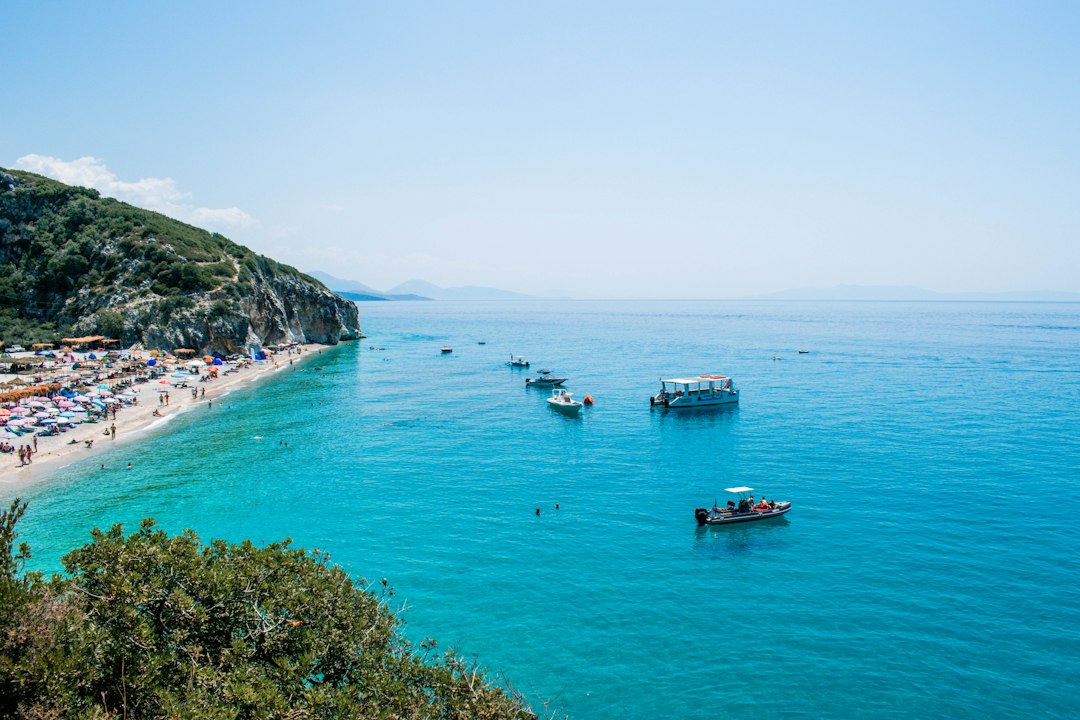
We are on the Albanian Riviera, in the stretch of coast that belongs to the municipality of Himara, in the south of the country. Gjipe is technically reachable only on foot, via a path that runs through the canyon of the same name starting from the road that connects Himara to Palasa. There are no paved roads leading directly to the beach, and this difficulty of access is probably the main reason why the place has remained largely untouched compared to other seaside destinations in the region.
The color of the water and the nature of the beach

The water of Gjipe has a hue that ranges from intense emerald green near the shore to deep blue further out, with color transitions that change depending on the time of day and the position of the sun. This effect is amplified by the presence of the rocky walls that surround the bay on three sides, creating a sort of natural amphitheater that reflects and concentrates light in an unusual way.
The beach is entirely made up of pebbles and gravel, not fine sand. The stones are smooth, light gray and white in color, and tend to heat up quickly under the sun. The coastline is relatively narrow, compressed between the sea and the base of the cliffs, which means that the available space is limited. Wearing suitable shoes for walking on the stones is practically essential, especially for entering and exiting the water.
The canyon and the approach path
The trail that crosses the Gjipe canyon is about two kilometers long and takes an average of forty minutes under normal conditions, although the time can vary depending on physical fitness and heat. The path is not systematically marked, but it is quite evident to follow: you walk along the bed of the canyon, sometimes on rocky terrain and sometimes on flatter sections. During the summer months, the bottom of the canyon is dry, but in spring there may be running water.
The limestone walls of the canyon reach considerable heights and create natural shade during certain hours of the day, making the walk more bearable than one might expect. The vegetation is typical of the Albanian Mediterranean scrub: low shrubs, some wild figs, aromatic herbs. There are no facilities along the route, no fountains or refreshment points, so it is essential to start with enough water.
How to get there and practical advice
The starting point of the trail is located along the state road SH8, which connects Himara to Palasa and continues north along the coast. There are some rudimentary signs near the mouth of the canyon, but it is not guaranteed that they will always be in good condition. Many visitors use offline navigation apps like Maps.me or Google Maps with maps downloaded in advance, which locate the entrance of the trail quite accurately.
The most useful advice is to start early in the morning, preferably by nine o'clock, for two reasons: the first is to avoid the most intense heat during the walk in the canyon, which in the central hours of the summer day can become very muggy due to the lack of wind; the second is to arrive at the beach before it gets crowded, even though the numbers remain limited compared to the more accessible beaches of the Riviera. Bringing food, plenty of water, sunscreen, and lightweight hiking shoes is the minimum necessary preparation. There are no services on the beach itself, or they are extremely limited and seasonal.
The atmosphere and why the journey is worth it
What makes Gjipe different from other secluded beaches is the combination of elements that are all found in the same place: the vertical cliffs that plunge directly into the water on either side of the bay, the relative silence, the color of the water, and the tangible feeling of having earned the spot through a little physical effort. It is not a spectacular place for infrastructure or services, but for its natural condition.
Southern Albania in general, and this beach in particular, represents a type of beach experience that has become hard to find along the more frequented coasts of the Mediterranean: a place where nature still takes precedence over tourist logistics. Gjipe is not perfect — the pebbles are uncomfortable, the sun is strong, the path requires attention — but it is real in the most direct sense of the term.