10 Best Day Trips from Tokyo — by train, car, and boat
Where to go, how to get there, and what actually matters when you only have one day
L
Words by
Lena Hofmann
Updated
20 September 2026
Read time
12 minutes
Includes
9 places · interactive map
Tokyo is a gravitational field. It pulls you in, keeps you fed, keeps you entertained, keeps you slightly overwhelmed. And then, somewhere around day three or four, you start to feel the city's weight — the crowds on the Yamanote Line, the sameness of convenience store mornings, the suspicion that you're missing something quieter, older, or simply different. That's when a day trip stops being a tourist activity and becomes a necessity.
A good day trip from Tokyo earns its round-trip fare. It gives you something the city structurally cannot: a change in scale. Kamakura's narrow backstreets, Hakone's volcanic silence, the warehouse districts of Kawagoe where the Edo period didn't quite finish — these places work precisely because Tokyo is two hours away, not two days. You can leave at 7 a.m. and be back in time for dinner in Shinjuku. That's the deal.
I've done all of these trips multiple times, in different seasons, by different means. Some I've done alone with a JR Pass and a convenience store onigiri. Others I've driven, which changes everything — you stop where you want, you arrive before the tour buses, you can carry a folding chair if you feel like it. A couple I've reached partly by boat, which adds a layer of drama that no Shinkansen can replicate.
What makes a day trip worth it? Honest answer: the moment you step off the platform or out of the parking lot and feel the city release its grip. Every destination on this list delivers that moment. Some deliver it within ten minutes. Plan accordingly.
Kawagoe sits about 30 kilometers northwest of central Tokyo, and the express from Ikebukuro on the Tobu Tojo Line gets you there in roughly 30 minutes — less time than crossing Tokyo by subway on a bad day. Most visitors come for the kurazukuri warehouse district, which is fair enough, but the destination that genuinely earns your attention is Honmaru Goten, the sole surviving structure of Kawagoe Castle. It's not a reconstructed replica dressed up for tourists. This is the actual building — the lord's residential quarters and administrative offices — which survived fires and the Meiji demolition of feudal architecture largely by luck and local stubbornness. Inside, the tatami rooms are spare and serious. You can walk through the spaces where decisions were made, where retainers waited, where the domestic machinery of a castle town was run. The building itself is modest in scale, which makes it feel more real, not less. Combine it with a walk through the warehouse district, a look at the Toki no Kane bell tower, and a wander through Kashiya Yokocho, the old candy alley. Give yourself four hours minimum.
Insider tip
Arrive before 10 a.m. on weekdays. The warehouse district fills with tour groups from mid-morning onward, and Honmaru Goten — which has limited interior capacity — can get crowded by late morning on weekends. The last entry is typically 30 minutes before closing; check the Kawagoe City Museum website for current hours before you go.
This entry and the previous one are, yes, the same city — but they represent genuinely different experiences within it, and both are worth treating as separate destinations on the same day. Where Honmaru Goten is about a specific building and a specific political history, Kawagoe's Little Edo identity is about an urban atmosphere that accumulated over centuries. The kurazukuri storehouses — thick-walled, black-plastered, built to survive the fires that periodically destroyed Edo — line Ichiban-gai Street in a way that makes the 21st century feel like a rumor. The city earned its 'Little Edo' nickname because it supplied the capital with goods and culture; walking it, you can still feel that old commercial confidence. Specific things to do: visit the Kurazukuri Shiryokan museum in a converted storehouse, walk the full length of Ichiban-gai from north to south, find the Toki no Kane bell tower and wait for it to strike the hour, and detour into the covered shopping arcade for a less curated but more local experience. The whole circuit takes about two to three hours at a reasonable pace.
Insider tip
If you're combining both Kawagoe entries into one day — which I'd recommend — start at Honmaru Goten when it opens, then walk south into the Little Edo district as the morning progresses. By the time the tour buses arrive around 10:30–11 a.m., you'll already be ahead of them.
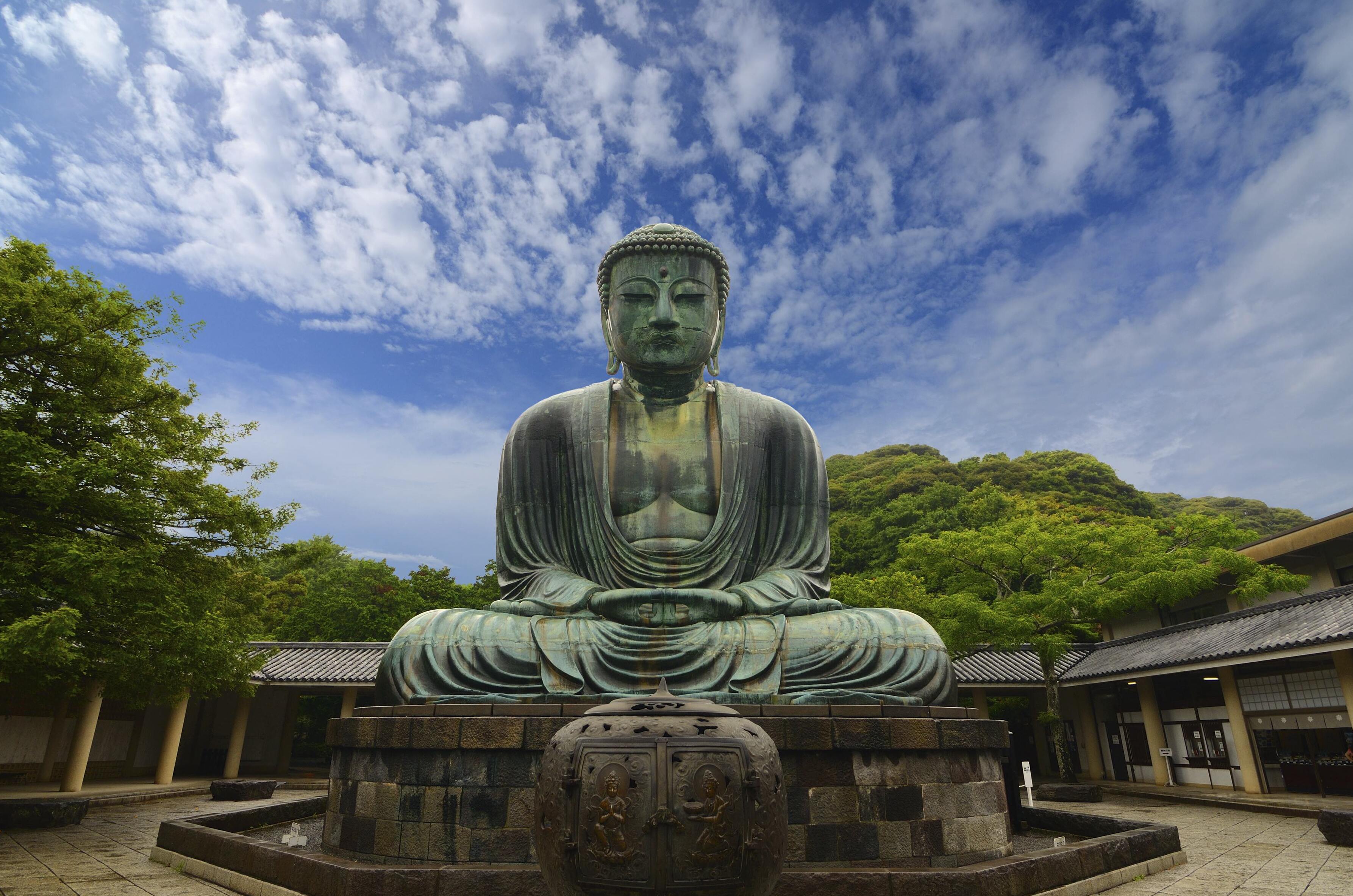
From Tokyo Station, the JR Yokosuka Line takes you to Kita-Kamakura in about an hour, or you can ride to Kamakura Station directly and take the Enoden tram line one stop to Hase. The Great Buddha — the Kotoku-in Daibutsu — is a bronze figure of Amida Buddha standing 11.4 meters tall, which makes it the second-tallest bronze Buddha in Japan. What the statistics don't prepare you for is the quality of stillness the statue projects. It has been sitting in the open air since the 14th century, when the hall that once enclosed it was destroyed by typhoons and never rebuilt. The result is a figure that seems to belong to the landscape rather than to any institution. You can enter the hollow interior for a small additional fee, which is worth doing once for the industrial strangeness of it. Beyond the Daibutsu itself: walk to Hase-dera temple five minutes away for its hillside garden and sea views, explore the back lanes of Kamakura toward Tsurugaoka Hachimangu, and if time allows, ride the Enoden tram along the coast to Enoshima.
Insider tip
The Daibutsu grounds open at 8 a.m. and the statue is dramatically less crowded before 9:30 a.m. If you're arriving on a weekend, take the 6:30 or 7:00 a.m. train from Tokyo — you'll have the statue nearly to yourself for the first hour.
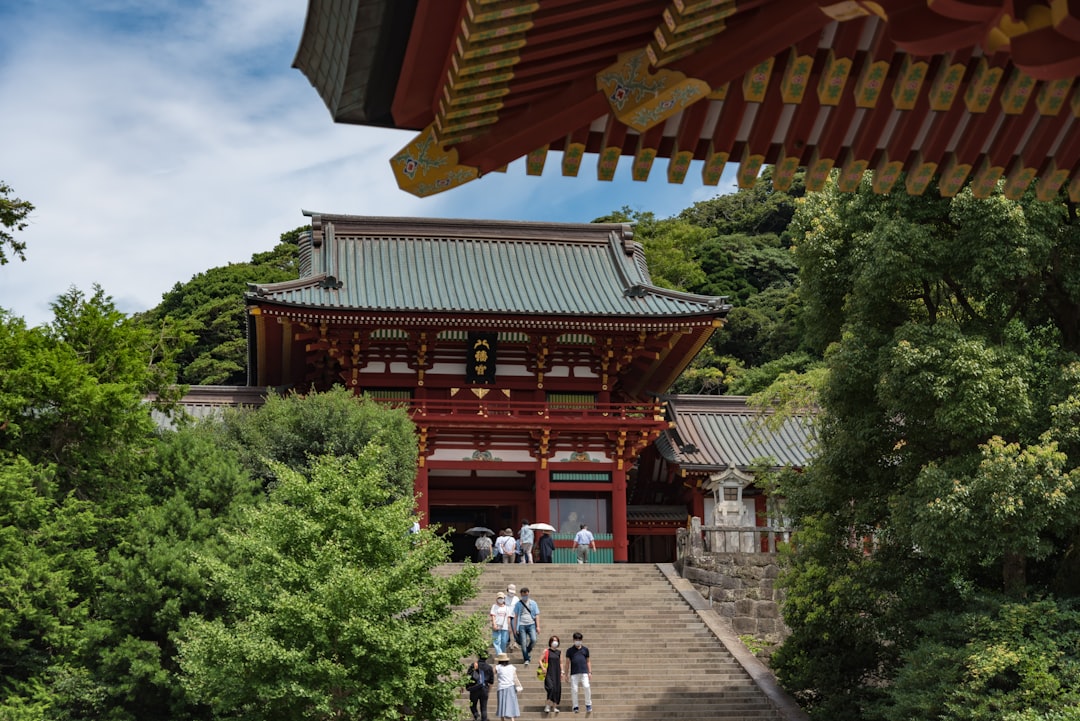
Tsurugaoka Hachimangu is the organizational center of Kamakura — the great shrine that Minamoto no Yoritomo established as the spiritual anchor of his shogunate in the late 12th century. The approach along Wakamiya Oji, the broad avenue lined with cherry trees, is one of the most formally composed processional routes in Japan, and walking it from the sea toward the shrine gives you a physical sense of how the city was designed around a single act of devotion. The shrine complex itself sits on an elevated platform at the end of the avenue, with a series of torii gates, ponds, and subsidiary shrines to navigate before you reach the main hall. Specific things to do: walk the full length of Wakamiya Oji from the Yuigahama end, visit the Genpei Ponds (the white lotus pond on the east side, the red on the west — the color symbolism refers to the Genpei War), climb to the main hall for the view back down the avenue, and check the shrine's schedule for any ritual events. Combined with the Great Buddha, this makes a full and satisfying Kamakura day.
Insider tip
Tsurugaoka Hachimangu is free to enter, which means it absorbs enormous crowds on weekends and public holidays. If you're pairing it with the Great Buddha on the same day, visit the Daibutsu first thing in the morning, then walk or take the bus to the shrine after lunch, when the mid-morning rush has thinned slightly.
5Mountain hot spring resort· 69.7 km
箱根温泉1日モデルコース:一人旅でも楽しめる巡り方: the mountain that earns every cliché about it
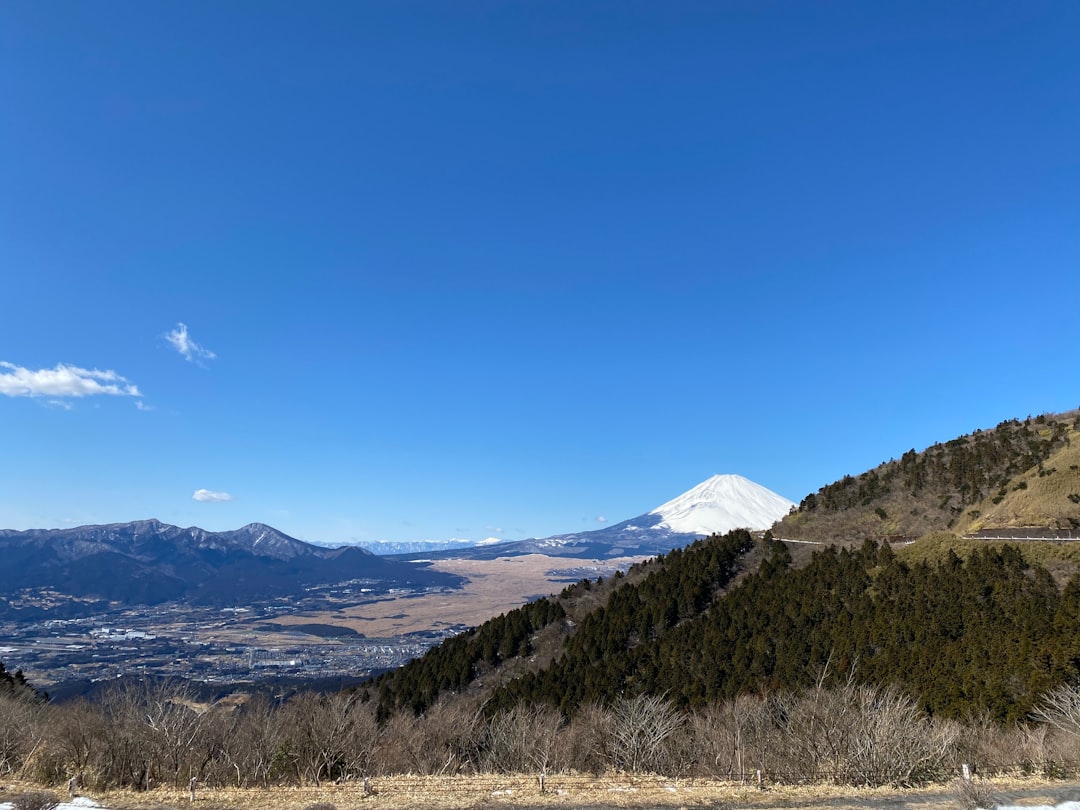
Hakone is 70 kilometers southwest of Tokyo, and the Odakyu Romance Car from Shinjuku reaches Hakone-Yumoto in about 85 minutes — a genuinely comfortable ride with reserved seating and large windows. From there, the Hakone Tozan Railway switchback line climbs into the mountains, and the whole Hakone Free Pass system kicks in: buses, the ropeway over Owakudani's sulfurous volcanic vents, the Lake Ashi sightseeing boat. This is a destination that rewards planning. The onsen here — scattered across distinct areas including Gora, Miyanoshita, and Yumoto — vary significantly in character and water chemistry. For a day trip specifically, the circuit that works best is: take the switchback train to Gora, ride the cable car and ropeway to Owakudani for the volcanic landscape and the black sulfur eggs, descend to Togendai on Lake Ashi, cross the lake by boat, and walk or bus to Hakone-Yumoto for a foot bath before the return train. It's a full day, and it requires an early start — first train from Shinjuku, not the 9 a.m. one.
Insider tip
The Hakone Free Pass (2-day version, available from Odakyu counters at Shinjuku) covers almost all transport within the Hakone area and pays for itself quickly. Buy it the evening before your trip. The ropeway to Owakudani is frequently suspended due to volcanic activity — check the Hakone Ropeway website the morning of your trip before you commit to that route.
6Theme park spa· 73.2 km
Hakone Kowakien Yunessun, Ciotole di Ramen: when Hakone gets deliberately strange
This is not a place I'd send someone on their only day in Japan, but as a second Hakone experience — or as a deliberate palate-cleanser after too much temple-and-shrine tourism — Hakone Kowakien Yunessun is genuinely worth knowing about. It's a water park and spa complex in the Kowakidani area of Hakone, and it operates on a premise that is either inspired or bewildering depending on your disposition: themed bathing pools that have included, at various times, ramen broth baths, sake baths, green tea pools, and wine baths. The source note mentions ramen bowls specifically, and that detail is accurate to the park's long-running identity. Beyond the theatrical pools, there are conventional hot spring baths in a separate section (Mori no Yu) that require a separate ticket and no swimwear. For a day trip, the practical case is this: it's accessible by bus from Hakone-Yumoto or Odawara, it opens relatively early, and it offers a genuinely different register of experience from the historical and natural attractions that dominate most Hakone itineraries. Bring your own towel to avoid rental fees.
Insider tip
Weekends and Japanese public holidays see this park fill up significantly by mid-morning. If you're going on a weekend, arrive at opening time. The Mori no Yu section (conventional onsen) is considerably quieter than the main Yunessun water park area and is worth the separate ticket if you want a more contemplative experience.
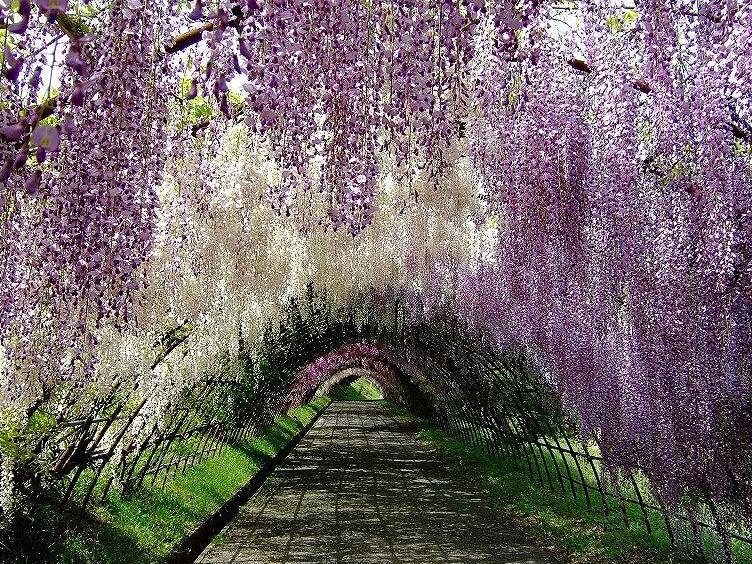
Ashikaga is about 80 kilometers north of Tokyo in Tochigi Prefecture, and while there is a train option (JR Ryomo Line from Ueno to Ashikaga Station, roughly 90 minutes), this is one of the destinations where driving makes a genuine practical difference — mainly because the park's peak wisteria season, typically late April to mid-May, draws enormous crowds that overwhelm the local train service and make parking a managed but navigable challenge if you arrive before 8 a.m. The wisteria at Ashikaga Flower Park are among the oldest and largest in Japan; the great white wisteria trellis and the 150-year-old purple wisteria tree are the park's centerpieces. Outside wisteria season, the park has roses, hydrangeas, and autumn illuminations that are worth the trip in their own right. Specific things to do: walk the full garden circuit slowly (it's not large, but the density of planting rewards attention), find the tunnel of yellow wisteria on the east side, check the bloom forecast on the park's official website before booking, and allow time for the inevitable queue at the main gate during peak season.
Insider tip
The park publishes a real-time bloom forecast on its website during wisteria season — check it two or three days before your planned visit and adjust if needed. Peak bloom lasts only about two weeks. If you're driving, the Kita-Kanto Expressway from the capital is straightforward, and arriving at park opening (typically 7 a.m. during peak season) means you'll be leaving just as the main crowds arrive.
9Religious monument· 56.2 km
Ushiku Daibutsu meant for 'Great Buddha: the one with an elevator
The Ushiku Daibutsu is in Ibaraki Prefecture, about 55 kilometers northeast of Tokyo, and it is not subtle. At 110 meters tall (not counting the 10-meter base), it is one of the tallest statues in the world, and the experience of standing at its feet and looking up is genuinely disorienting in a way that photographs don't convey. The statue is a bronze figure of Amida Buddha, completed in the 1990s, and it contains a multi-story interior that visitors can access by elevator — rising through the hollow body to observation levels with small windows looking out at the surrounding landscape. The grounds include a flower garden and a deer park, which makes the overall experience somewhat surreal: enormous sacred statue, deer, roses. By car, Ushiku is about an hour from central Tokyo via the Joban Expressway. By train, the JR Joban Line reaches Ushiku Station in about 45 minutes from Ueno, followed by a bus or taxi to the statue. Specific things to do: walk the full exterior circuit of the base, take the elevator to the upper observation level, walk through the deer park, and allow time for the small museum inside the statue's base.
Insider tip
This destination is genuinely less crowded than Kamakura or Hakone on almost any day of the week. If you're traveling outside the main tourist seasons and want a day trip without the crowd management, Ushiku is a reliable choice. The deer park is a particular draw for families — the deer are accustomed to visitors and can be fed with purchased pellets.
10Coastal park· 97.3 km
Hitachi Seaside Park in Ibaraki, Japan: the park that changes its face four times a year
Hitachi Seaside Park is about 130 kilometers northeast of Tokyo in Ibaraki Prefecture — far enough that driving is the most practical option for a day trip, though the train (JR Joban Line to Katsuta, then bus) is workable if you start early. The park covers roughly 350 hectares of the Kanto Plain near the Pacific coast, and its reputation rests on a sequence of seasonal spectacles: nemophila (baby blue eyes) flowers in late April and early May that cover the Miharashi Hill in a wash of pale blue, and kochia (burning bush) in October that turns the same hill a deep crimson. Outside those peak seasons, the park has roses, narcissus, sunflowers, and cycling paths that are pleasant without being particularly dramatic. For a day trip, the practical calculation is this: the park is large enough to spend four to five hours in, the coastal location means the light is good in the morning, and the crowds — while significant during nemophila and kochia season — are manageable if you arrive at opening time. Specific things to do: cycle the main circuit (rental bikes available at the park), walk Miharashi Hill, visit the amusement area near the west gate, and walk down to the coastal dunes.
Insider tip
During nemophila season (late April–early May) and kochia season (mid-October), the park draws massive crowds and the bus from Katsuta Station can have very long queues. If you're driving, the Joban Expressway to Hitachinaka IC is direct, and arriving at 9 a.m. (park opening) means you'll have Miharashi Hill largely to yourself for the first hour. Book parking in advance if possible during peak bloom weekends.
Every one of these trips has a moment where Tokyo stops being the reference point. It happens at different times — sometimes on the train platform before you've even arrived, sometimes not until you're standing in front of something that has been standing for eight centuries and will be standing long after the city's current skyline has been rebuilt twice. That moment is what you're paying for, in time and train fare and the mild logistics of planning.
The city will be there when you get back. It always is. What changes is you — slightly recalibrated, having spent a day in a different register of Japan. The Edo-era storehouses of Kawagoe, the volcanic silence above Lake Ashi, the improbable scale of a bronze figure in a deer park in Ibaraki — they don't compete with Tokyo. They complete it. Go early, go prepared, and go more than once. The second visit to any of these places is always better than the first.
🏆 Pocket guide
Take this guide with you.
Save it offline, get walking directions, and discover thousands more places like the ones you just read.
What is the best time of year for day trips from Tokyo?
It depends entirely on the destination. For Ashikaga Flower Park and Hitachi Seaside Park, late April to early May (nemophila and wisteria season) is the peak, but also the most crowded. Kamakura and Kawagoe are best in spring (cherry blossoms, late March to early April) or autumn (foliage, mid-November). Hakone is good year-round but particularly atmospheric in autumn and winter when the air is clear and Mt. Fuji is visible from Lake Ashi. Summer (July–August) is hot and humid everywhere; if you go in summer, start earlier and plan shorter days. The general principle: avoid Japanese national holidays (Golden Week in late April–early May, Obon in mid-August, Silver Week in September) at the most popular sites unless you arrive at opening time.
Is the JR Pass worth buying for day trips from Tokyo?
For most of the destinations on this list, no — or at least, not for day trips alone. The JR Pass covers Shinkansen travel to Odawara and JR lines to Kamakura, Ushiku, and Hitachi Seaside Park, but it does not cover the Odakyu Romance Car to Hakone, the Tobu Tojo Line to Kawagoe, or the Ashikaga Flower Park trains. If you are already buying a JR Pass for longer travel within Japan, use it on the applicable routes. If you are only in Tokyo and doing day trips, buy individual tickets or use a Suica/Pasmo IC card for local trains, and purchase the Hakone Free Pass separately from Odakyu if you're going to Hakone.
Is it practical to drive from Tokyo for day trips?
Yes, but with caveats. Tokyo's expressway system is efficient but toll-heavy — budget ¥2,000–¥4,000 each way in tolls depending on destination, plus parking fees at the destination (typically ¥500–¥1,500 per day). Traffic leaving Tokyo on Friday evenings and Saturday mornings is severe; leave before 7 a.m. or after 9 a.m. to avoid the worst of it. For Ashikaga, Hitachi Seaside Park, and Ushiku — all in Ibaraki or Tochigi — driving is significantly more practical than the train alternatives. For Kamakura and Kawagoe, the train is faster and less stressful than driving. International visitors need an International Driving Permit and must drive on the left. Navigation apps (Google Maps or Yahoo! Car Navigation) work well on Japanese roads.
How early should I leave Tokyo to avoid crowds at popular sites?
The rule I've applied consistently: be at the entrance of any popular site when it opens, which usually means leaving Tokyo by 7–7:30 a.m. at the latest. The Great Buddha of Kamakura, Tsurugaoka Hachimangu, and Hakone's Owakudani ropeway all become significantly more crowded after 10 a.m. on weekends. For Ashikaga Flower Park and Hitachi Seaside Park during peak bloom, 9 a.m. arrival is the cutoff — after that, the main viewpoints are busy. Kawagoe's warehouse district is walkable and partially manageable even with crowds, but Honmaru Goten has limited interior capacity, so arrive early there too. The reward for an early start is not just fewer people — the light is better in the morning, and the sites feel more like themselves before the day's tourism machinery fully engages.
Can I do two destinations in one day trip?
Sometimes, but be realistic about transit time. The combinations that work well: Kawagoe Honmaru Goten and Kawagoe Little Edo (same city, obvious pairing); The Great Buddha of Kamakura and Tsurugaoka Hachimangu (40-minute walk or short bus ride apart); Odawara Castle and Hakone (Odawara is on the way, stop there first). The combinations that don't work: Kamakura and Hakone (different rail lines, significant backtracking through Odawara); Hitachi Seaside Park and anything else (it's far enough that the transit time eats the day). The general test: if the two destinations are on the same rail line or within 20 kilometers of each other, the combination is probably viable. If they require returning to Tokyo in between, it isn't.
🏆 Read this offline
Save it to your phone.
Bookmark this guide, plan your trip offline, and discover thousands of places like these.