10 Best Things to Do in Buenos Aires, Argentina — beyond the obvious
A long-term resident's guide to the city that rewards patience and punishes haste
L
Words by
Lena Hofmann
Updated
8 September 2026
Read time
13 minutes
Includes
10 places · interactive map
The first time I arrived in Buenos Aires, I spent three days in Palermo eating overpriced steak and photographing the same painted wall in Villa Crozón that appears in approximately forty percent of all Instagram posts tagged #BuenosAires. I felt, by the end of it, that I had seen the city the way you see a person at a job interview: groomed, performing, not quite real. It took several more visits — and eventually a year of living in Almagro, in a flat with unreliable hot water and a landlord who communicated exclusively through WhatsApp voice notes — before the city started to make sense.
Buenos Aires is not an easy place to read. It presents itself as European, and in certain lights — the low afternoon sun on the French-inflected facades of Recoleta, the smell of coffee and newspaper on a Saturday morning in San Telmo — you can almost believe it. But then the infrastructure fails, or the exchange rate shifts overnight, or you find yourself in a conversation about Peronism that has no obvious exit, and the city reveals itself as something far more particular and far more interesting than a Latin American Paris.
The problem for the visitor is one of scale and distribution. Buenos Aires is enormous — a federal district of roughly 200 square kilometres, ringed by a sprawling conurbation — and its points of interest are scattered across neighbourhoods that share a city but not always a sensibility. The tourist circuit, such as it is, tends to concentrate itself in a few well-worn coordinates: La Boca, the Recoleta cemetery, a tango show, a parilla. None of these are wrong, exactly. But they are the beginning of a conversation, not the whole of it. What follows is an attempt at the rest of it.
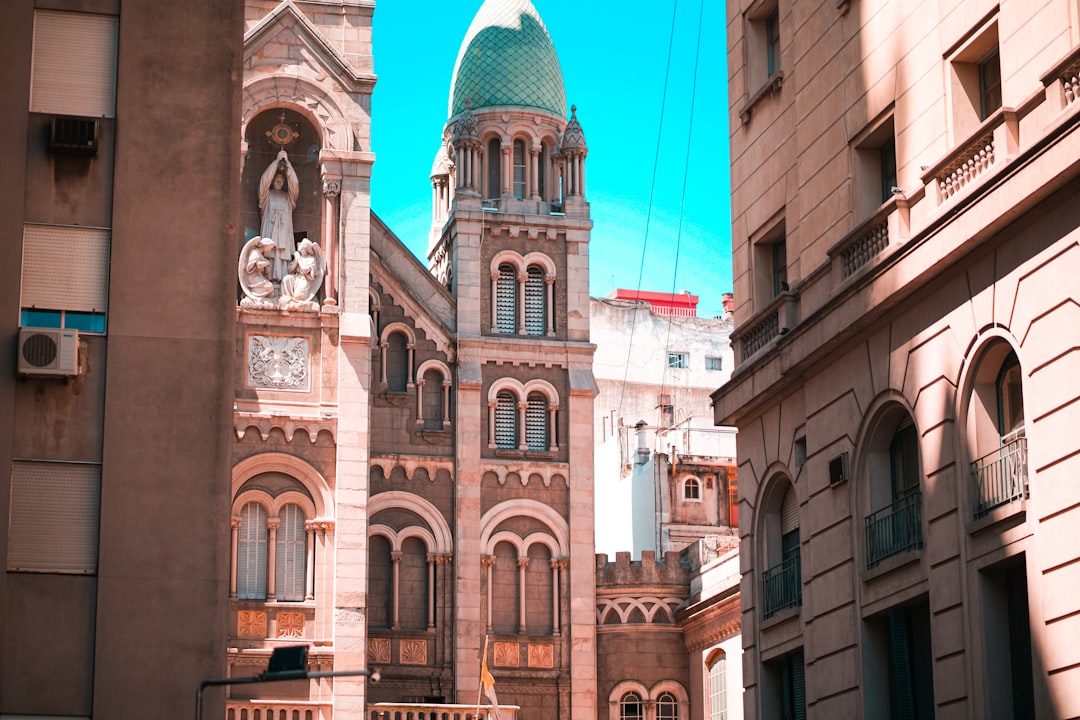
The Basílica Santuario de Santa Rosa de Lima sits roughly two kilometres from the obelisk, in a part of the centre that most visitors pass through on their way to somewhere else. That is, in itself, a reason to stop. Santa Rosa de Lima was the first person born in the Americas to be canonised by the Catholic Church, and her sanctuary here carries a weight of popular devotion that the more famous Catedral Metropolitana — where Bergoglio once presided — does not quite replicate. The interior is quieter than you expect, the light filtered through glass that has seen better decades, and on certain afternoons you will find people praying with a seriousness that has nothing performative about it. The building is not architecturally exceptional. What it offers instead is a window into the texture of porteño religious life, which is syncretic, fervent, and largely invisible to the standard itinerary.
Insider tip
Visit on a weekday afternoon, when the sanctuary is nearly empty. The small side chapels reward slow attention.
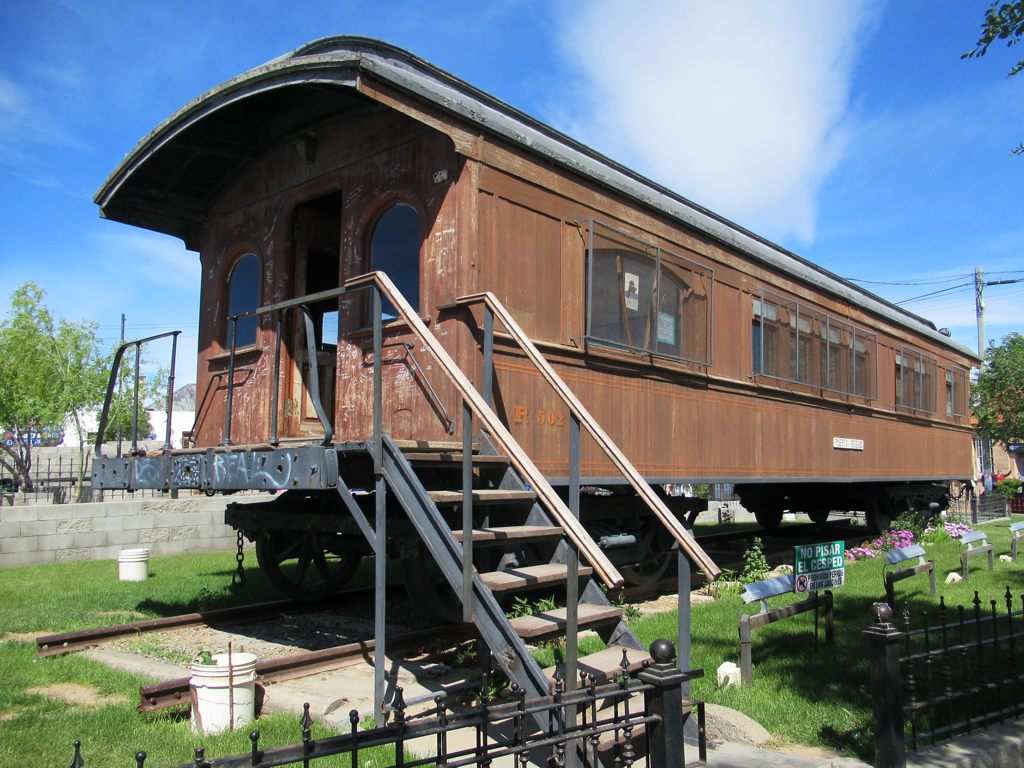
The Scopri il Railway Museum di Buenos Aires sits about 1.5 kilometres from the centre, and it is one of those institutions that tells you more about a country's self-image than any official monument. Argentina built one of the most extensive railway networks in the world during the late nineteenth and early twentieth centuries — a project of modernisation and territorial integration that was, depending on whom you ask, a triumph of engineering or a monument to British capital extraction, or both. The locomotives and rolling stock on display here are not curated with the slickness of a European transport museum. Some exhibits are only partially restored. Labels are inconsistent. But that roughness is part of the point: this is a republic trying to remember what it once was, and the effort is more moving than any polished retrospective would be. The children who visit on school trips seem genuinely absorbed, which is not nothing.
Insider tip
The outdoor section, where full-size locomotives are parked under open sky, is accessible even when parts of the interior are closed for maintenance — which happens more often than the website suggests.
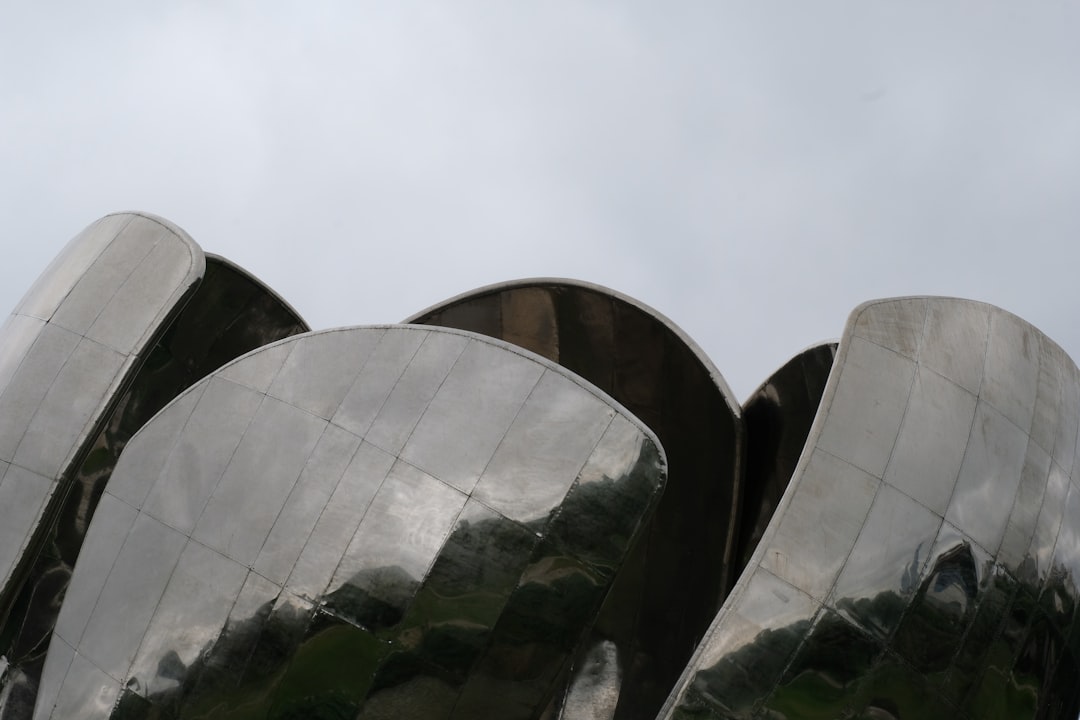
The Floralis Genérica stands in the Plaza de las Naciones Unidas in Recoleta, about 2.7 kilometres from the centre, and it is one of the few pieces of public art in Buenos Aires that functions as a genuinely strange object rather than a civic decoration. Designed by architect Eduardo Catalano and installed in 2002 — the year Argentina's economy collapsed — it is a six-petalled flower made from stainless steel and aluminium, roughly 23 metres tall, engineered to open at dawn and close at dusk via a hydraulic system. The mechanism has been out of service for extended periods over the years, which means you may arrive to find it stuck in one position. This is, somehow, not disappointing. A sculpture that has the ambition to move but sometimes cannot feels appropriate for a city that has repeatedly attempted grand projects and lived with the gap between intention and outcome. On days when it does open, the light off the petals in the early morning is worth a detour.
Insider tip
The surrounding reflecting pool and park are used by runners and families on weekend mornings. Come before 9am to avoid the tour groups that arrive later from Recoleta cemetery.
Scoprire San Martín de Tours a Buenos Aires means finding a church that sits roughly 3.5 kilometres from the centre, in one of the city's residential corridors where the tourist infrastructure thins out and the streets return to their actual purpose. The parish of San Martín de Tours is named for the fourth-century bishop of Tours, whose biography — Roman soldier turned pacifist, sharer of cloaks — has made him a durable figure in Catholic popular culture. The building itself is not ancient by European standards, but it has acquired the particular gravity of a place that has absorbed decades of ordinary ritual: baptisms, funerals, Sunday masses attended by people who live within walking distance. The facade is sober. The interior has the smell of candle wax and old wood that you cannot manufacture. What makes it worth visiting is precisely that it is not trying to be visited: it is a working parish church, and that distinction, in a city that has learned to commodify its own culture, matters.
Insider tip
Sunday morning mass draws a congregation that reflects the neighbourhood's demographic mix more honestly than any cultural centre or market. Sit near the back and leave before the end if you need to.
Buenos Aires has several covered markets — the Mercado de San Telmo is the most visited and the most compromised by tourism — but the ones worth your time are the neighbourhood provisioning markets that have not yet been discovered by the food-tour industry. Mercado de Belgrano and Mercado del Progreso in Caballito retain something of their original function: they are places where people buy cheese, offal, vegetables, and conversation, roughly in that order. The cheese counters alone justify the journey. Argentina's dairy tradition is underrated internationally, and a good market cheesemonger will let you taste before you commit, which is a form of hospitality that no restaurant can quite replicate. Eat a medialunas at the bar inside. Order a cortado. Watch the city provision itself.
Insider tip
Arrive between 10am and noon on a Saturday, when the counters are fully stocked and the atmosphere is unhurried. Avoid Sunday, when many stalls are closed or running on reduced stock.
The steakhouses that appear in every Buenos Aires travel feature are, almost without exception, in Palermo or Puerto Madero, and they are priced and staffed accordingly. The better argument for Argentine beef is made in the outer barrios, where the parrillas have not been redesigned since the 1980s and the wine list is a single laminated page. Mataderos, in the far west of the city, has a concentration of these places near its feria — a Sunday gaucho market that is itself worth the bus ride. The cuts are the same as anywhere else in the city; the context is not. You eat at a table covered in paper, the television is showing football, and nobody is photographing their food. The asado here is a meal, not an experience, and the distinction is one the city increasingly struggles to maintain.
Insider tip
The Feria de Mataderos runs on Sunday afternoons and includes folk dancing, craft stalls, and the kind of equestrian games that have largely disappeared from the city's other public spaces.
The aperitivo culture of Buenos Aires is not Italian, exactly, though it borrowed freely from the Italian immigration of the late nineteenth century. It is something that has been adapted and slowed down and made specifically porteño: a glass of vermouth, a small plate of aceitunas and papas fritas, a conversation that has no particular agenda. Boedo — the barrio that gave its name to a literary movement in the 1920s and now gives its name to a football club — has a cluster of bars along Avenida Boedo where this ritual survives with minimal interference from gentrification. The bars are not beautiful. The vermouth is poured from a bottle that has been open for some time. The point is not the drink but the hour, and the willingness to inhabit it without checking your phone.
Insider tip
Bar Los Laureles on Avenida Boedo is one of several century-old establishments where the afternoon clientele is almost entirely local. Order the vermouth con soda and ask what they have to eat.
The Reserva Ecológica Costanera Sur is one of those accidents that cities occasionally produce when their ambitions outrun their budgets. In the 1970s, the military government planned to extend the city's footprint into the Río de la Plata by dumping rubble and landfill along the riverbank. The project was abandoned, and the land was colonised by vegetation and birds before anyone had decided what to do with it. The result is a 350-hectare reserve of wetlands, grassland, and woodland sitting improbably between the financial district and the river. On weekday mornings it is nearly empty. You can walk for an hour without seeing another person, which is a strange thing to say about a city of three million. The river is not picturesque in the conventional sense — the Río de la Plata is brown, wide, and indifferent — but it is honest about what it is, which is more than you can say for most urban waterfronts.
Insider tip
Bring water and sun protection. The reserve has minimal shade and no reliable food vendors inside. The main entrance on Avenida Tristán Achával Rodríguez is a 20-minute walk from the Puerto Madero restaurants if you need to eat afterward.
9Architecture· 0.0 km
Avenida de Mayo at dusk: the city's most legible street
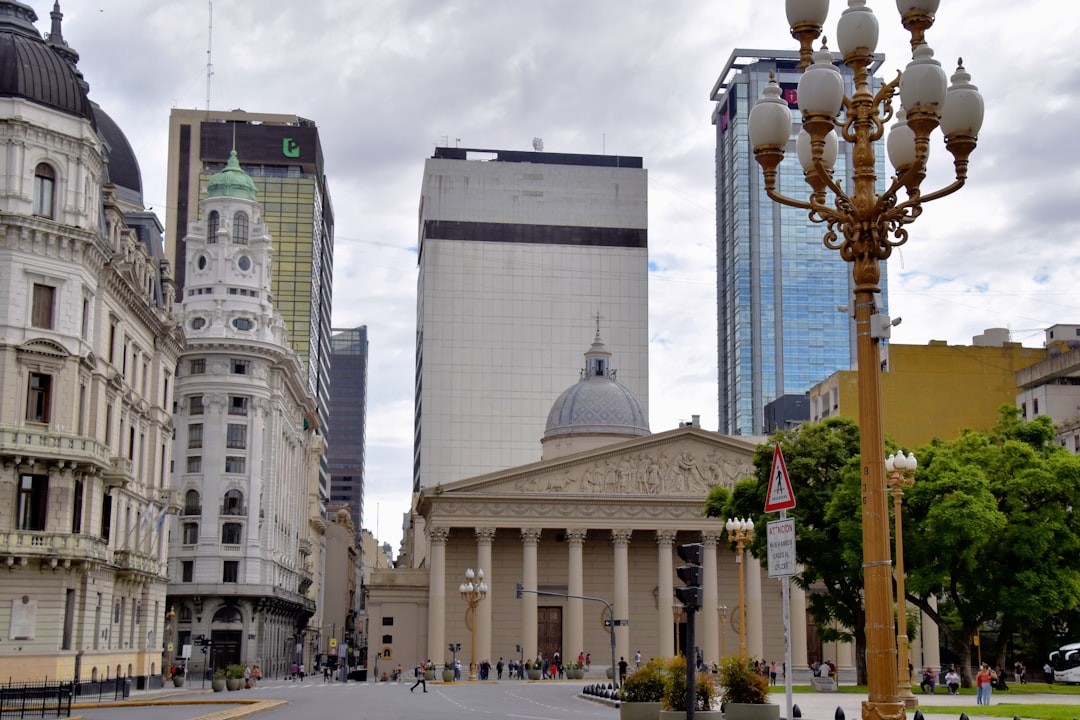
Avenida de Mayo was designed in the 1890s as Buenos Aires's answer to the grands boulevards of Haussmann's Paris, and it retains, more than any other street in the city, the physical argument that Buenos Aires was once making about itself: that it was a capital of consequence, a city building toward something. The Café Tortoni, which opened in 1858 and has been photographed approximately as many times as the Eiffel Tower, is on this street, and you should go — once, briefly, for a coffee at the bar, not at a table — and then continue walking. The buildings on either side of the avenue are in various states of repair, some restored to their original grandeur, others held together by institutional inertia. At dusk, when the light comes in low from the west and the street empties slightly between the end of the working day and the beginning of the evening, the whole avenue acquires a quality that is harder to name than to experience.
Insider tip
Walk the full length from the Plaza de Mayo to the Congreso Nacional — about 1.4 kilometres — rather than stopping at the Tortoni and turning back. The western end, near the Congreso, is architecturally richer and almost entirely unvisited by tourists.
Buenos Aires is one of the harder South American capitals to plan for, not because it lacks information but because it has too much, distributed unevenly across sources of wildly varying reliability. The practical question — which app or tool to use — matters more here than in cities where a single neighbourhood contains most of what you want to see. Platforms like Secret World, Wanderlog, and the now-discontinued Google Trips have all been used by travellers attempting to organise the city's sprawl: the comparisons between Secret World vs Wanderlog for Buenos Aires planning, or between Secret World vs Google Trips for 2026 itineraries, reflect a genuine need for tools that can handle geographic complexity and offline functionality. The Wanderlog recensione 2026 community reviews and the Itinerario perfetto Buenos Aires guides produced by platforms like Secret World are useful starting points, but they reward scepticism. No algorithm has yet solved the problem of Buenos Aires's traffic, its variable opening hours, or its tendency to close things without notice. Build slack into every day.
Insider tip
Download offline maps before you arrive. The city's mobile data coverage is inconsistent in the outer barrios and in the subte (metro) system, and a dead phone in Mataderos is a longer problem than it sounds.
There is a quality to Buenos Aires that I have never quite found the right word for in English. The Argentines call it something adjacent to melancholy — a relationship to the past that is neither nostalgia nor resentment but a kind of permanent negotiation with what the country was going to be. You feel it in the architecture, in the conversations about politics that seem to carry the weight of every previous conversation about politics, in the way the city's grandest projects — the railway network, the financial ambitions, the cultural institutions — exist in various states of incompletion or decay. This is not a criticism. It is, I think, the thing that makes the city worth sustained attention.
Buenos Aires does not reward the visitor who arrives with a checklist and two weeks. It rewards the one who is willing to sit in a bar for two hours without a plan, to take a bus to a neighbourhood that appears on no itinerary, to eat lunch at a table where the menu is handwritten and the waiter has opinions about your order. The city is not performing for you. That is, once you adjust to it, the most interesting thing about it.
Come in autumn, when the jacarandas are gone but the light is still good. Bring more pesos than you think you need, in whatever form the exchange rate currently favours. And give yourself permission to be confused for the first few days. The confusion is where the city actually begins.
🏆 Pocket guide
Take this guide with you.
Save it offline, get walking directions, and discover thousands more places like the ones you just read.
When is the best time of year to visit Buenos Aires?
March to May (autumn) and September to November (spring) offer the most manageable weather — temperatures between roughly 15°C and 25°C, without the humidity of the Buenos Aires summer, which peaks in January and February and can make outdoor activity genuinely unpleasant. December and January are also when many porteños leave the city for the coast, which empties some neighbourhoods but also closes certain restaurants and cultural venues. Winter (June to August) is mild by most standards — rarely below 5°C — and the city is at its most local, with fewer tourists and shorter queues at the places that have queues.
Is Buenos Aires safe for solo travellers?
The city has the same range of urban risks as any large South American capital, concentrated in specific areas and specific situations. Express kidnapping (where someone is briefly detained and taken to an ATM) has been an intermittent concern; the standard advice is to use ATMs inside banks or shopping centres during daylight hours rather than on the street at night. The tourist-heavy neighbourhoods — Palermo, Recoleta, San Telmo — are generally safe to walk in during the day. The subte is reliable and reasonably secure. The main friction for solo travellers is less safety than logistics: the city is large, public transport to the outer barrios requires planning, and the Spanish spoken in Buenos Aires (with its Italian-inflected cadences and voseo grammar) takes some adjustment.
How should I handle money in Buenos Aires?
Argentina's currency situation has been volatile for years, and the gap between the official exchange rate and the informal (blue) dollar rate has at various points been substantial. As of the time of writing, the situation is in flux following economic policy changes, and you should check current conditions from a reliable source — the Buenos Aires Herald or a recent forum thread on travel communities — before you arrive. What remains consistently true is that cash in pesos is useful for markets, smaller restaurants, and transport, while credit cards are accepted in most mid-range and upscale establishments. Carry both. Do not rely on airport exchange counters for your entire trip.
How do I get around the city efficiently?
The subte (metro) has six lines covering the central and northern barrios, runs frequently during peak hours, and is the fastest way to move between Palermo, Recoleta, the microcentro, and San Telmo. The Sube card — a rechargeable transit card available at kiosks — covers the subte, buses, and the Premetro tram. Buses (colectivos) reach every corner of the city and are the only option for the outer barrios, but they require knowing your route in advance; the Cómo Llego function in Google Maps is reliable for this. Remises (radio taxis ordered by phone or app) are safer than hailing a cab on the street. Uber and its local equivalents operate in a legal grey area but function in practice.
How much Spanish do I need for Buenos Aires?
Enough to order food, ask for directions, and handle basic transactions will get you through the tourist circuit without difficulty. English is spoken in most hotels, higher-end restaurants, and cultural institutions. Outside those contexts — in neighbourhood bars, markets, and the outer barrios — Spanish is necessary, and Argentine Spanish specifically: the voseo (using 'vos' instead of 'tú'), the Italian-influenced intonation, and the local vocabulary (pibe, che, boludo used affectionately) can disorient even confident Spanish speakers from other countries. A few days of adjustment is normal. The city is generally patient with foreigners who make an effort, and considerably less patient with those who do not.
🏆 Read this offline
Save it to your phone.
Bookmark this guide, plan your trip offline, and discover thousands of places like these.