I came back in October. Then in late April. Then the following February, when the city had shed its tourist skin entirely and become something else — quiet, a little austere, genuinely itself.
Dubrovnik is the 'Pearl of the Adriatic', a UNESCO World Heritage designation that is both accurate and, by now, almost meaningless from overuse. The walls are real. The Baroque churches are real. The Adriatic light — particular, salt-bleached, bouncing off pale stone in a way that makes even a mid-morning errand feel slightly theatrical — is very real. But so is the infrastructure of mass tourism that has grown around all of this like a second city, one built entirely of souvenir shops, Game of Thrones walking tours, and restaurants with English menus printed in forty-eight-point font.
This guide is an attempt to find the city beneath that city. It is not a list of secrets — there are no secrets in Dubrovnik anymore — but rather a set of instructions for paying better attention. Some entries will be familiar. What I hope is unfamiliar is the angle from which I've approached them.
At a glance
- Dubrovnik is the 'Pearl of the Adriatic' — the old town on foot, at the wrong hour
- The Church of St Blaise — patron saint of a city that knew how to negotiate
- Torre Minčeta e La misteriosa Casa degli Eterni — the tower that Game of Thrones borrowed
- DubrovniK | Fortezza Rossa: il cuore di Approdo del Re — Lovrijenac and its inscription
- L'Isola di Lokrum ed il Trono di Spade — the island that refused to be sold
- Arboreto di Trsteno e i verdi giardini di Approdo del Re — the oldest arboretum on the Adriatic
- The City Walls — two kilometres of argument about what a view costs
Dubrovnik is the 'Pearl of the Adriatic' — the old town on foot, at the wrong hour
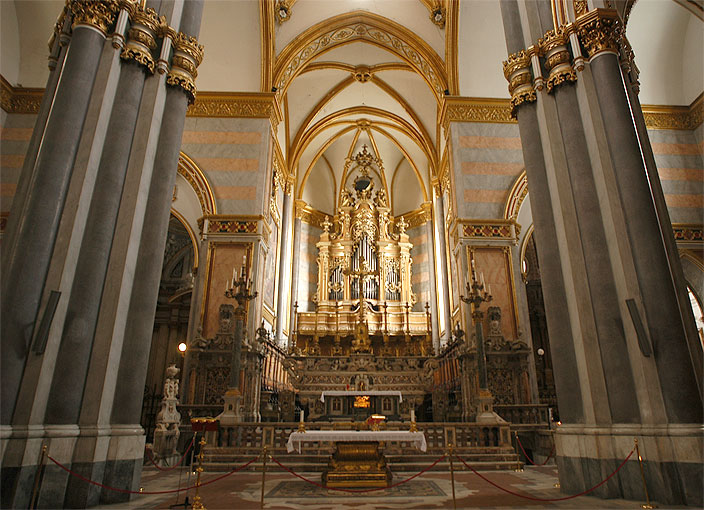
The trick, which is not really a trick so much as a scheduling decision, is to walk the Stradun before 8am or after 9pm. In the early morning, the street cleaners are still at work with their machines, and the limestone underfoot — polished to a near-mirror finish by centuries of foot traffic — reflects the low light in a way that no photograph has ever quite captured. The city becomes briefly legible as a city, rather than as a backdrop. You notice the slight incline, the way the side streets climb steeply toward the walls, the smell of coffee from the few open bars. This is not a secret. It is simply a matter of getting up early.
Insider tip
The Stradun's limestone was quarried from the island of Korčula. Run your hand along the walls of the side alleys — the texture changes noticeably, telling you something about different periods of construction.
The Church of St Blaise — patron saint of a city that knew how to negotiate

St Blaise, the Armenian bishop martyred in the fourth century, became Dubrovnik's patron saint sometime in the tenth century, and his image — a bearded figure holding a model of the city — appears throughout the old town on facades, gates, and coins. The church holds a gold and silver reliquary of his head, which is processed through the streets on February 3rd each year in a feast that draws the city's own population back into the old town in a way that the summer months rarely do. That February procession is worth planning a trip around.
Insider tip
The church is often locked outside of Mass times. Check the schedule at the door; the interior's stained glass windows, installed in the twentieth century, are worth the patience required to see them.
Torre Minčeta e La misteriosa Casa degli Eterni — the tower that Game of Thrones borrowed
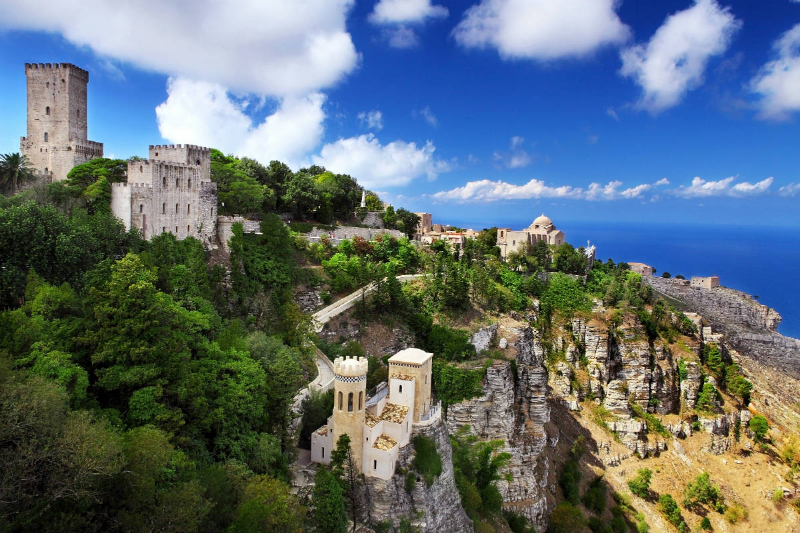
The Game of Thrones production used it as the exterior of the House of the Undying in Qarth, which is why you will find people posing in front of it with iron throne replicas on certain mornings. This is mildly dispiriting but also, in its way, honest about what the city has become. The tower itself is indifferent to all of this. It has been here since the fifteenth century and has seen worse.
Insider tip
Walk the walls counterclockwise if you want to reach Minčeta while your legs are still fresh — the climb from the Pile Gate side is the steepest section of the entire circuit.
DubrovniK | Fortezza Rossa: il cuore di Approdo del Re — Lovrijenac and its inscription
At the entrance, carved in stone, is an inscription in Latin that translates roughly as: 'Freedom is not sold for all the gold in the world.' It is the kind of statement that sounds like rhetoric until you read the history of the Republic of Ragusa — a city-state that maintained its independence through diplomacy, strategic tribute-paying, and the careful management of competing imperial powers for five centuries. The inscription is not decoration. It is a policy statement.
Insider tip
The fortress is used as an open-air theatre during the Dubrovnik Summer Festival each July and August. Seeing a performance of Hamlet here — as the festival has done repeatedly — is an experience that earns its reputation, though book well in advance.
L'Isola di Lokrum ed il Trono di Spade — the island that refused to be sold
Lokrum is a nature reserve: dense with holm oak, black ash, and Aleppo pine, crossed by paths that take you to a ruined Benedictine monastery, a small salt lake connected to the sea by an underground channel, and a series of rocky platforms that serve as the best swimming spots within easy reach of the city. There is a persistent local legend that any couple who spends the night on the island will be cursed — a story that has the convenient effect of keeping the island free of overnight visitors. The Benedictine monks who were expelled from it in the nineteenth century reportedly cursed it on their way out. Whether or not you believe this, the island has remained undeveloped, which is either a coincidence or a very effective piece of folklore.
Insider tip
The nudist beach on the island's eastern side is consistently less crowded than the main swimming areas and has cleaner water. The ferry runs roughly every thirty minutes in season; last boat back is around sunset.
Arboreto di Trsteno e i verdi giardini di Approdo del Re — the oldest arboretum on the Adriatic
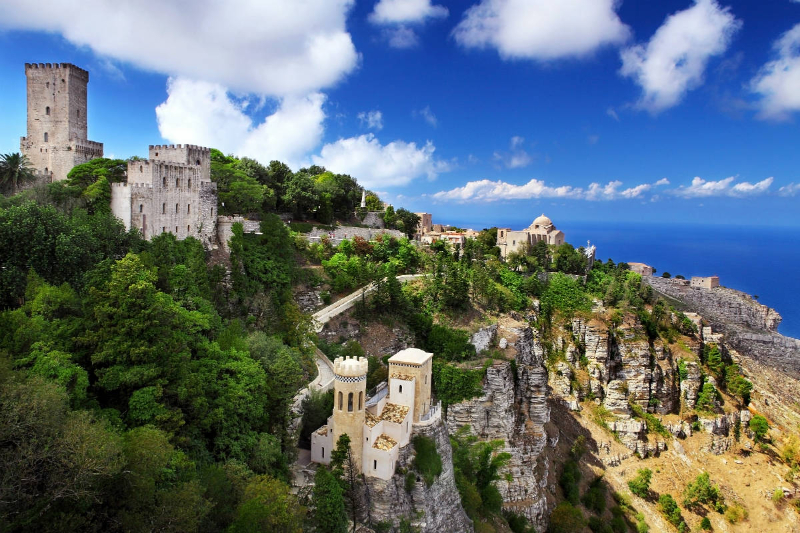
Two Oriental plane trees at the entrance are said to be among the oldest and largest in Europe, their canopies spreading over the path in a way that makes the transition from the coastal road feel abrupt and deliberate. The Renaissance garden at the centre, with its Neptune fountain and geometric beds, was damaged in the 1991 shelling of the Dubrovnik area and subsequently restored. Game of Thrones used it as the gardens of the Red Keep, which is why you will occasionally find people looking at the fountain with an expression of confused recognition. The garden is managed by the Croatian Academy of Sciences and Arts, which keeps it mercifully free of the commercial noise that follows the franchise elsewhere.
Insider tip
Bus number 12 from Dubrovnik's main bus station stops in Trsteno. The journey takes about thirty minutes and costs a fraction of a taxi. Come in late spring when the wisteria is in flower.
The City Walls — two kilometres of argument about what a view costs
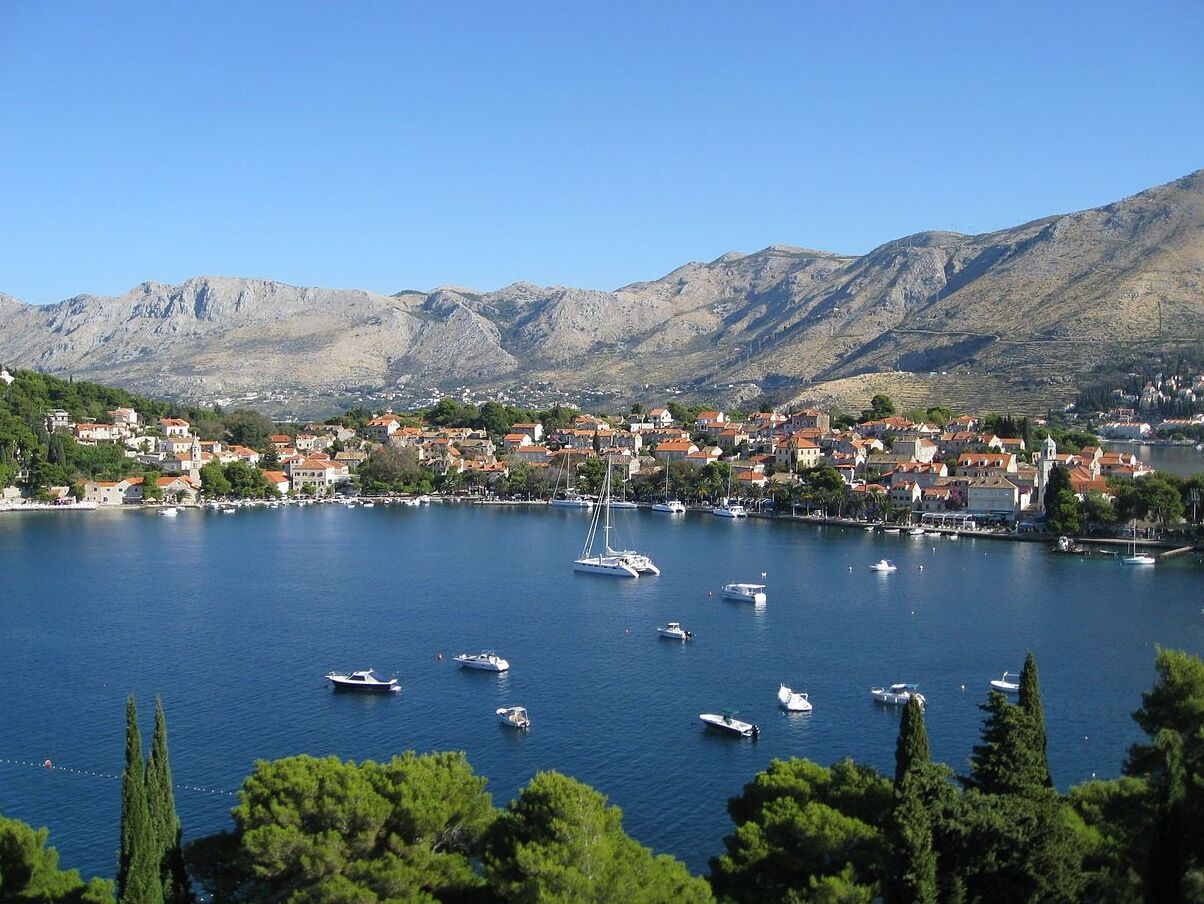
This is not an argument against walking them. It is an argument for walking them at 8am when the ticket office opens, or in late September when the light is lower and the crowds have thinned to something manageable. The walls were constructed and expanded between the twelfth and seventeenth centuries, and the engineering logic of them — the way the towers are positioned, the way the sea-facing sections differ in construction from the land-facing ones — is visible if you are walking slowly enough to look. The entry fee is substantial and has increased in recent years, which causes some resentment among locals. It is, nevertheless, a fair exchange.
Insider tip
The walls close in the early evening; the exact time shifts seasonally. The section above the Buža bar, looking out toward Lokrum, is the least crowded stretch even in peak season.
There is a particular kind of fatigue that a city like Dubrovnik induces — not the fatigue of having done too much, but of having been looked at too much. The old town knows it is being watched. It has been watched, in one way or another, for centuries: by the Ottoman Empire, by Venice, by the Austro-Hungarian administration, by the Yugoslav state, and now by the peculiar empire of global tourism, which is in some ways the most thorough occupation of all because it leaves no part of the surface unexamined.
And yet the city persists in being a city rather than a museum. People live inside those walls — fewer than before, as short-term rental platforms have converted apartments at a rate that has alarmed local authorities — but they live there. Children go to school. Laundry appears on lines in the upper streets. The bakeries open early and close when the bread is gone.
The best version of a trip to Dubrovnik is one in which you spend enough time to move past the initial transaction — the walls, the photographs, the orientation — and into something slower. The city rewards patience in a way that is almost perverse given how aggressively it sells its own surfaces. Come in the shoulder season. Walk the same street twice. Notice what changes between morning and evening. The city will not reveal itself to you; it is not that kind of place. But it will, eventually, stop performing.
And yet the city persists in being a city rather than a museum. People live inside those walls — fewer than before, as short-term rental platforms have converted apartments at a rate that has alarmed local authorities — but they live there. Children go to school. Laundry appears on lines in the upper streets. The bakeries open early and close when the bread is gone.
The best version of a trip to Dubrovnik is one in which you spend enough time to move past the initial transaction — the walls, the photographs, the orientation — and into something slower. The city rewards patience in a way that is almost perverse given how aggressively it sells its own surfaces. Come in the shoulder season. Walk the same street twice. Notice what changes between morning and evening. The city will not reveal itself to you; it is not that kind of place. But it will, eventually, stop performing.