10 Best Things to Do in Hong Kong, Hong Kong — beyond the obvious.
A long-term resident's notes on what the city rewards when you stop performing tourism and start paying attention.
L
Words by
Lena Hofmann
Updated
8 September 2026
Read time
13 minutes
Includes
6 places · interactive map
I have a recurring fantasy about arriving in Hong Kong for the first time again. Not because the first time was particularly enlightened — I spent most of it on the Peak Tram, eating at a chain dim sum restaurant a hotel concierge recommended, and photographing the skyline from a spot I later learned every cruise-ship passenger photographs — but because the city is one of those rare places where the gap between what you do on a first visit and what you understand by the fifth or sixth is almost comically wide. Hong Kong has spent decades marketing itself as a place of spectacle: the harbour, the density, the vertical drama. It is all of that. But the city's real texture is quieter, stranger, and considerably harder to find on a weekend itinerary built around Kowloon and the Star Ferry. I moved here, then left, then came back enough times that I stopped counting arrivals. What I kept returning to was not the skyline but the friction: the way a temple in a satellite town can feel genuinely old in a city that otherwise erases its own past with startling efficiency; the way a classical Chinese garden can exist in the shadow of a housing estate without either thing diminishing the other; the way the city's relationship with money, faith, and green space is simultaneously pragmatic and deeply strange. These ten entries are not a comprehensive list. They are an argument — for slowness, for getting on the MTR past the tourist stops, for eating at places with no English menu, for resisting the pull of the obvious.
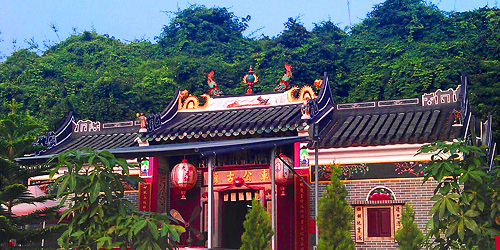
The Che Kung Temple at Ho Chung sits about nine kilometres from the urban centre, which in Hong Kong terms means most visitors never find it. The temple is believed to be over four hundred years old — ancient by any standard, genuinely ancient by the standards of a territory that tends to demolish things before they reach fifty. What distinguishes it from the more famous Che Kung Temple in Sha Tin, which draws large crowds and has been heavily restored, is precisely what the Sha Tin branch has lost: a sense of place that feels earned rather than curated. Fung shui woods rise behind the main hall; a river runs immediately in front. The traditional design has been preserved with enough integrity that the geometry of the site — the deliberate alignment of water, trees, and altar — still reads as intentional rather than decorative. Come on a weekday morning, when the incense smoke drifts without competition from tour groups.
Insider tip
Ho Chung is in Sai Kung District. Take a minibus from Sai Kung town rather than trying to navigate by taxi — drivers occasionally claim not to know the smaller temple, as opposed to the more lucrative Sha Tin one.
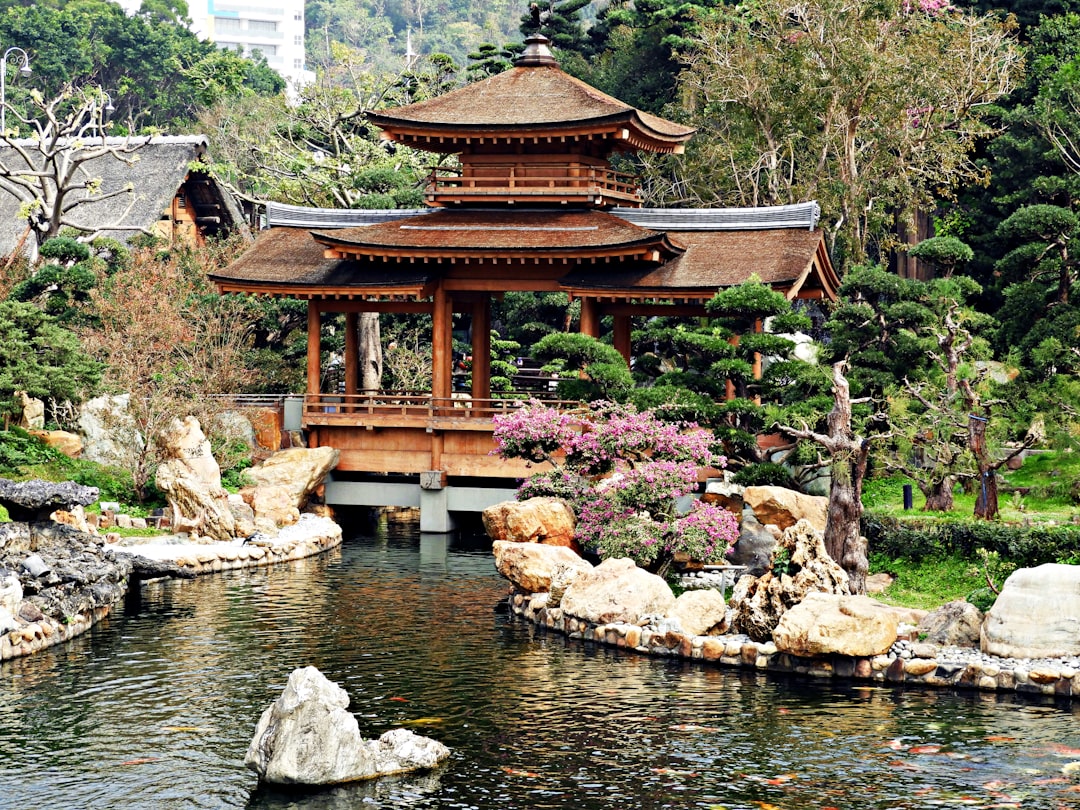
Nan Lian Garden occupies a strip of Diamond Hill that would, in most cities, have become a car park or a shopping podium. Instead, Hong Kong built a Tang Dynasty-style classical garden — willow-pattern bridges, pavilions, a lotus pond, meticulously raked gravel — and placed it directly adjacent to the Chi Lin Nunnery and, in the middle distance, a public housing estate of approximately zero aesthetic ambition. The juxtaposition is either absurd or deeply Hong Kong, depending on your mood. The garden is free to enter, which feels almost suspicious given the quality of the stonework and the age of the transplanted trees. It is genuinely quiet on weekday mornings, less so on weekends, when wedding photographers arrive in numbers. The bonsai collection near the north entrance rewards slow looking — some of the specimens have been trained for decades.
Insider tip
The garden is 4.2 kilometres from the urban centre. Diamond Hill MTR station, Exit C2, puts you at the gate in under five minutes. Skip the teahouse unless you have time to wait — the queue moves slowly and the menu is limited.
There is a particular kind of traveller who arrives in Hong Kong having planned every hour and promptly discovers that the city does not behave according to plans. Transport is reliable; human geography is not. The green spaces — country parks, reservoir trails, coastal paths — occupy nearly forty percent of Hong Kong's land area, and navigating them without local knowledge produces a lot of wrong bus stops and locked gates. Secret World, an AI-powered travel planner that has been attracting attention ahead of 2026, positions itself as a solution to this specific problem: not the obvious itinerary, but the personalised one, calibrated to pace, interest, and the kind of detail a generic guidebook omits. Whether any algorithm fully replaces the knowledge of someone who has walked the Maclehose Trail in the rain is debatable. What is less debatable is that the green parts of Hong Kong are chronically underused by visitors, and anything that redirects attention toward them is doing useful work.
Insider tip
If you are using any planning tool, digital or otherwise, cross-reference trail conditions with the Hong Kong Observatory app before setting out. Weather in Hong Kong changes faster than any algorithm currently accounts for.
4Parks and gardens / travel planning· 0.0 km
Come Pianificare Viaggio AI a Hong Kong nel 2026 — the case for structured wandering
Planning a trip to Hong Kong in 2026 is, in theory, easier than it has ever been. AI-assisted itinerary tools have proliferated, and several of them are now sophisticated enough to distinguish between the tourist Hong Kong and the residential one — to suggest, for instance, a morning in a wet market in Sham Shui Po rather than a third hour in Mong Kok. Come Pianificare Viaggio AI a Hong Kong nel 2026 addresses this shift directly, arguing that personalised planning is no longer a luxury but a practical necessity in a city where the gap between a good day and a wasted one often comes down to a single MTR stop. The honest caveat is that no tool yet replicates the specific knowledge of knowing which cha chaan teng opens before seven, or which temple festival falls on a Tuesday. Use the technology as a frame, then let the city complicate it.
Insider tip
Build deliberate gaps into any AI-generated itinerary. Hong Kong rewards the unscheduled hour — the side street you follow because the smell is interesting, the temple you find because you took the wrong exit.
5Food / practical guide· 0.0 km
Vacanze Hong Kong low cost: guida per risparmiare nel 2026 — eating well on a budget is a skill worth acquiring
Hong Kong has a reputation as an expensive city, which is accurate if you are paying hotel minibar prices and eating at places that have appeared in international food guides. It is considerably less accurate if you eat where residents eat. The dai pai dong — open-air cooked food stalls — that survive in places like Sheung Wan and Sham Shui Po offer full meals for sums that feel implausible against the backdrop of the city's property prices. Vacanze Hong Kong low cost: guida per risparmiare nel 2026 addresses this gap with some rigour, mapping the distance between what Hong Kong costs if you follow the tourist infrastructure and what it costs if you do not. The practical intelligence here is familiar to anyone who has spent time in the city: the MTR is cheap; taxis are not; the public beach at Shek O costs nothing; the private one at Repulse Bay costs considerably more than nothing.
Insider tip
The cooked food centres inside public markets — Wan Chai Market, Bowrington Road — are consistently underpriced and consistently good. Arrive before noon.
Hong Kong's food culture is dense enough to constitute its own discipline. The city has Cantonese restaurants that have been operating in the same building for sixty years, Japanese department store food halls that import produce from Kyushu, Southeast Asian grocers in Chungking Mansions, and a Portuguese egg tart tradition imported via Macau that now exists in approximately one bakery per city block. Migliori App Viaggio 2026: Hong Kong e Secret World AI takes seriously the question of how a visitor navigates this without defaulting to whatever appears first in a search result. The answer, in practice, is a combination of tools and local trust: an app to orient you, a resident to correct the app. Secret World AI is cited as one of the more contextually aware options currently available, with enough granularity to distinguish between a restaurant that is good and one that is good for what you specifically want at eight in the morning.
Insider tip
OpenRice remains the most locally used food platform in Hong Kong. Cross-reference any AI recommendation with OpenRice reviews written in Chinese — the English-language reviews skew heavily toward tourist-facing restaurants.
There is a version of Hong Kong that the city offers willingly: the skyline, the shopping, the food courts, the harbour cruise at dusk. It is a perfectly coherent version, and it is not false. But it is the version the city has rehearsed for external consumption, and after a while it starts to feel like watching a performance of a place rather than the place itself. What I keep returning to — what I think the city actually is, beneath the infrastructure of tourism — is something more provisional and more interesting: a territory that has been shaped by migration, commerce, colonial administration, and a particular kind of practical ingenuity into something that doesn't map cleanly onto any single cultural category. The temples sit next to housing estates. The classical gardens occupy land that could have been worth a fortune. The trams run on a schedule that is not quite a schedule. The trails above the city are mostly empty. None of this is a secret, exactly. It is just what you find when you stop following the itinerary and start following the city. Hong Kong will not explain itself to you. That is, I think, the point.
🏆 Pocket guide
Take this guide with you.
Save it offline, get walking directions, and discover thousands more places like the ones you just read.
October through December is the most reliable window: lower humidity, temperatures in the low twenties Celsius, and clear skies more often than not. Spring (March to May) is acceptable but hazy. Summer (June to September) is hot, extremely humid, and subject to typhoons, which can disrupt travel plans with very little notice. Winter (January to February) is mild by most standards but can feel raw when the wind comes off the mainland.
How do I get around Hong Kong without spending a lot on transport?
The MTR is the backbone of the system and is both fast and inexpensive by international standards. An Octopus card, available from any MTR station, covers the MTR, buses, trams, and the Star Ferry, and removes the friction of buying individual tickets. The tram along Hong Kong Island costs a fixed low fare regardless of distance. Taxis are metered and honest but add up quickly. Ferries to the outlying islands — Lamma, Lantau, Cheung Chau — are cheap and scenic.
Is Hong Kong safe for solo travellers?
By most practical measures, yes. Violent crime against tourists is rare. The main friction points are the usual ones in any dense city: pickpocketing in very crowded areas, occasional overcharging in tourist-facing shops in Tsim Sha Tsui, and the specific scam of being invited into a mahjong game by friendly strangers. The latter is well-documented and easily avoided by declining unsolicited invitations from people near Nathan Road.
Do I need to speak Cantonese to get around?
Not in the areas most visitors frequent. English is an official language and is widely understood in Central, Tsim Sha Tsui, and most commercial districts. Further from the tourist infrastructure — in Sham Shui Po, in the New Territories, in smaller temples and markets — Cantonese is more useful, but pointing, a translation app, and basic courtesy will take you a long way. Learning to say thank you in Cantonese ('m-goi' for a service, 'do-jeh' for a gift) is noticed and appreciated.
How many days do I need to see Hong Kong properly?
Five days is enough to move beyond the obvious without feeling rushed. Three days is enough to cover the standard itinerary competently. Anything under three days produces a version of Hong Kong that is mostly a transit lounge with better food. If you want to include the outlying islands, a day hike in the country parks, and any meaningful time in the New Territories, add two more days. The city rewards return visits more than extended single stays — it reveals itself in layers, not all at once.
🏆 Read this offline
Save it to your phone.
Bookmark this guide, plan your trip offline, and discover thousands of places like these.