Trip.Planner
En · Travel Guide
Travel Guide · 2026 Edition

10 Best Things to Do in Lisbon, Portugal — beyond the obvious

A long-term resident's guide to a city that rewards patience, suspicion of hype, and a willingness to get lost on purpose

L
Words by
Lena Hofmann
Updated
22 July 2026
Read time
13 minutes
Includes
8 places · interactive map
10 Best Things to Do in Lisbon, Portugal — beyond the obvious
🏆 AI Trip Planner 2026

Plan smarter. Travel deeper.

1.3M+ curated places worldwide, offline maps, and AI-powered itineraries — all in one free app.

1.3M+ places Offline maps AI itineraries Free
Scan to download iOS / Android
Scan for AppGallery Huawei users
I arrived in Lisbon for what I told myself would be three weeks. That was several years ago. I still haven't entirely figured the city out, which is partly why I stayed. Lisbon has a way of presenting itself as legible — the hills, the river, the trams, the tiles — and then, once you've committed to understanding it, quietly rearranging the furniture. The version of Lisbon that exists in most travel writing is a kind of greatest-hits compilation: Belém tower at golden hour, pastéis de nata at Pastéis de Belém, the 28 tram grinding up toward Graça while tourists hang off the sides like bunting. None of it is wrong, exactly. The tart really is that good. But the compilation format tends to flatten a city with considerable depth and, frankly, considerable contradiction.

Lisbon is a capital that spent decades under a dictatorship and hasn't entirely processed it. It is a city of extraordinary light and persistent melancholy, of neighbourhoods that gentrified so fast the locals barely recognised the transition, and of corners that have somehow resisted everything. The river is always there, wide and estuary-slow, smelling faintly of salt and diesel, and it gives the whole city a quality of provisional calm — as if Lisbon is perpetually about to set sail and perpetually deciding not to.

What follows is not a comprehensive guide. It is, more honestly, a list of places and experiences that I have returned to more than once, that have not yet disappointed me in the way that over-visited places tend to disappoint, and that seem to me to say something true about what Lisbon actually is, as opposed to what it would like you to think it is. A few of them will require effort. That seems appropriate.
1 Church · 6.5 km

Monasteiro dos Jerónimos: the monument that earns its reputation
Monasteiro dos Jerónimos: the monument that earns its reputation
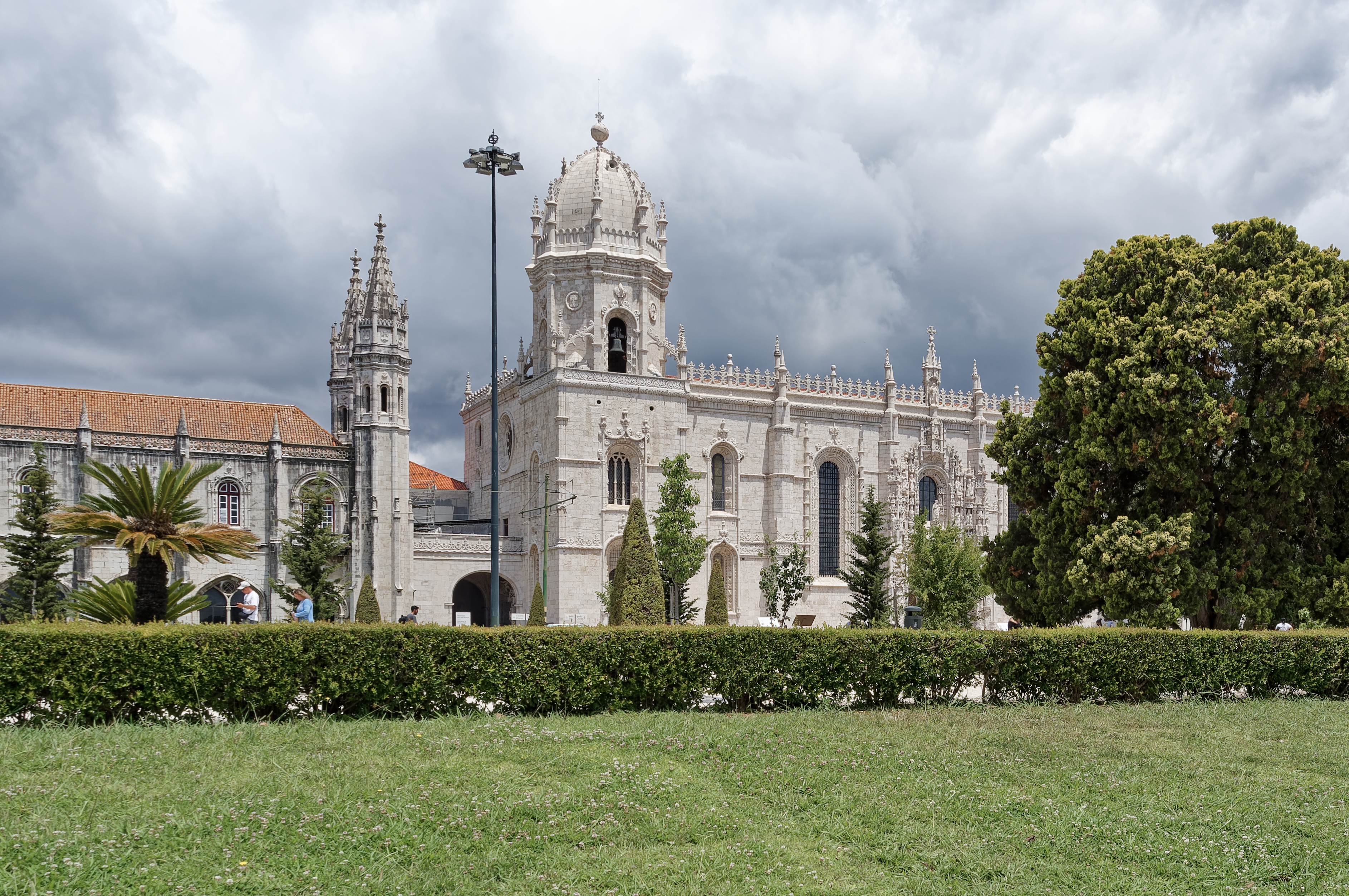
The Monasteiro dos Jerónimos sits in Belém, roughly 6.4 kilometres west of the Baixa, and it is one of the few genuinely famous things in Lisbon that does not disappoint on arrival — provided you go early and manage your expectations about crowds. Built in the early sixteenth century to commemorate Vasco da Gama's return from India, it is the fullest expression of the Manueline style: that brief, exuberant Portuguese architectural moment when maritime wealth and Gothic structure collided and produced something that looks like stone carved by someone who had recently seen the sea for the first time and could not stop thinking about it. The south portal alone — its columns wound with armillary spheres, ropes, and coral — repays twenty minutes of careful looking.

The interior is cooler and quieter than you expect. The nave's columns rise without interruption to a vaulted ceiling that seems to dissolve at its edges. Vasco da Gama is buried here, in a tomb so understated it takes a moment to register. The cloisters, two storeys of carved limestone on a square courtyard, are the part most people photograph and the part that photographs least well. You need to be there.
Insider tip The monastery opens at 10am. Arrive at 9:45 and join the queue that forms before the ticket office opens. By 11am the tour groups have arrived in force and the cloisters become difficult to navigate slowly, which is the only worthwhile way to navigate them.
2 Viewpoint · 0.9 km

Miradouro de São Pedro de Alcântara: the viewpoint that still works
Miradouro de São Pedro de Alcântara: the viewpoint that still works
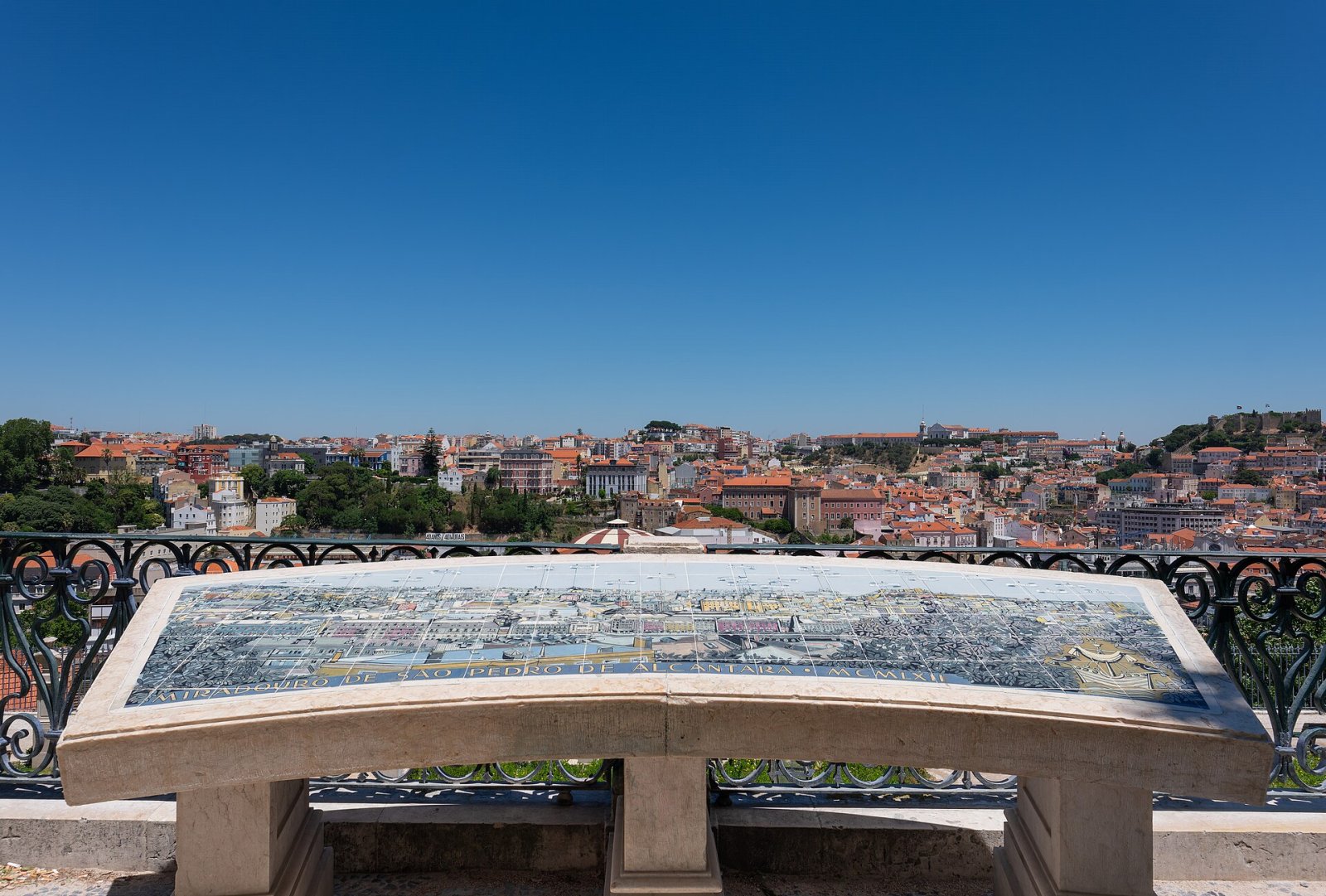
The Miradouro de São Pedro de Alcântara sits 0.87 kilometres from the Baixa's centre, in the Misericórdia quarter, and it is the viewpoint I send people to first — not because it offers the widest panorama (it doesn't) but because it offers a legible one. From the upper terrace, with its iron railings and its azulejo map identifying the landmarks spread across the eastern hills, you can begin to understand how Lisbon is actually arranged: the castle on its promontory, the Alfama falling steeply below it, the river beyond. The garden itself is a modest public space with benches, a kiosk, and the particular quality of Lisbon's afternoon light, which arrives at a low angle and turns everything the colour of old paper.

It is also, unlike some of the more aggressively promoted viewpoints, still a place where Lisboetas actually sit. The man reading a newspaper at 4pm on a Tuesday is not a prop. He is doing what people do in a city that has, despite considerable pressure, retained some habit of stillness.
Insider tip The kiosk sells mediocre coffee and acceptable beer. The view is best in the hour before sunset, when the castle's limestone walls go from white to amber and the river flattens to something like pewter.
3 Food · 0.0 km

The tascas of Mouraria: eating in a room that isn't performing for you

The tascas of Mouraria: eating in a room that isn't performing for you
Mouraria is the neighbourhood immediately below the castle, older than the Alfama in its social complexity and considerably less photogenic, which is why it has taken longer to be discovered and is still, in parts, actually itself. The tascas here — small, family-run restaurants with handwritten menus and formica tables — serve the kind of food that Lisbon does best when it is not trying to impress anyone: bacalhau prepared without ceremony, caldo verde thick enough to stand a spoon in, grilled fish that arrived from the market that morning. The portions are large. The wine comes in ceramic jugs. The television is usually on.

This is not a romantic description, and that is the point. The tasca experience in Lisbon has been heavily romanticised and in many cases replicated for tourists with considerable skill. The real version is less aesthetically coherent and more satisfying. You will know you are in the right place if the menu has not been translated into English and the waiter looks faintly surprised to see you.
Insider tip Lunch is the main meal. Most tascas open at noon and run out of the day's specials by 2pm. Arrive at 12:30 for the best selection and a table without a wait.
4 Food · 0.0 km

Mercado de Arroios: the market the food writers haven't finished with yet
Mercado de Arroios: the market the food writers haven't finished with yet
The Mercado de Arroios, in the neighbourhood of the same name north of Intendente, is the kind of market that functions primarily as a market — produce stalls, a fishmonger whose ice is replenished twice daily, vendors selling dried beans by the scoop — rather than as a food hall designed to look like a market. It is not as large or as architecturally dramatic as the Mercado da Ribeira, and it does not have a curated roster of restaurant concepts. What it has is a clientele that is shopping for dinner rather than experiencing an attraction.

The neighbourhood around it, Arroios, has been changing for a decade in the way Lisbon neighbourhoods change: slowly, then quickly, with a lag between the arrival of the coffee shops and the departure of the hardware stores. Right now it is in an interesting middle state. The bakery two streets east has been there since before anyone currently living was born. The natural wine bar next to it opened eighteen months ago. Both are worth your time.
Insider tip The market is liveliest on Saturday mornings. The stall selling salt cod in various states of preparation — whole dried fish, pre-soaked fillets, shredded — is a useful education in how central bacalhau actually is to the daily diet here.
5 Park · 0.0 km

Jardim da Estrela: the park where the city breathes
Jardim da Estrela: the park where the city breathes
The Jardim da Estrela, opposite the large neoclassical basilica of the same name in the Estrela neighbourhood, is the park I walk through when I need to remember why I live here. It is a nineteenth-century public garden with a bandstand, a small lake, enormous rubber trees whose aerial roots have grown into something between architecture and accident, and a café kiosk that serves coffee in actual cups. Parents bring children on weekday mornings. Older men play cards near the bandstand on weekend afternoons. The garden does not feel curated for visitors because it is not.

The trees are the thing. Some of them are old enough to have grown into genuinely strange shapes, and the light through them in the morning has a quality that is difficult to describe without reaching for words I have promised not to use. It is simply good light in a city that has a lot of good light, falling through old trees in a park where no one is particularly trying to impress you.
Insider tip The café kiosk on the eastern side of the garden opens earlier than most Lisbon cafés — useful if you are staying in the Estrela or Lapa area and want coffee before 8am.
6 Park · 0.0 km

Parque das Nações: the city's unresolved future, worth one afternoon
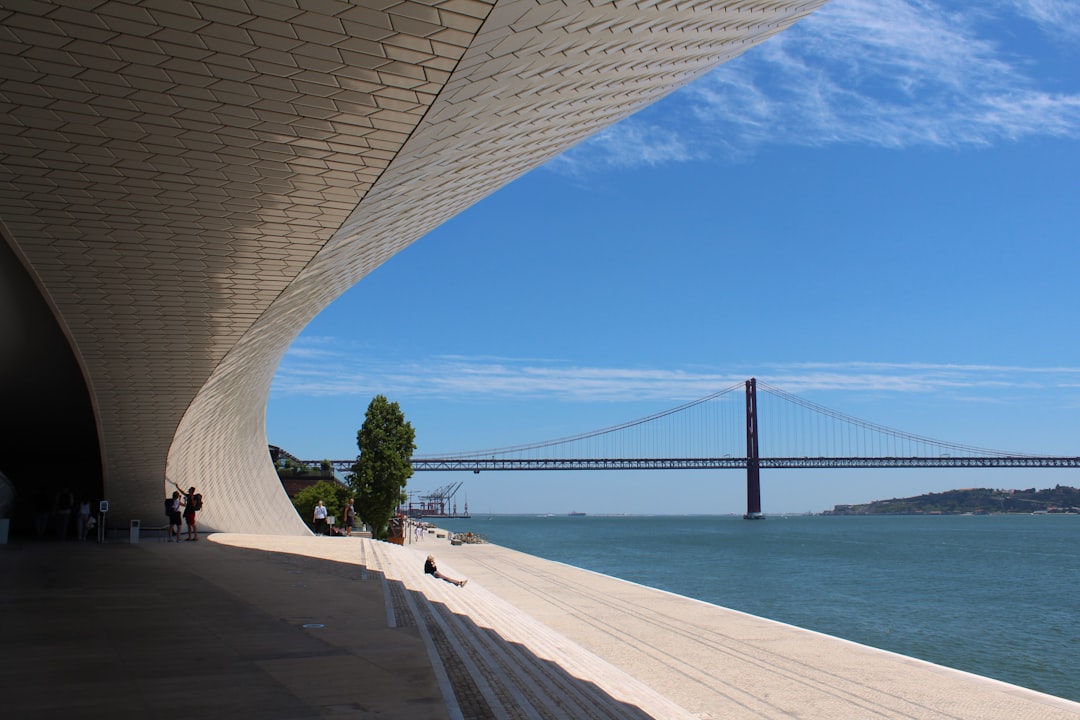
Parque das Nações: the city's unresolved future, worth one afternoon
The Parque das Nações, built on reclaimed industrial land in the eastern reaches of the city for the 1998 World Exposition, is not beautiful in the way the older city is beautiful. It is the Lisbon that tried, quite deliberately, to imagine itself as a twenty-first century European capital, and the result is wide, windswept, and architecturally uneven in the way that exposition grounds tend to be once the exposition has ended. The Oceanarium is genuinely excellent — one of the better aquariums in Europe, with a central tank large enough to make you forget, briefly, that you are indoors. The Santiago Calatrava train station, Oriente, is worth seeing as a piece of engineering even if you are not catching a train.

What I find interesting about Parque das Nações is less any individual thing than the feeling of a city trying on an identity it has not quite grown into. The residential towers are occupied. The riverside promenade fills on Sunday afternoons. It is a real neighbourhood now, not just a site. Whether it is a successful one is a question Lisbon is still answering.
Insider tip The Oceanarium is expensive by Portuguese standards and queues are long on weekends. Book online and go on a weekday morning. The aquarium is significantly less crowded after 3pm in winter.
7 Neighbourhood · 0.0 km

The Alfama on foot, slowly, without a map
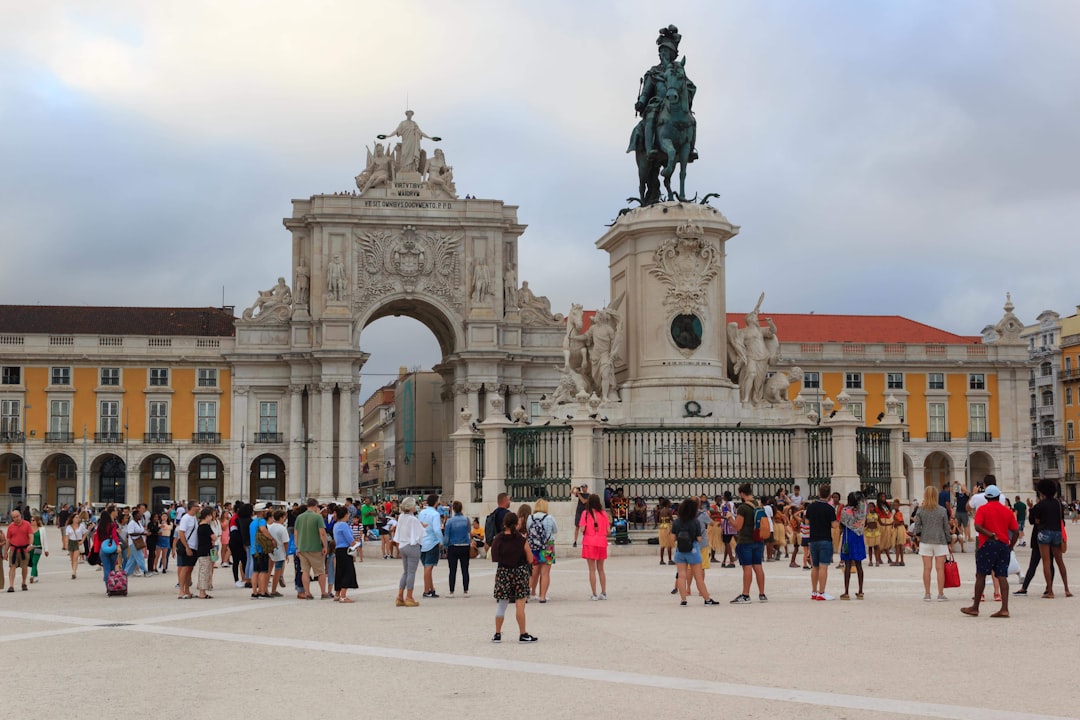
The Alfama on foot, slowly, without a map
The Alfama is the oldest surviving neighbourhood in Lisbon — the Moorish city's residential core, largely intact after the 1755 earthquake because its position on the hillside somehow spared it the worst of the shaking. It is also the neighbourhood most aggressively marketed to tourists, and the tension between those two facts is something you feel constantly while walking through it. The fado houses on the main drag are largely performing fado at tourists. The souvenir shops are selling the same roosters and tiles as every other souvenir shop in Europe.

None of this means you should avoid it. It means you should walk it slowly, take the wrong turns, and go on a weekday morning when the tour groups have not yet assembled. The streets above Rua de São Miguel, where the laundry still hangs between buildings and the cats still have the relaxed authority of animals who have been here longer than anyone, are a different city from the Alfama of the guidebooks. Both are real. One requires more effort to find.
Insider tip The neighbourhood is significantly quieter before 10am and after 8pm. The evening walk, when the light has gone and the alleys are lit by the yellow of old streetlamps, is a different experience from the daytime one and worth doing separately.
8 Day trip · 0.0 km

A ferry to Cacilhas: crossing the river to see the city

A ferry to Cacilhas: crossing the river to see the city
The ferry from Cais do Sodré to Cacilhas costs less than two euros and takes about ten minutes, and the crossing is the best way to understand Lisbon's relationship with the Tagus. From the water, the city arranges itself properly: the white and terracotta of the hills, the castle, the bridge (which is the colour of the Golden Gate because it was built by the same company, in 1966), the long horizontal of the waterfront. Lisbon is a city that faces the river and has always faced the river, and you cannot fully understand that orientation from land.

Cacilhas itself is a small town on the southern bank, in the municipality of Almada, and it has the particular quality of places that exist primarily in relation to somewhere else. There are good seafood restaurants on the waterfront. There is a retired frigate moored at the dock that functions as a naval museum. There is a tram that runs up the hill to the Cristo Rei statue, which is what you think it is — a smaller, Portuguese version of Rio's Christ the Redeemer, built in 1959 as a vow of thanks for Portugal's neutrality in the Second World War.
Insider tip The ferry runs from Cais do Sodré roughly every 30 minutes. The return crossing at dusk, with the city lit up across the water, is one of those experiences that costs almost nothing and delivers considerably more than its price suggests.
There is a word in Portuguese — saudade — that every piece of writing about Lisbon is obligated to mention and that most pieces of writing about Lisbon deploy incorrectly, as if it were simply a synonym for nostalgia or longing. It is more specific than that, and more structural: it describes a relationship with absence, with things that were and are no longer, with the awareness that what you love is already passing. Lisbon is a city that seems to understand this at a cellular level. The fado that drifts out of the restaurants in the Alfama is not performing sadness for tourists, or not only that — it is expressing something the city has always known about itself, which is that its greatest period of power and expansion is several centuries behind it, and that the river it faces is the same river its ships left from and mostly did not return.

This is not a melancholy city, or not primarily. It is a city with a complicated relationship to time, which makes it interesting to live in and interesting to visit. The things worth doing here are mostly things that put you in contact with that complexity: the old monastery, the river crossing, the park with the old trees, the tasca where the television is on. None of them require you to perform enthusiasm. They require you to pay attention, which is a different and more satisfying demand.
🏆 Pocket guide

Take this guide with you.

Save it offline, get walking directions, and discover thousands more places like the ones you just read.

Save offline Smart routes Hidden gems
Scan to download iOS / Android
Scan for AppGallery Huawei users

All places, on a map

Map data © OpenStreetMap contributors.

Frequently asked questions

What is the best time of year to visit Lisbon?

September and October are the months I would choose without hesitation. The summer crowds have thinned, the temperatures are warm but not the aggressive heat of July and August (which regularly exceeds 35°C and turns the stone city into a radiator), and the light has the particular quality of early autumn. March and April are also good — the city is green after winter rain, the queues at major monuments are manageable, and the prices at smaller accommodation are considerably lower than peak season. Avoid the two weeks around Christmas if you want to move freely in the Baixa and Chiado; they are pleasant but extremely crowded.

Is Lisbon walkable, or do you need public transport?

Lisbon is walkable in the sense that its most interesting neighbourhoods — Alfama, Mouraria, Chiado, Bairro Alto, Príncipe Real — are all within reasonable walking distance of each other. It is not walkable in the sense that it is flat: the hills are real and some of them are steep enough to be genuinely tiring. The metro is clean, cheap, and covers the main arteries well. For Belém and Parque das Nações, tram 15E and the metro's red line respectively are the practical options. The famous tram 28 is useful for the Alfama but is so crowded in tourist season that the ride is more ordeal than pleasure; tram 12 covers some of the same ground with fewer people.

How much should I budget per day in Lisbon?

Lisbon is no longer the inexpensive European capital it was a decade ago, though it remains cheaper than Paris, Amsterdam, or London. A realistic daily budget for a mid-range traveller — decent accommodation, lunch at a tasca, dinner at a proper restaurant, public transport, one or two paid attractions — is somewhere between €100 and €150 per person. Budget travellers eating at tascas and using the metro can manage on €60–80. The main expenses that catch people off guard are accommodation (prices have risen sharply since 2018) and the tourist-facing restaurants in the Alfama and Chiado, which charge significantly more than their equivalents one neighbourhood further out.

What are the most common tourist mistakes in Lisbon?

Trying to do too much in too little time is the most common. Lisbon rewards slowness and punishes the itinerary that has six neighbourhoods in one day. The second mistake is eating at the restaurants with menus in five languages displayed outside the door in the Alfama — the food is generally mediocre and the prices are not. The third is taking the 28 tram in summer without understanding that pickpocketing on it is a well-documented problem; keep bags in front of you and phones in a front pocket. The fourth is underestimating the hills: comfortable shoes are not a suggestion.

Do I need to speak Portuguese in Lisbon?

No — English is widely spoken in hotels, restaurants, and tourist-facing businesses, and the younger population in particular tends to be comfortable in English. That said, making any effort in Portuguese — even a basic obrigado (thank you) or bom dia (good morning) — is noticed and appreciated in a way that matters. Lisbon has received enough tourists to have developed a certain professional warmth toward them, which is not quite the same as genuine warmth. The latter tends to appear when you demonstrate, however clumsily, that you are trying to meet the city on its own terms rather than expecting it to translate itself entirely for you.

🏆 Read this offline

Save it to your phone.

Bookmark this guide, plan your trip offline, and discover thousands of places like these.

Bookmark Plan offline 60 languages
Scan to download iOS / Android
Scan for AppGallery Huawei users