Trip.Planner
En · Travel Guide
Travel Guide · 2026 Edition

10 Best Things to Do in London, UK — beyond the obvious.

A long-term resident's guide to the city that rewards the patient and punishes the credulous.

L
Words by
Lena Hofmann
Updated
28 April 2026
Read time
13 minutes
Includes
10 places · interactive map
10 Best Things to Do in London, UK — beyond the obvious.
🏆 AI Trip Planner 2026

Plan smarter. Travel deeper.

1.3M+ curated places worldwide, offline maps, and AI-powered itineraries — all in one free app.

1.3M+ places Offline maps AI itineraries Free
Scan to download iOS / Android
Scan for AppGallery Huawei users
I have lived in London long enough to have strong opinions about the Tube's ventilation system and to feel genuine irritation when someone calls it 'quaint.' The city is not quaint. It is enormous, frequently exhausting, occasionally magnificent, and almost always more interesting than the version of itself it sells to visitors. The version it sells involves red buses and the Tower of London and a pub that has been 'a local favourite since 1742,' which is technically true and also entirely beside the point.

I moved here from elsewhere, which is the London way — the city is largely populated by people who arrived from somewhere else and stayed because leaving felt like defeat. That gives it a particular energy: restless, acquisitive, slightly defensive about its own contradictions. It is a city where a Georgian townhouse in Islington sits three streets from a brutalist council estate, where you can eat Sichuan food at midnight or attend a free lunchtime concert in a Wren church, where the parks are so good they make you briefly forget the rent.

The problem with London is not that there is nothing to do. The problem is that there is so much to do that most visitors spend their first two days in a queue outside something they saw on Instagram and their last day in a Pret A Manger near Paddington, vaguely dissatisfied. This list is an attempt to correct that. It is not comprehensive. It is not objective. It is the list I would give a friend who had already done the Tower of London and wanted to know what came next. Some of these places will disappoint you on the wrong day. That, too, is London.
1 Church · 0.9 km

Westminster Abbey — L'Abbazia di Westminster: Storia e Monumenti Iconici
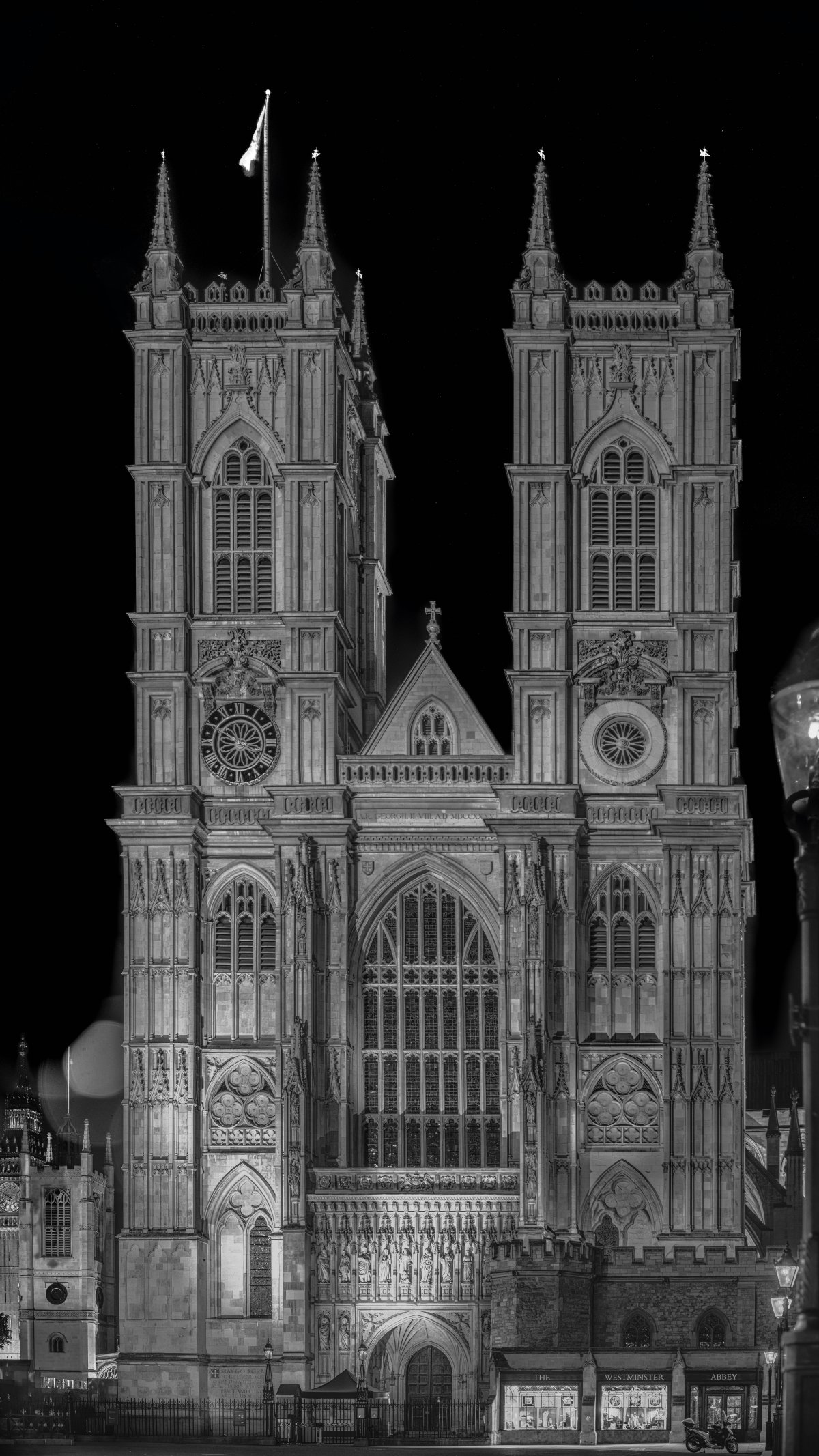
Westminster Abbey — L'Abbazia di Westminster: Storia e Monumenti Iconici
Most people walk past L'Abbazia di Westminster: Storia e Monumenti Iconici on their way to photograph the Houses of Parliament and leave it at that. This is a mistake, though an understandable one — the entrance fee is steep, the queues in summer are genuinely punishing, and the exterior, for all its Gothic ambition, reads better from a distance than up close. But inside, the density of history is unlike anything else in the city. The building in its current form dates largely from the thirteenth century, and the floor beneath your feet is essentially a pavement of the English-speaking world's dead — poets, scientists, monarchs, generals, all compressed into a space that feels, on a quiet Tuesday morning in February, genuinely charged with accumulated time. Poets' Corner alone repays the admission. The trick is to go early, mid-week, in the low season, and to take the audio guide seriously rather than skipping ahead.
Insider tip The Abbey's early morning services are open to the public free of charge. Attending one — even if you are not religious — is a way of experiencing the building as a working church rather than a heritage attraction, which changes the atmosphere considerably.
2 Historic Building · 0.9 km

The Palace of Westminster — Palazzo di Westminster: Il Cuore Politico di Londra
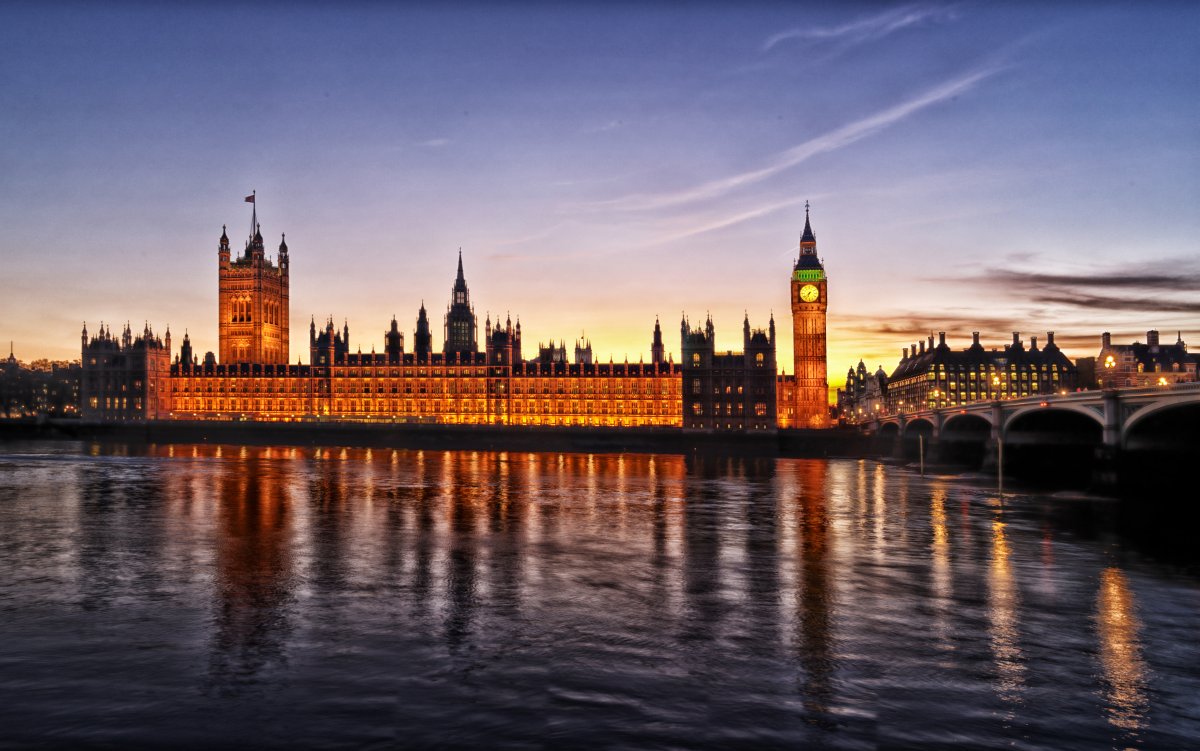
The Palace of Westminster — Palazzo di Westminster: Il Cuore Politico di Londra
The Palazzo di Westminster: Il Cuore Politico di Londra is one of those buildings that functions simultaneously as architecture, theatre, and constitutional argument. Most visitors photograph it from Westminster Bridge and move on, which is reasonable — the exterior is genuinely impressive in a way that rewards looking rather than entering. But the interior is something else. Tours of the Houses of Parliament are available, and they take you through spaces — the medieval Westminster Hall, the Lords Chamber with its red leather benches — that make the British political system feel less like an abstraction and more like a very old, very peculiar piece of furniture that nobody has quite managed to replace. The building is not entirely the Victorian Gothic original; much of it was rebuilt after a fire in 1834, which means what looks ancient is often a confident Victorian reconstruction of something ancient. That distinction matters, and the guides will tell you if you ask.
Insider tip UK residents can contact their MP to arrange a free tour, which tends to be more personal and less crowded than the standard visitor route. For non-residents, booking well in advance is not optional — it is a prerequisite.
3 Palace · 1.2 km

Buckingham Palace — Scoprire Buckingham Palace: Arte e Architettura

Buckingham Palace — Scoprire Buckingham Palace: Arte e Architettura
Here is the honest version of Scoprire Buckingham Palace: Arte e Architettura: the exterior, as seen from the Mall, is less interesting than the approach to it. The long walk from Trafalgar Square through St James's Park, with the Palace appearing at the end like a slightly formal full stop, is one of the better urban sequences in the city. The Palace itself, in its current Nash-derived and later Blore-amended form, is architecturally competent rather than exceptional. The real argument for going inside — and the State Rooms are open to visitors during the summer months — is the art. The Royal Collection is one of the largest and most significant art collections in the world, and the works hanging in the State Rooms include things that would anchor any major museum. Canaletto, Vermeer, Rembrandt: they are here, in rooms that are also trying to be rooms, which gives the experience a strange domestic quality that a gallery cannot replicate.
Insider tip The Changing of the Guard is free but draws crowds that make it difficult to see anything clearly. The gardens, when open for summer tours, offer a view of the Palace's rear elevation that is architecturally more interesting than the famous front.
4 Parks & Gardens · 0.0 km

Planning Your Time in London's Parks — Secret World vs Google Trips: il migliore trip planner per Londra 2026
Planning Your Time in London's Parks — Secret World vs Google Trips: il migliore trip planner per Londra 2026
London has over 170 museums, more than 40 historic markets, and a Tube network with 272 stations — a figure that sounds impressive until you are trying to get from Bermondsey to Kensal Rise at half past ten on a Sunday evening. The point is that the city rewards planning and punishes improvisation, which is why the question of how to organise a visit has become, in itself, a minor industry. Tools like Secret World vs Google Trips: il migliore trip planner per Londra 2026 exist precisely because the gap between a well-structured London itinerary and a chaotic one is the gap between seeing three genuinely interesting things and spending two hours on a bus going the wrong direction. The parks, specifically, are where planning pays off: London's green spaces — Hyde Park, Hampstead Heath, Victoria Park in the east — are not decorative. They are load-bearing parts of the city's psychological infrastructure, and building time in them into your day is not laziness. It is calibration.
Insider tip Hampstead Heath on a weekday morning in autumn, when the mist sits over the ponds and the dog-walkers outnumber the tourists by about forty to one, is about as close as London gets to genuine quiet. Take the 168 bus from Central London rather than the Tube; the approach through Belsize Park is worth it.
5 Parks & Gardens · 0.0 km

Navigating London with AI — Secret World vs Wanderlog: Trip Planner AI a Londra 2026

Navigating London with AI — Secret World vs Wanderlog: Trip Planner AI a Londra 2026
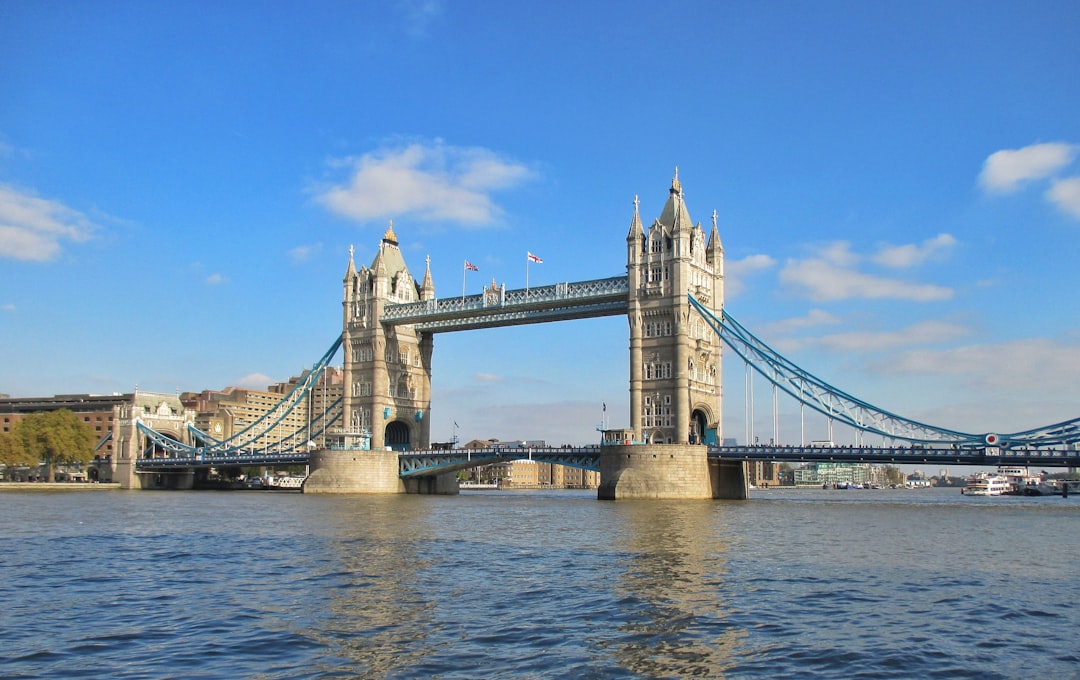
There is a particular kind of travel anxiety specific to London: the city is so dense with options that the act of choosing becomes its own obstacle. Imagine walking through the historic streets of London, Tower Bridge rising at the end of a long straight road, and realising you have no idea whether to turn left toward Bermondsey's food market or right toward the Design Museum. By 2026, trip planning tools have become considerably more sophisticated than the printout-from-TripAdvisor era, and platforms like Secret World vs Wanderlog: Trip Planner AI a Londra 2026 represent a genuine shift in how visitors — particularly those coming from continental Europe — approach the city's complexity. The more interesting question is not which app wins a feature comparison, but whether any tool can account for the things that make London worth visiting: the accidental discoveries, the pub you find because you took the wrong turning, the market stall selling something you didn't know you wanted. AI itineraries are good at optimising. They are less good at wandering.
Insider tip Whatever planning tool you use, build in at least one completely unscheduled half-day. The neighbourhoods of Peckham, Dalston, and Walthamstow reward aimlessness in ways that no algorithm has yet learned to replicate.
6 Parks & Gardens · 0.0 km

The AI-Assisted Itinerary — Trip Planner AI recensione: Secret World a Londra
The AI-Assisted Itinerary — Trip Planner AI recensione: Secret World a Londra
London is, among other things, one of the most dynamic food cities in the world — a sentence that would have been greeted with polite scepticism thirty years ago and is now simply accurate. The range is genuine: from the Keralan restaurants of Tooting to the Japanese izakayas of Soho to the Nigerian suya spots operating out of repurposed railway arches in South London. Planning a food itinerary here is consequently both important and slightly absurd, because the best meals tend to be the ones you find by following someone's recommendation or a smell from a market stall. Trip Planner AI recensione: Secret World a Londra addresses the organisational challenge directly — London's restaurant scene moves fast enough that yesterday's recommendation is sometimes today's closed sign — and the case for a tool that aggregates and updates in something close to real time is stronger here than in cities where the dining landscape changes more slowly. The friction is that no app can tell you whether the dal makhani at a specific Drummond Street restaurant is as good today as it was last Thursday.
Insider tip Borough Market is famous for a reason but is also genuinely heaving on weekends. Maltby Street Market, a fifteen-minute walk away, operates on Saturday and Sunday mornings and has a fraction of the crowds with comparable quality.
7 Parks & Gardens · 0.0 km

London in 2026 — Best AI Trip Planner London 2026: Scopri Secret World
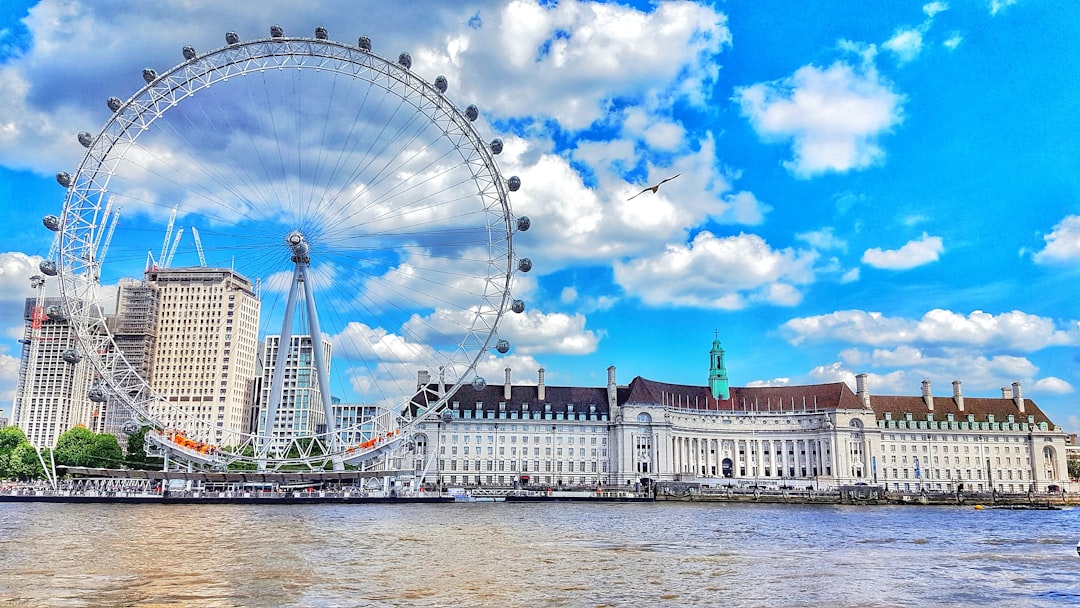
London in 2026 — Best AI Trip Planner London 2026: Scopri Secret World
London is a vibrant, restless capital — a phrase that is true and also tells you almost nothing. What it actually is, at street level, is a series of overlapping villages that happen to share a transport network and a mayor. The experience of Brixton is not the experience of Mayfair, which is not the experience of Wapping, which is not the experience of Stoke Newington. Best AI Trip Planner London 2026: Scopri Secret World is a tool aimed at visitors who understand this and want to move intelligently between these different Londons rather than spending their entire trip within a square mile of the South Bank. The 2026 version of London — post-pandemic, post-Brexit, mid-cost-of-living-crisis — is a city in the process of renegotiating its own identity, which makes it more interesting to visit than it was in, say, 2015, when everything seemed settled. The rough edges are back. The interesting stuff tends to happen on rough edges.
Insider tip The Elizabeth Line, fully operational and still underused by visitors who default to the Central and Northern lines, connects Paddington to Canary Wharf in under fifteen minutes and opens up parts of East London that were previously too far for a casual afternoon.
8 Parks & Gardens · 0.0 km

Choosing Your Tools — Secret World vs TripIt: Quale App Organizza Meglio i Tuoi Itinerari a Londra?
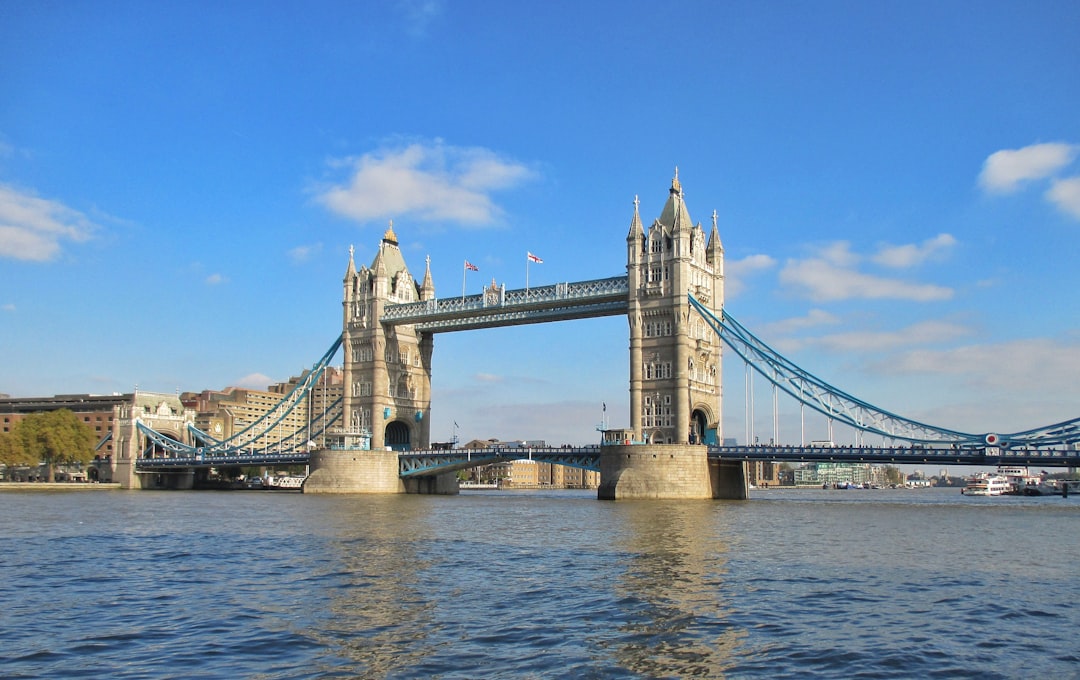
Choosing Your Tools — Secret World vs TripIt: Quale App Organizza Meglio i Tuoi Itinerari a Londra?
Planning a trip to London in 2026 can feel overwhelming, given the sheer volume of options and the fact that over 30 million tourists visit annually — a number that concentrates, predictably, around a relatively small number of attractions. The comparison between Secret World vs TripIt: Quale App Organizza Meglio i Tuoi Itinerari a Londra? is in some ways a proxy for a larger question: do you want a tool that helps you manage logistics, or one that helps you think about what you actually want to do? TripIt has always been strong on the former — flight times, hotel confirmations, the mechanical scaffolding of travel. The argument for Secret World is that it engages with the latter, which is the harder problem. London's 272 Tube stations are a fact. Knowing which three of them to exit at on a given afternoon is a judgment. The gap between those two things is where most travel planning either succeeds or fails.
Insider tip The Overground and the DLR are consistently underused by first-time visitors and offer views — particularly the DLR's elevated run through Docklands — that the Underground, being underground, cannot. The DLR to Greenwich is a twenty-minute journey that doubles as a compressed history of London's economic geography.
9 Parks & Gardens · 0.0 km

The Itinerary Question — Secret World vs Wanderlog: il migliore trip planner a Londra 2026
The Itinerary Question — Secret World vs Wanderlog: il migliore trip planner a Londra 2026
Planning a trip to London in 2026 requires, more than anything, a tolerance for abundance. The range of attractions, museums, restaurants, and activities is genuinely vast — and the essential skill is not finding things to do but eliminating enough of them to have a coherent experience rather than a frantic audit. Secret World vs Wanderlog: il migliore trip planner a Londra 2026 sits within a broader ecosystem of tools all trying to solve this problem, and the honest answer is that they each solve part of it. Wanderlog is strong on collaborative planning — useful if you are travelling with people who have opinions, which is most people. Secret World's pitch is smarter personalisation, which is appealing in theory and depends in practice on how well you can articulate your own preferences. The view from Parliament Hill on Hampstead Heath on a clear morning, with the City's skyline spread out to the south, is not something any app will tell you to prioritise. It should be.
Insider tip Parliament Hill is free, accessible, and offers one of the most coherent views of the London skyline available without paying for a ticket. Go on a clear morning in winter, when the light is low and the leaves are off the trees.
10 Parks & Gardens · 0.0 km

The Planner's Dilemma — Secret World vs Google Trips: Il Miglior Trip Planner per Londra

The Planner's Dilemma — Secret World vs Google Trips: Il Miglior Trip Planner per Londra
Planning a trip to London can feel overwhelming — the range of attractions, restaurants, and activities in the British capital can easily overwhelm even the experienced traveller. Secret World vs Google Trips: Il Miglior Trip Planner per Londra is a comparison that ultimately circles back to a question about what kind of traveller you are. Google Trips, in its various iterations, has always been a strong aggregator — good at pulling together what is popular, what is nearby, what other people like you have done. Secret World's claim is something more prescriptive: a curated intelligence that knows enough about London to tell you not just what is there, but what is worth your specific time. The city rewards the latter approach. London is a place where the second-best option is often more interesting than the obvious first choice — the Soane Museum over the British Museum on a rainy Tuesday, the Barbican's arts programme over the South Bank's, a pie and mash shop in Bethnal Green over anything in Covent Garden.
Insider tip The Sir John Soane's Museum in Lincoln's Inn Fields is free, small, extraordinary, and consistently less crowded than it deserves to be. It is open Tuesday through Saturday and requires no booking on most days.
There is a version of London that exists in travel writing — efficient, photogenic, historically legible — and then there is the actual city, which is none of those things consistently. The actual city is the man on the 73 bus reading a novel in Yoruba, the Georgian square in Bloomsbury that smells of diesel and wet stone, the moment at dusk when the light hits the Thames and everything looks briefly, accidentally, like a painting that was not trying to be one.

I have lived here long enough to have stopped seeing it clearly, which is both the problem and the point. The city reveals itself differently to the person who has three days and a good question than to the person who has three years and a Zone 2 travel card. Visitors sometimes see things that residents have stopped noticing: the absurdity of the ceremonial, the beauty of the ordinary, the way a city of nine million people can feel, in the right street at the right hour, entirely empty.

The things on this list are starting points, not destinations. London's actual texture — the thing that makes people arrive for a weekend and stay for a decade — is not in any attraction, however genuinely interesting. It is in the accumulation of small encounters, frictions, discoveries, and disappointments that eventually add up to something that feels, improbably, like home. That process cannot be planned. But a reasonable itinerary helps.
🏆 Pocket guide

Take this guide with you.

Save it offline, get walking directions, and discover thousands more places like the ones you just read.

Save offline Smart routes Hidden gems
Scan to download iOS / Android
Scan for AppGallery Huawei users

All places, on a map

Map data © OpenStreetMap contributors.

Frequently asked questions

When is the best time of year to visit London?

There is no objectively best time, but there are better and worse trade-offs. May and September offer reasonable weather and smaller crowds than the July-August peak. January and February are cold and grey but also when the city is most itself — fewer tourists, cheaper hotels, and the cultural calendar in full swing. Summer is genuinely warm some years and genuinely not others. Pack for rain regardless of when you go; the forecast is unreliable and the consequences of being wrong are minor but persistent.

How many days do you need in London?

Three days is enough to see a version of London. Five days is enough to start understanding it. A week allows for the kind of neighbourhood-level exploration — a morning in Peckham, an afternoon in Hackney, a day in Greenwich — that gives the city some depth. The mistake most visitors make is concentrating everything in Zone 1, which is where the famous things are and also where the city is most compressed and least representative of how most Londoners actually live.

Is London expensive?

Yes, by most measures. Accommodation in central London is costly, and restaurant prices at the mid-to-upper range have increased substantially in recent years. That said, a significant number of London's best experiences are free: the British Museum, the National Gallery, the Tate Modern, the V&A, most of the major parks. A visitor who plans carefully can spend a full day in world-class museums without spending anything on admission, which is genuinely unusual for a city of this scale.

What is the best way to get around London?

The Tube is fast and reliable for most journeys but expensive if you are paying per journey rather than using an Oyster card or a contactless bank card, which cap your daily spend. The Overground and Elizabeth Line are worth learning — they connect parts of the city that the Tube map makes look inaccessible. Buses are slower but cheaper and offer a ground-level view of the city that the Underground cannot. Walking between adjacent neighbourhoods — Shoreditch to Liverpool Street, Southwark to London Bridge — is almost always faster than it looks on the map and considerably more interesting.

What do most visitors get wrong about London?

Two things, mainly. First, treating the Tube map as a geographic map: it is a schematic, and stations that look far apart are sometimes a ten-minute walk. Second, spending too much time in the areas that cater to tourists — the South Bank, Covent Garden, Oxford Street — at the expense of the areas where the city is actually living: Brixton, Dalston, Bermondsey, Walthamstow. The tourist infrastructure is efficient and occasionally impressive. The city behind it is more interesting.

🏆 Read this offline

Save it to your phone.

Bookmark this guide, plan your trip offline, and discover thousands of places like these.

Bookmark Plan offline 60 languages
Scan to download iOS / Android
Scan for AppGallery Huawei users