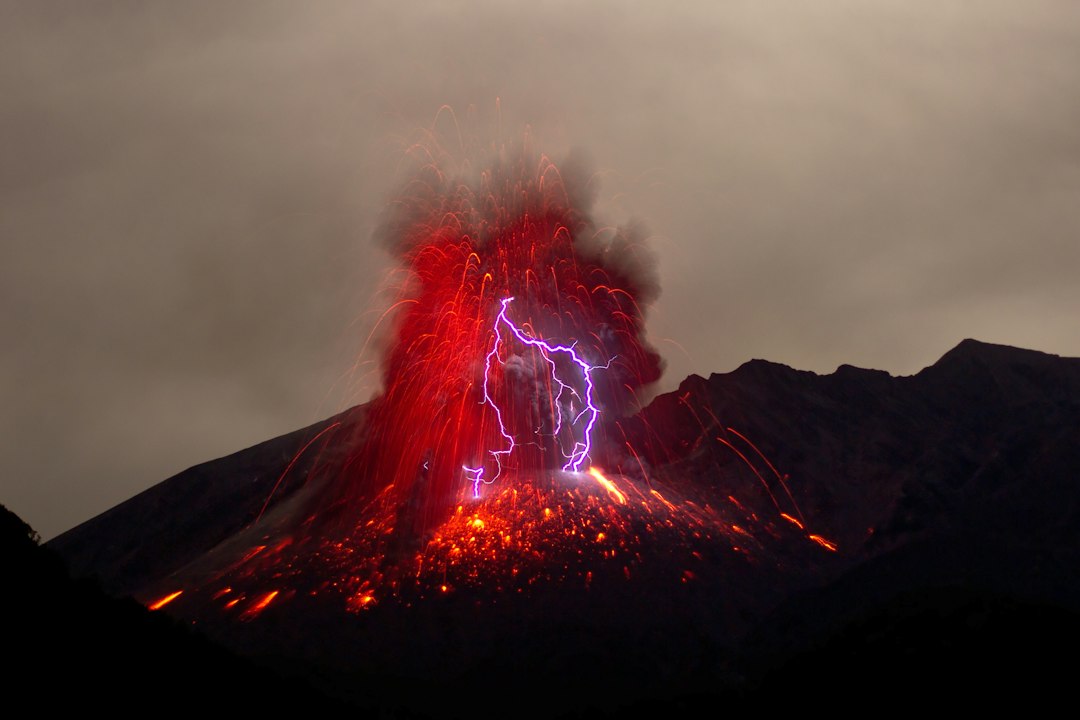

The ferry takes just fifteen minutes to cross the bay of Kagoshima, but when you step ashore on the island of Sakurajima, you feel as if you have landed on another planet. The volcano dominates the horizon with its 1,117 meters in height, and as you walk along the paths of solidified lava, a plume of white smoke almost always rises from the crater. It is not an occasional sight: Sakurajima is one of the most active volcanoes in Japan, with hundreds of minor eruptions every year — in some years, over 1,000 explosions have been recorded, mostly small bursts of ash and gas that color the sky gray.
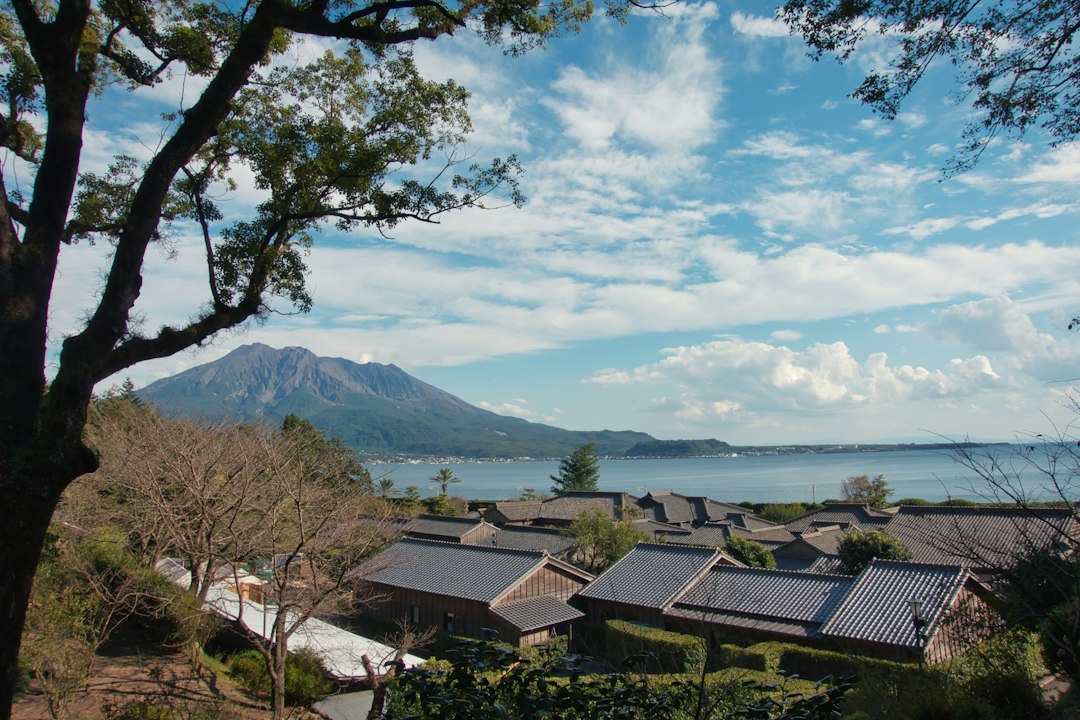
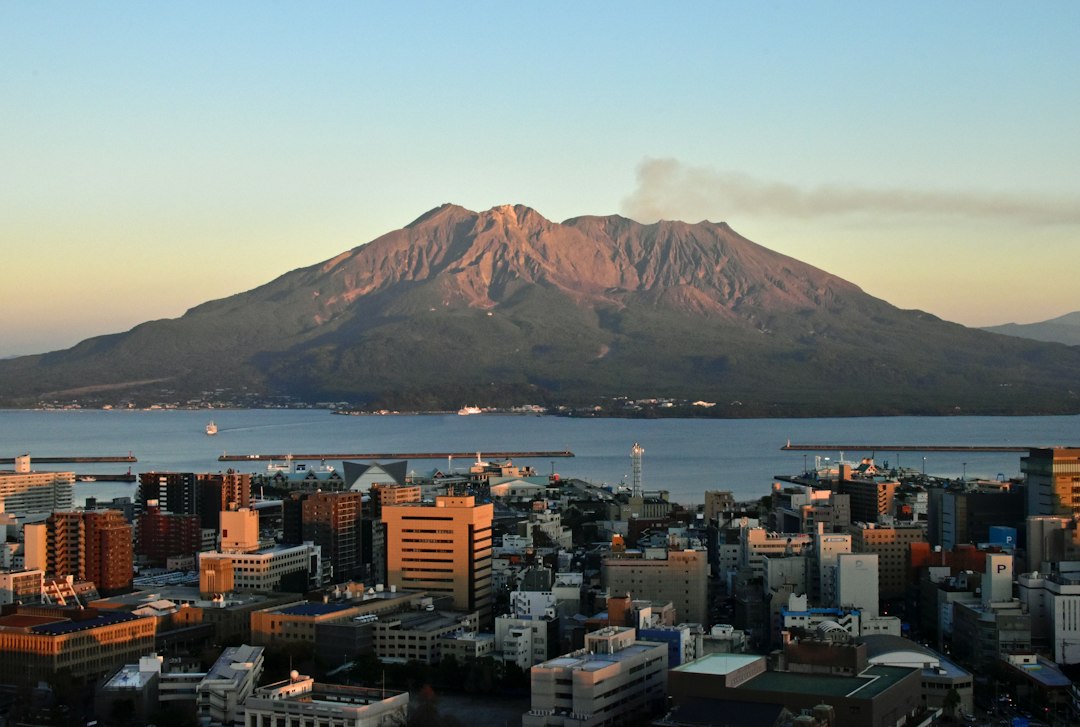
What makes this experience extraordinary is not just the power of nature, but the contrast with the daily life that surrounds it. Kagoshima, a city of over 600,000 inhabitants, has coexisted with this difficult neighbor for centuries. Residents regularly wash the ash off their balconies, children go to school with protective helmets in their backpacks, and the radar of the Volcanological Observatory monitors every tremor of the underground. Sakurajima is not a remote natural park: it is a living presence in the midst of Japanese urban life.
The geological and human history of the island
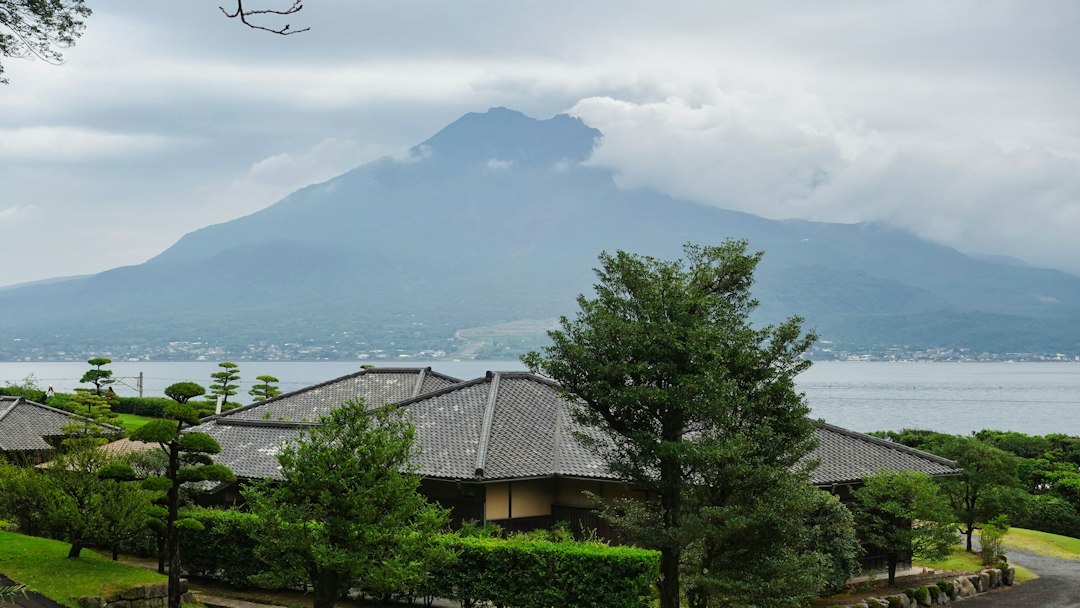
Sakurajima was originally a separate island in Kagoshima Bay until the great eruption of 1914 — one of the most powerful in Japan in the 20th century — filled the Seto Strait with millions of tons of lava, connecting the island to the Osumi Peninsula. Even today, walking along the eastern coast, one can clearly see where the lava flow stopped, forming an irregular and black coastline that drops directly into the sea.
Before that catastrophic eruption, the mayor of the city received a warning letter from a geologist, but the population was not evacuated in time. Almost miraculously, the casualties were relatively few — a few dozen — thanks to the warning signs that prompted many residents to flee on their own. This episode is still remembered today as an example of how knowledge of the territory can save lives.
What to see and do on the island
The most accessible route for visitors is the Arimura Lava Trail, a path of about one kilometer that crosses the lava field formed in 1914. Walking on that black and jagged surface, with vegetation slowly reclaiming space among the rocks, is a physically tangible experience of how nature regenerates. Along the path, there are informational panels that explain the composition of the lava and the history of the eruptions.
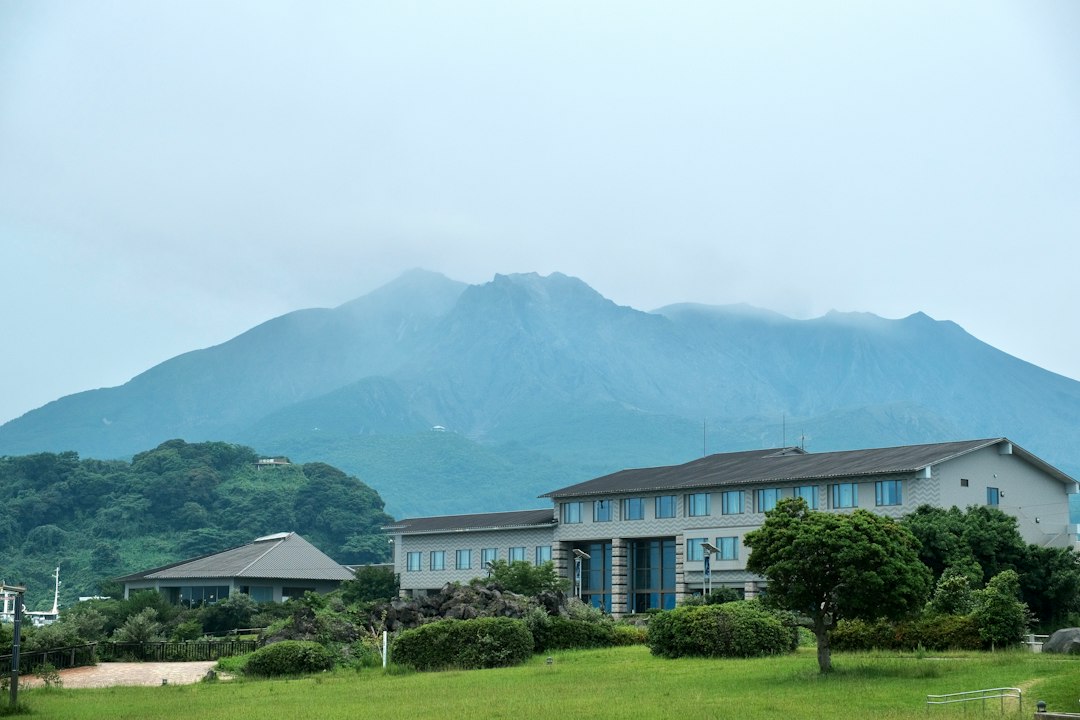
It is also worth climbing to the Yunohira Observatory, the highest observation point accessible to visitors, located at about 373 meters above sea level. From here, on clear days, there is a complete view of the caldera and the bay of Kagoshima in the background. The observatory is located along the scenic road that partially circumnavigates the volcano, which can also be traveled by tourist bus. Another interesting stop is the Kurokami torii, a sacred Shinto gate partially buried by the lava of 1914: only the top emerges from the ground, like a symbol of the geological power that has transformed the landscape.
Practical tips for the visit
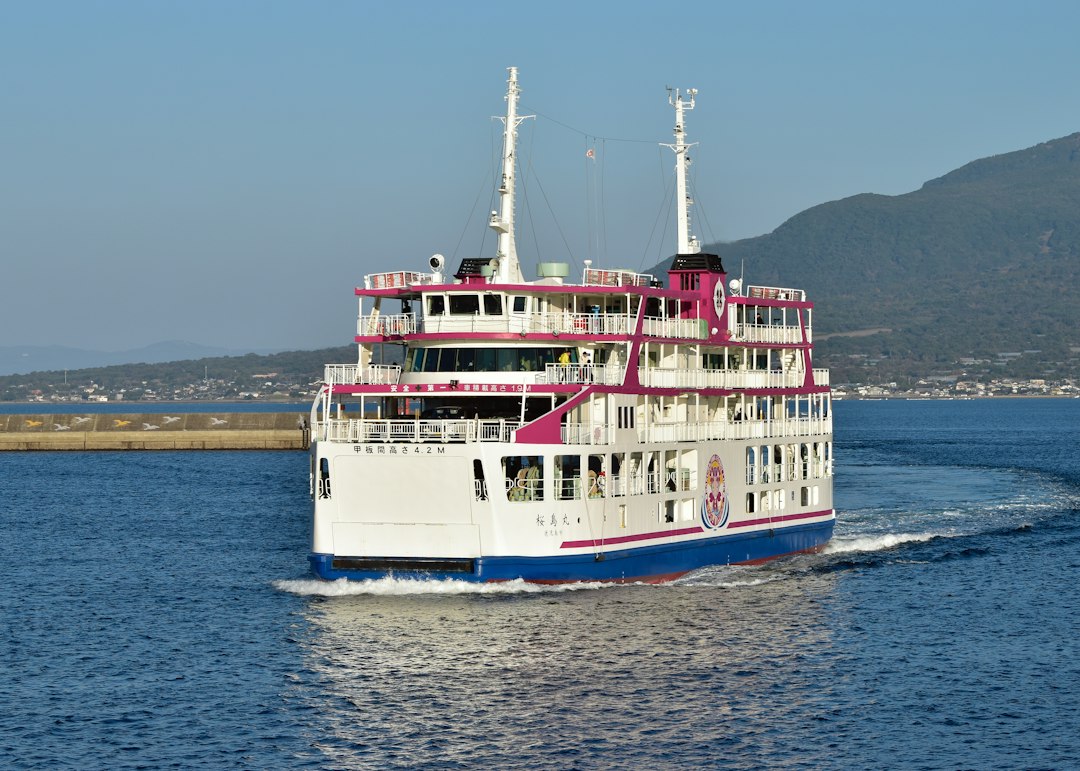
The ferry to Sakurajima departs from the Kagoshima port at regular intervals throughout the day, and a one-way ticket costs just a few euros — it is one of the most affordable maritime routes in Japan. Once on the island, the best way to get around is the circular tourist bus that leaves from the ferry terminal and connects the main points of interest in about an hour and a half for a complete route.
The best time to visit is early in the morning, when the light is softer and tourist groups have not yet reached the island. It is advisable to check the weather conditions and the volcanic alert level before departing: Japanese authorities maintain an alert system on a scale from 1 to 5, and some areas of the island may be temporarily closed when the level rises. In case of ash in the air, a simple mask is sufficient to protect the respiratory system. Wearing sturdy shoes is essential for the lava trails, where the ground is uneven and sharp. Half a day is generally enough to visit the main points, but those who want to delve deeper can easily fill an entire day.
The unique atmosphere of Sakurajima
What remains impressed after a visit to Sakurajima is not so much a monument or a structure, but a feeling: that of being on something alive. The ground trembles sometimes imperceptibly, the smell of sulfur is noticeable at certain points along the path, and the smoke rising from the crater reminds us that this is not a landscape frozen in time, but an ongoing geological process.
Kagoshima itself, viewed from the shore of Sakurajima, appears in all its urban elegance: a modern city that has chosen not to turn its back on its dangerous neighbor, but to coexist with it, study it, and respect it. This coexistence between civilization and the force of nature is perhaps the true spectacle that Sakurajima offers to those who visit with attentive eyes.