
🎄 Win a month in Italy for two — €10,000 · The Secret Italy Prize GO →
← Back

The Lanfranchi Palace

The Lanfranchi Palace — Matera, Italia.

Piazzetta Pascoli, 1, 75100 Matera MT, Italia ★★★★☆ 416 views
Giovanna Pascoli
Matera
🏆 AI Trip Planner 2026

Get the free app

Discover the best of Matera with Secret World — the AI trip planner with 1M+ destinations. Get personalized itineraries, hidden gems and local tips. Free on iOS & Android.

🧠 AI Itineraries 🎒 Trip Toolkit 🎮 KnowWhere Game 🎧 Audio Guides 📹 Videos
Scan to download iOS / Android
Scan for AppGallery Huawei users

About The Lanfranchi Palace

The Lanfranchi Palace - Matera | Secret World Trip Planner

The Lanfranchi Palace is the greatest monument representing the seventeenth-century period in Matera.

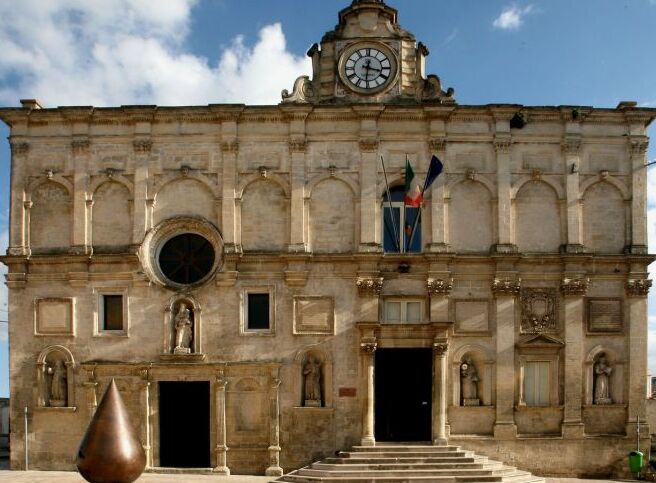
The asymmetrical façade is divided horizontally into two parts by a cornice. In the lower part there are five niches where you can admire the statues of the Madonna del Carmine and Saints. The upper part has vertical pilasters complete with capital, nine blind arches, the largest of which overlooks and incorporates the rose window, and above the crowning of the facade you can see a pediment with a clock in the center.

The work was designed and built, between 1668 and 1672, by Friar Francesco da Copertino at the request of Archbishop Vincenzo Lanfranchi, with the aim of hosting the diocesan seminary. The building of the structure also incorporated the existing Convent of Carmine". In 1864, after the Unification of Italy, the Palazzo Lanfranchi hosted the Liceo Classico "E. until 1980. Duni", where he also taught Pascoli from 1882 to 1884. Since the 1980s the building has given space to the offices of the Superintendence for Artistic and Historical Heritage of Basilicata and, from 6 May 2003, it became the seat of the National Museum of Medieval and Modern Art of Basilicata, divided into four sections: Sacred Art, Collectionism with a gallery of paintings, which belonged to Camillo D'Errico, of Ruoppolo, Abraham Brueghel, De Mura and Preti, Contemporary Art, with works by Carlo Levi, and Demoetnoantropological Section.


🗺 The smart Trip Planner app 🎄 Win a month in Italy — €10,000 →

Plan your visit to Matera

Suggested itinerary near The Lanfranchi Palace

MAJ+
500.000+ travelers worldwide
  1. 🌅
    Morning
    The Lanfranchi Palace
    📍 Matera
  2. ☀️
    Afternoon
    The church of Madonna del Carmine
    📍 0 km · Matera
  3. 🌆
    Evening
    The rock church of Santa Maria de Armenis
    📍 0.1 km · Matera

Buy Unique Travel Experiences

Powered by Viator

See more on Viator.com

Explore nearby · Matera

Frequently Asked Questions

Since May 6, 2003, the Lanfranchi Palace has served as the seat of the National Museum of Medieval and Modern Art of Basilicata. The museum is divided into four sections: Sacred Art, Collectionism (featuring a gallery of paintings by masters like Ruoppolo and Abraham Brueghel), Contemporary Art with works by Carlo Levi, and a Demoetnoantropological Section.
The Lanfranchi Palace was designed and built between 1668 and 1672 by Friar Francesco da Copertino, commissioned by Archbishop Vincenzo Lanfranchi. The building was originally intended to host a diocesan seminary and incorporated the existing Convent of Carmine into its structure.
The palace features an asymmetrical façade divided horizontally by a cornice, with five lower niches displaying statues of the Madonna del Carmine and Saints. The upper section showcases nine blind arches with a prominent rose window, vertical pilasters with capitals, and a pediment crowned with a clock at the center.
Yes, the renowned Italian poet Pascoli taught at the Liceo Classico "E. Duni" housed in the palace from 1882 to 1884. After the Unification of Italy in 1864, the building hosted this classical high school until 1980.
The Lanfranchi Palace is considered the greatest monument representing the seventeenth-century period in Matera, showcasing the artistic and architectural achievements of that era. Its transformation from a seminary to a school, and finally to a major art museum, reflects Italy's evolving cultural priorities over four centuries.