A few minutes' walk from the center of Kandy, the ground rises steeply and the air changes. The noise of traffic dissolves among the treetops, replaced by the unmistakable calls of Sri Lanka's endemic birds. Udawatta Kele Sanctuary is a rainforest of about 104 hectares that extends directly above the city, a remnant of ancient nature that the kings of the Kingdom of Kandy considered a sacred forest reserved for the royal court. Even today, entering here means crossing an invisible threshold between urban chaos and something much older.
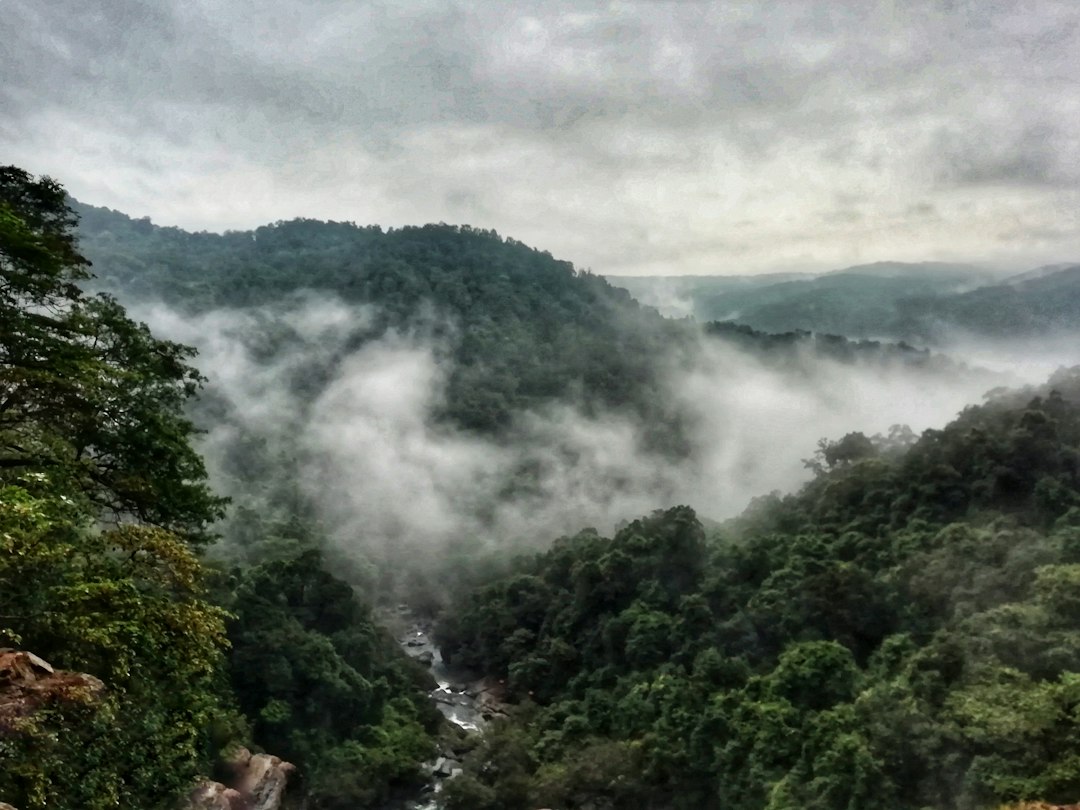
The history of this place has its roots in the Sinhalese medieval period. The forest was known as Uda Wasala Watta, meaning the garden of the upper palace, and served as a private reserve for the royal family. The British, during the colonial period, transformed it into a protected reserve in 1856, recognizing its ecological and landscape value. Since then, the sanctuary has remained largely intact, a rarity for an area so close to a city of nearly 120,000 inhabitants.
A forest that grows above the city

The main path rises decisively from the entrance near the Temple of the Sacred Tooth, and in less than ten minutes one finds themselves immersed in dense vegetation, where light filters barely through the foliage of dipterocarpus and ficus trees with roots centuries old. The ground is covered with moss and decomposed leaves, and the humidity is felt on the skin. It is not a garden tended in the conventional sense of the term: it is something wilder, more honest.
Along the paths, one encounters rare orchids that grow directly on the trunks of trees, some of which are endemic to Sri Lanka. The gray langur monkeys move among the branches with a calm almost indifferent to human presence, while the Indian giant squirrels — with their tricolored coats and bushy tails — glide from one tree to another with surprising movements. Those who bring binoculars may spot the Ceylon babbler and the Ceylon myna, two endemic species that frequent the forest regularly.

The hermitage hidden among the trees
One of the most unexpected elements of Udawatta Kele is the presence of a Buddhist meditation hermitage hidden in the heart of the forest. Monks have lived and practiced here for centuries, and even today some structures are inhabited. Reaching the hermitage requires following one of the side paths that branch off from the main route: the silence surrounding the small stone buildings, enveloped by vegetation, provides a sense of total isolation that is hard to find elsewhere at this distance from an urban center.

Near the hermitage, there are also two small artificial lakes, built during the royal era, which host freshwater turtles and various species of water birds. The water reflects the treetops and the surface is often covered with water lilies. They are corners of absolute tranquility, ideal for those who simply want to sit and observe.
How to visit the sanctuary

The entrance to the sanctuary is managed by the Sri Lanka Wildlife Department. The entrance fee for foreign visitors is about 700-800 Sri Lankan rupees, a modest amount that contributes to the maintenance of the park. The sanctuary is open every day, generally from 8:00 AM to 5:00 PM, but it is advisable to check the updated hours on-site or at the Kandy tourist office.
The best time to visit is in the early morning, when the light is softer, the heat is still bearable, and the wildlife is more active. Wearing shoes with good grip is essential: the paths can be slippery after rain, which can occur in this area at any season. The visit typically takes an average of two to three hours to leisurely walk the main trails. Those wishing to reach the hermitage and the internal lakes should allow additional time. It is preferable not to bring food into view: the monkeys are accustomed to human presence and can become persistent.
Why the Detour is Worth It
Udawatta Kele is not a botanical garden with explanatory signs and tidy flowerbeds. It is a forest that has been preserved for centuries thanks to royal protection first and colonial protection later, and today it offers something rare: the opportunity to walk in an ancient ecosystem just a few steps from the center of a lively and chaotic city. The transition is so stark that it almost seems unreal. Anyone visiting Kandy for the Temple of the Sacred Tooth would do well to set aside a morning for this place as well: not to complete a list, but because the forest provides a different perspective on the city that can be seen from above, among the foliage, as if modernity were just a temporary parenthesis.