
🎄 Win a month in Italy for two — €10,000 · The Secret Italy Prize GO →
← Back

Villa Lante and the Fountain of the Four Moors

Villa Lante and the Fountain of the Four Moors — ocalità Bagnaia, Viterbo, Italia.

Via Jacopo Barozzi, 71, 01100 ocalità Bagnaia, Viterbo VT, Italia ★★★★☆ 1,109 views
Maya Kim
ocalità Bagnaia, Viterbo
🏆 AI Trip Planner 2026

Get the free app

Discover the best of ocalità Bagnaia, Viterbo with Secret World — the AI trip planner with 1M+ destinations. Get personalized itineraries, hidden gems and local tips. Free on iOS & Android.

🧠 AI Itineraries 🎒 Trip Toolkit 🎮 KnowWhere Game 🎧 Audio Guides 📹 Videos
Scan to download iOS / Android
Scan for AppGallery Huawei users

About Villa Lante and the Fountain of the Four Moors

Villa Lante and the Fountain of the Four Moors - ocalità Bagnaia, Viterbo | Secret World Trip Planner

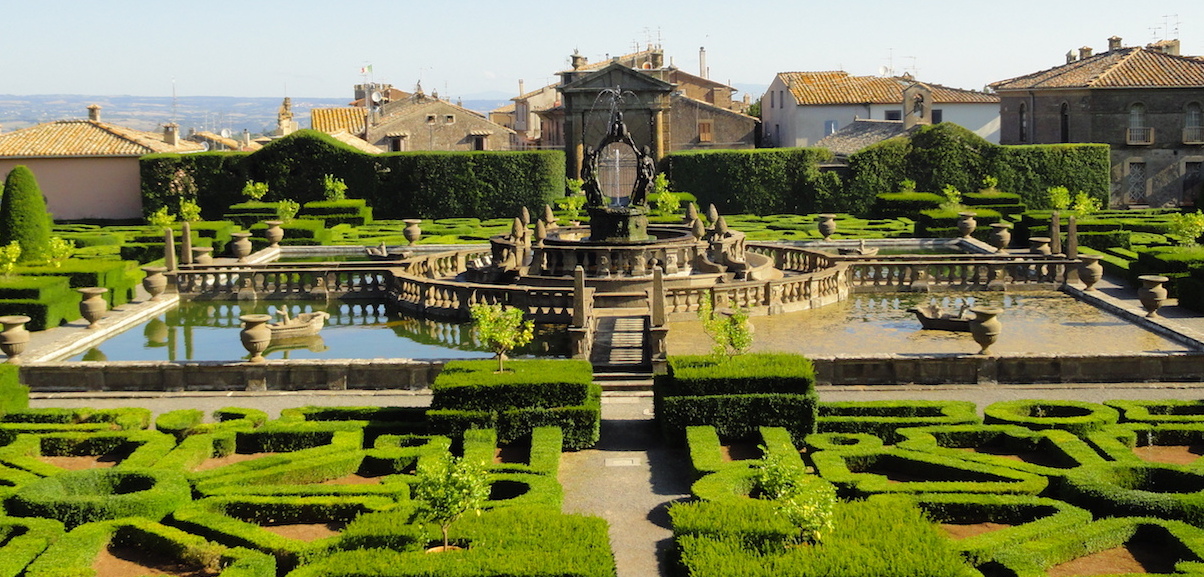
The residential area of Villa Lante, one of the most beautiful Renaissance gardens of the 16th century in Tuscia, is known as Quadrato; here - where the cardinals and their followers lived at the time - they wanted to create a suggestive water path of fountains connecting the top of the hill of Villa Lante to the parterre. The water then began to flow in the highest part of the Villa from the Diluvio Fountain to the valley, in the Fontana dei Mori. From here it will then take off towards all the other fountains scattered in the vast park of the Villa and outside the residential area that at the time of construction served as a wood for hunting for the enjoyment of the noble inhabitants. The Fountain of the Moors is therefore the main fountain of the residence and certainly one of the most suggestive, the fulcrum of the architecture of the Villa symmetrically perfect in all its forms. In the center stand the four athletes (called Moors for the burnished color that has taken on the peperino with the passage of time) who support in a common effort the coat of arms of the Peretti-Montalto. The Moors are at the centre of a circular structure that serves as a bridge for a walk inside the fountain, then divided into four further symmetrical pools that contribute to creating a sense of geometric harmony. In ancient times the focal point of the fountain was not the sculptures of the four boys' helpers but a pyramid, symbolizing the Catholic Church; this is why in each of the four lateral basins there is still today a ship with an arquebusier that strikes the central composition with a jet of water; in this way it was intended to represent the attacks that the Church was undergoing during the years of the construction of Villa Lante: on the one hand the Muslim infidels who threatened the religious status quo while on the other the Protestant Reformation that was so successful in Central Europe. Cardinal Alessandro Damasceni Peretti later wanted to replace the pyramidal sculpture with something that could celebrate his family.

The visitor further perceives the geometric perfection of the artistic complex also thanks to the context in which it is immersed: to reach the fountain you have to pass through an intricate labyrinth made of carefully maintained boxwood hedges.

In this way, a fabulous Italian garden is created, which once again is not only pleasing to the eye but also full of symbolism: seen from above, it appears as an arboreal remake of the so-called Graticola di San Lorenzo, a martyr venerated by the Church for having been condemned to burn to death on the grill under Emperor Valerian.


🗺 The smart Trip Planner app 🎄 Win a month in Italy — €10,000 →

Plan your visit to ocalità Bagnaia, Viterbo

Suggested itinerary near Villa Lante and the Fountain of the Four Moors

MAJ+
500.000+ travelers worldwide
  1. 🌅
    Morning
    Villa Lante and the Fountain of the Four Moors
    📍 ocalità Bagnaia, Viterbo
  2. ☀️
    Afternoon
    Viterbo: Villa Lante, a Renaissance masterpiece
    📍 0 km · ocalità Bagnaia, Viterbo
  3. 🌆
    Evening
    Viterbo | Sanctuary of Santa Maria della Quercia
    📍 2.2 km · ocalità Bagnaia, Viterbo

Buy Unique Travel Experiences

Powered by Viator

See more on Viator.com

Explore nearby · ocalità Bagnaia, Viterbo

Frequently Asked Questions

The Fountain of the Moors is the main fountain of Villa Lante and one of its most striking features, serving as the architectural focal point with perfectly symmetrical design. It features four athletic figures (called Moors due to the darkened color of the peperino stone) supporting the coat of arms of the Peretti-Montalto family in the center, surrounded by a circular structure with four additional symmetrical pools that create geometric harmony throughout the fountain's design.
Originally, the focal point of the fountain was a pyramid symbolizing the Catholic Church, not the sculptures of the four boys. The four lateral basins still contain ships with arquebusiers that shoot water jets at the central composition, representing the attacks the Church faced during Villa Lante's construction from both Muslim threats and the Protestant Reformation in Central Europe.
Water flows from the highest point of Villa Lante starting at the Diluvio Fountain, then descends to the Fountain of the Moors in the valley, and from there distributes to all other fountains scattered throughout the vast park. This suggestive water path was intentionally designed to connect the top of the hill to the parterre in the residential Quadrato area where cardinals and their followers once lived.
Villa Lante features one of the most beautiful Renaissance gardens of the 16th century in Tuscia, with a masterfully planned water system and symmetrically perfect architecture throughout. The garden was built on land that originally served as a hunting wood for the noble inhabitants, and the entire design—especially the Fountain of the Moors—exemplifies geometric harmony and Renaissance ideals of balance and form.
Villa Lante was commissioned by Cardinal Alessandro Damasceni Peretti, whose family coat of arms is prominently displayed at the Fountain of the Moors. The fountain's design symbolized the religious and political conflicts of the time, with the pyramid originally representing the Church and the water-shooting ships representing both the Muslim threats to Christian Europe and the Protestant Reformation that was spreading across Central Europe during the villa's construction.