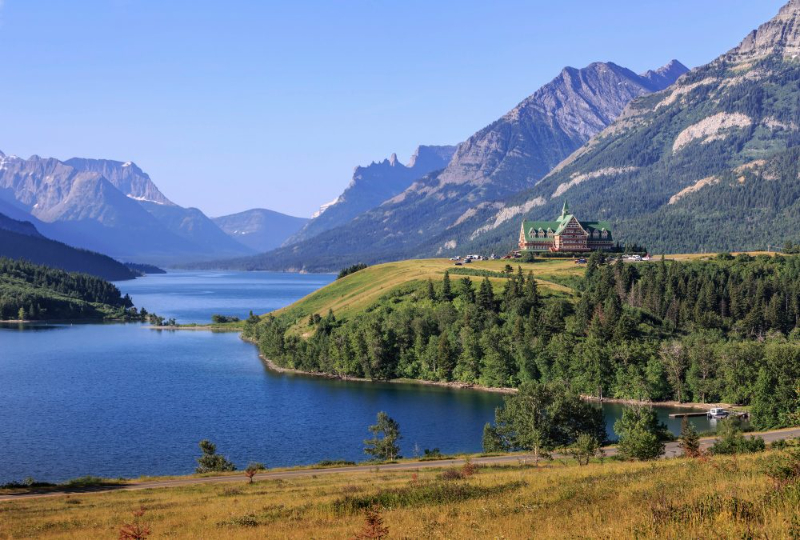

In 1931, the Rotary Clubs of Alberta and Montana proposed to join the province’s Waterton Lakes National Park with the state’s Glacier National Park in what would become the world’s first international Peace Park. The goal? To promote goodwill between the nations and to reinforce the co-operation needed to protect the environment. Its ecologically diverse and complex landscape jumps from mountain ranges in the north and south to prairies in the east, with abundant wildlife and wildflowers in-between.
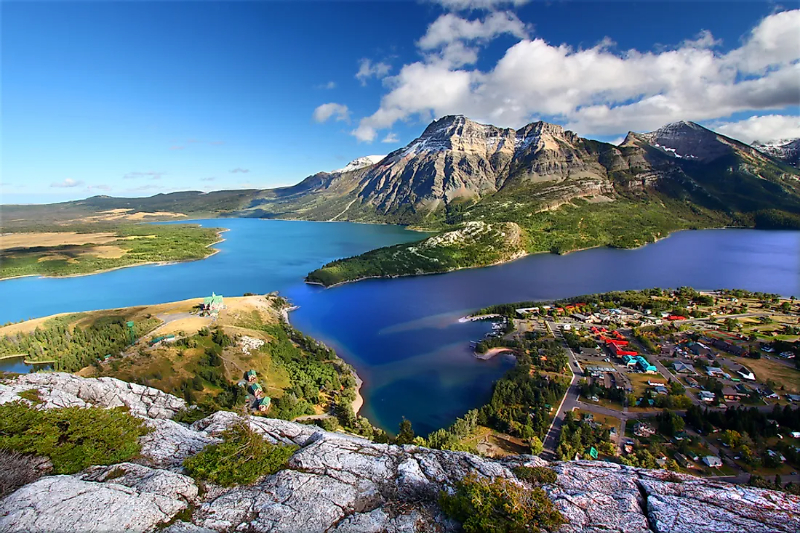
The world's first "international peace park," the combined site encompasses breathtaking snowcapped mountains, high-altitude lakes, and rivers cascading from glaciers. Glacial landforms, preserved fossil assemblages, breathtaking rock formations and other geological features provide outstanding aesthetic beauty. Ancient cedar-hemlock forests, alpine tundra, and extensive bunchgrass prairie provide diverse natural habitats for over 300 terrestrial species of animals. These mountains are home to a number of threatened or endangered species including the grizzly bear, gray wolf, lynx, bald eagle, and peregrine falcon.
Waterton-Glacier's distinctive climate, its interface between mountain and prairie ecosystems, and its three separate watersheds, all help to create a rich diversity of flora and fauna that is particularly impressive given the relatively small area included in the parks. Straddling the international border, Waterton-Glacier symbolizes goodwill and cooperation between Canada and the United States. Referred to as the Crown of the Continent, this area is home to one of the world’s most remarkable and unique natural environments.
In addition to its natural beauty, the parks have a long and rich history for the area’s native populations. American Indians have lived in and used these mountains for over 10,000 years and this long occupation continues to the present day. The Blackfeet Indians and their closely related tribes north of the border occupy traditional lands east of the park boundaries. On the western site, Kootenai and Salish Indian tribes. To this day, all of the nearby tribes look to the mountains as sacred areas and continue to visit them for reasons both traditional and ceremonial.
Early European explorers arrived in the Waterton-Glacier area primarily in search of animal pelts. Over time, this exploitation of the region’s natural resources expanded to include the establishment of a mining industry, and groups of settlers soon began to migrate to the area. By 1891, the completion of the Great Northern Railway allowed a greater number of people to enter into the heart of northwest Montana, leading to a significant increase in the region’s settlement along with the development of small towns.
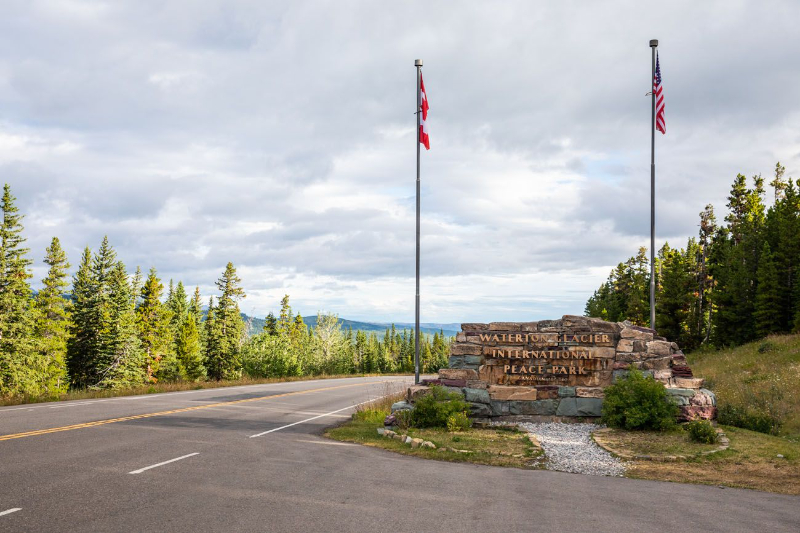
Around the turn of the century, people began to view the land differently, recognizing that the area had a unique scenic beauty. Efforts for the area to gain national recognition of the site’s natural and cultural significance prevailed. Waterton Lakes became Canada’s fourth national park in 1895 and Glacier National Park became the tenth national park in the United States in 1910. Decades later, in 1932, the United States and Canada jointly designated the two sites to create the world’s first International Peace Park to commemorate the peace and goodwill the two nations continue to share.
Take in the scenery with a hike, bike or kayak—you might even spot the migrating elk herds.