
🎄 Win a month in Italy for two — €10,000 · The Secret Italy Prize GO →
← Back

Civic Archaeological Museum of Vetulonia

Civic Archaeological Museum of Vetulonia — Vetulonia, Italia.

Piazza Vatluna, 58043 Vetulonia GR, Italia ★★★★☆ 158 views
Giovanna Pascoli
Vetulonia
🏆 AI Trip Planner 2026

Get the free app

Discover the best of Vetulonia with Secret World — the AI trip planner with 1M+ destinations. Get personalized itineraries, hidden gems and local tips. Free on iOS & Android.

🧠 AI Itineraries 🎒 Trip Toolkit 🎮 KnowWhere Game 🎧 Audio Guides 📹 Videos
Scan to download iOS / Android
Scan for AppGallery Huawei users

About Civic Archaeological Museum of Vetulonia

Civic Archaeological Museum of Vetulonia - Vetulonia | Secret World Trip Planner

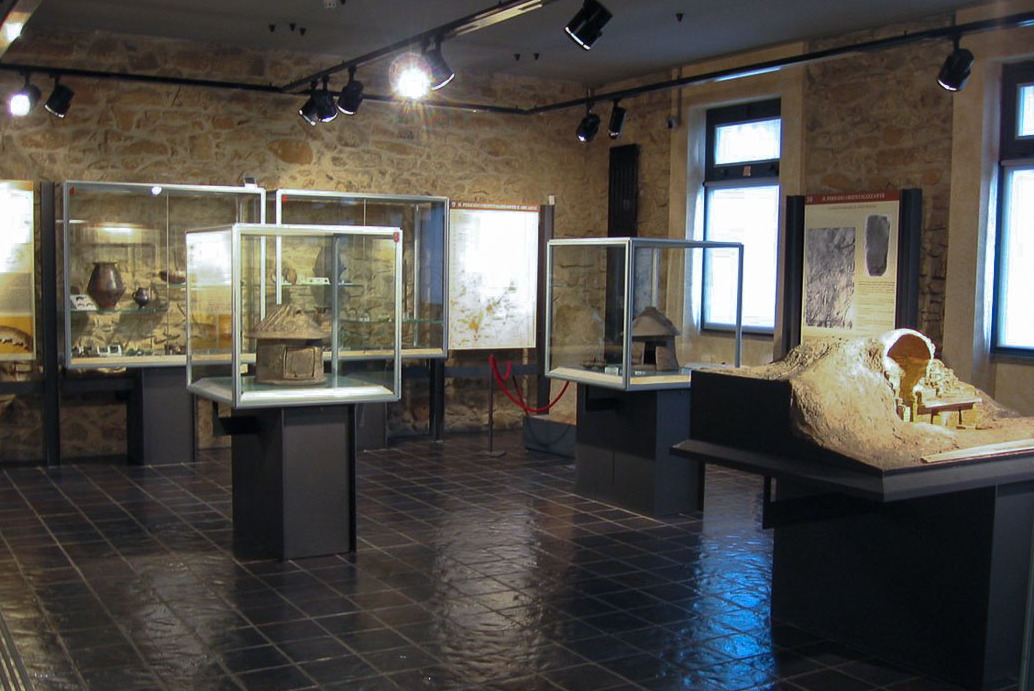
The Civic Archaeological Museum of Vetulonia describes the history of the territory hosting, according to a chronological-topographical order, finds from the remains of the town and the necropolis of Vetulonia, but also from the territorial area controlled by it. Of particular interest are the finds coming from the Villanov¬iane necropolis (IX-VIII century B.C.) with the urns configured as a hut, suitable to house the ashes of the deceased belonging to a high class (room A). To the following period, the Orientalizing (7th century B.C.), date back the so called circle tombs: among these, for quality and type of objects, the First Fur Circle and that of the Silver Leoncini with the presence of gold objects (rooms A, B). From a circle tomb, called the Warrior's tomb, comes the stele of Auvele Feluske in which the deceased is represented as an armed warrior (room A). The most famous monumental burials, chamber burials with mound of earth, are represented by the remains of the grave goods of the Diavolino (room B) and especially the grave goods of the Golden Fibula with the precious fibula from which the burial takes its name (room A). The vitality of the territory is also testified by the grave goods from the mounds of Poggio Pelliccia (room C) and Val Berretta with goldsmithery and imported Greek ceramics (room D). The finds coming from the votive deposit found near Costa Murata document the history of Vetulonia in the classical age (V-IV century B.C.): the presence of painted ceramics imported from Greece, in particular from Athens, is substantial, among which there is a crater with the representation of the ransom of Hector's body attributable to the circle of the Greek painter Lydòs (room B). The phases of the city's life in the Hellenistic period (3rd-2nd century B.C.) are exemplified by the exhibition of finds from the excavations of the inhabited quarters of this period (Halls E-G). In order to make the community aware of the complex and the richness of the archaeological materials found in the Vetulonian territory and preserved in different locations, since 2002 the Museum has prepared, in agreement with the Archaeological Superintendence for Tuscany, the setting up of exhibitions-events with the temporary exhibition of trousseaus or complexes of objects of particular interest. At the same time, starting from 2004, the permanent exhibition has been enriched with other valuable finds granted in storage by the Superintendence itself or donated by private inhabitants of Vetulonia and the municipal territory. An avant-garde path, intended for the blind and visually impaired, has been set up since 2005 inside a part of the museum premises and includes the possibility of implementing tactile laboratories with authentic exhibits.


🗺 The smart Trip Planner app 🎄 Win a month in Italy — €10,000 →

Plan your visit to Vetulonia

Suggested itinerary near Civic Archaeological Museum of Vetulonia

MAJ+
500.000+ travelers worldwide
  1. 🌅
    Morning
    Civic Archaeological Museum of Vetulonia
    📍 Vetulonia
  2. ☀️
    Afternoon
    The Tomb of the Duce
    📍 0.4 km · Vetulonia
  3. 🌆
    Evening
    Scarlino and the Rocca Pisana
    📍 10.9 km · Vetulonia

Buy Unique Travel Experiences

Powered by Viator

See more on Viator.com

Explore nearby · Vetulonia

Frequently Asked Questions

The museum's most notable exhibits include the Villanovan hut-shaped urns from the 9th-8th century B.C., the elaborate circle tombs from the Orientalizing period with gold objects, and the famous Golden Fibula burial with its precious fibula. You'll also find the stele of Auvele Feluske depicting an armed warrior and imported Greek ceramics from Athens, including a crater with Hector's ransom scene attributed to painter Lydòs.
The Civic Archaeological Museum of Vetulonia spans from the Villanovan period (9th-8th century B.C.) through the Hellenistic period (3rd-2nd century B.C.), with special focus on the Orientalizing era (7th century B.C.) and the classical age (5th-4th century B.C.). The exhibits are organized chronologically and topographically to help visitors understand the evolution of Vetulonia's territory.
Room A contains the most prestigious exhibits including the Villanovan hut urns, the First Fur Circle, the Silver Leoncini with gold objects, the Warrior's tomb stele, and the Golden Fibula burial. Room B features additional circle tombs and the famous Greek crater with Hector's ransom, while Rooms E-G showcase artifacts from the Hellenistic inhabited quarters.
The museum demonstrates Vetulonia's prosperity through extensive grave goods including precious gold objects, goldsmithery, and imported Greek ceramics from Athens, indicating strong trading connections and high social status. The monumental chamber burials with earth mounds and elaborate circle tombs reveal a society with significant resources and complex social hierarchies during the Orientalizing and classical periods.
The museum features funerary artifacts including Villanovan hut-shaped cremation urns, elaborate grave goods from circle tombs, a warrior stele, precious fibulae made of gold, imported Greek painted ceramics, and objects from votive deposits. These items encompass pottery, metalwork, and sculptures that collectively document the daily life, beliefs, and trade networks of ancient Vetulonia from the Iron Age through the Hellenistic period.