
The road that descends towards the valley of Theth is already an experience in itself: kilometers of winding dirt roads that cross the Valbonë Pass, with rocky walls closing in around the car and cliffs opening up unexpectedly on the opposite side. When the valley finally unfolds before the eyes, with its peaks exceeding 2,500 meters and the Shala river flowing through intensely green meadows, one understands why this corner of the Albanian Alps — locally called Bjeshkët e Namuna, or the Damned Mountains — increasingly attracts hikers from all over Europe.
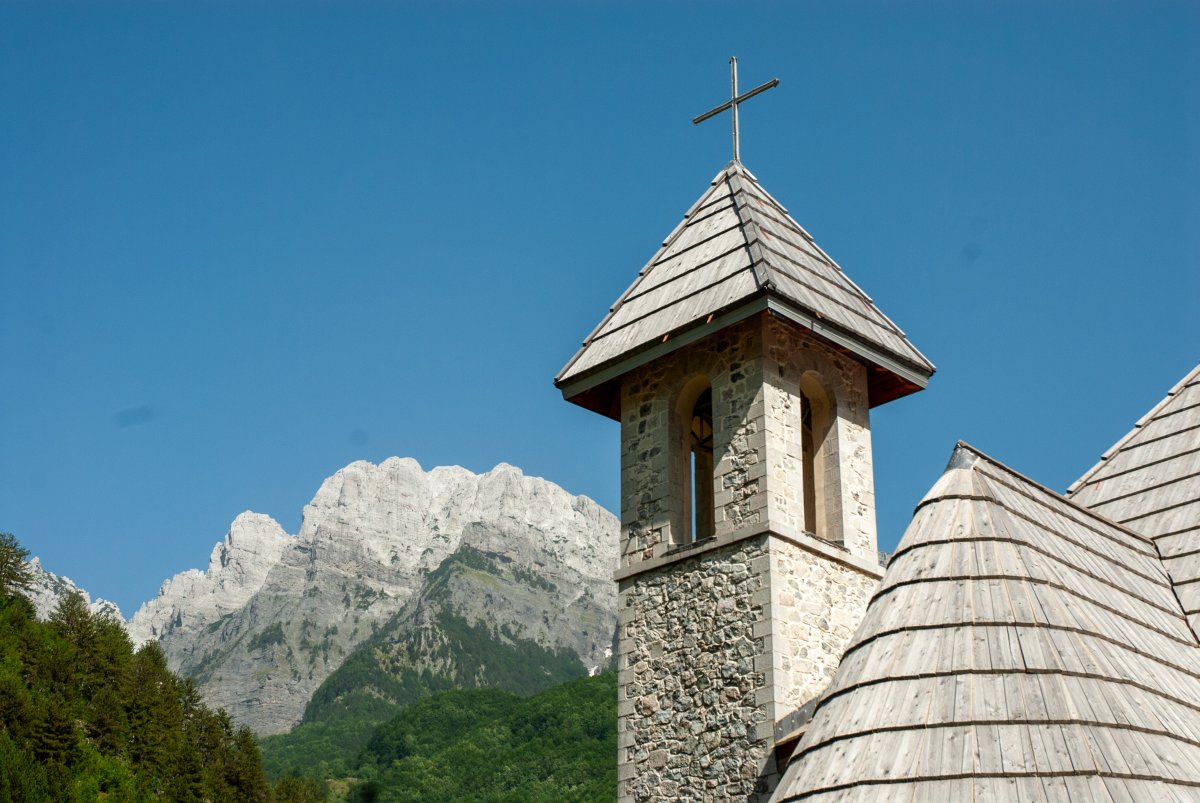
Theth is a village in the Shkodër district, in northern Albania, nestled within the Theth National Park, officially established in 1966 and covering about 2,630 hectares. Despite its history as a protected area being nearly sixty years long, the park has long remained isolated from mass tourism, preserving an ecosystem of extraordinary integrity where human presence is still measured in dozens of families and not in thousands of visitors.
An almost intact alpine ecosystem
The biodiversity of the Theth national park is the direct result of its geographical isolation. The beech and fir forests that cover the lower slopes are home to wolves, brown bears, lynxes, and wild boars — a fauna that is largely a memory in much of Western Europe. The brown bear in particular is still a real presence in this area, not a rarity to be sought: signs of its passage — scratched trunks, tracks in the mud near the streams — can be found relatively easily along the less frequented trails.
As you ascend in altitude, the forests give way to alpine pastures where in summer you can still see flocks brought up by local shepherds according to transhumance practices that have been repeated for centuries. Among the dwarf juniper bushes and the limestone rocks shaped by Pleistocene glaciers, endemic species of the Balkans bloom that are not found elsewhere. Botanists visiting the park regularly report the presence of wild orchids in the wet meadows near the Shala river, especially visible between May and June.
The Kulla: a tower that tells the story of blood
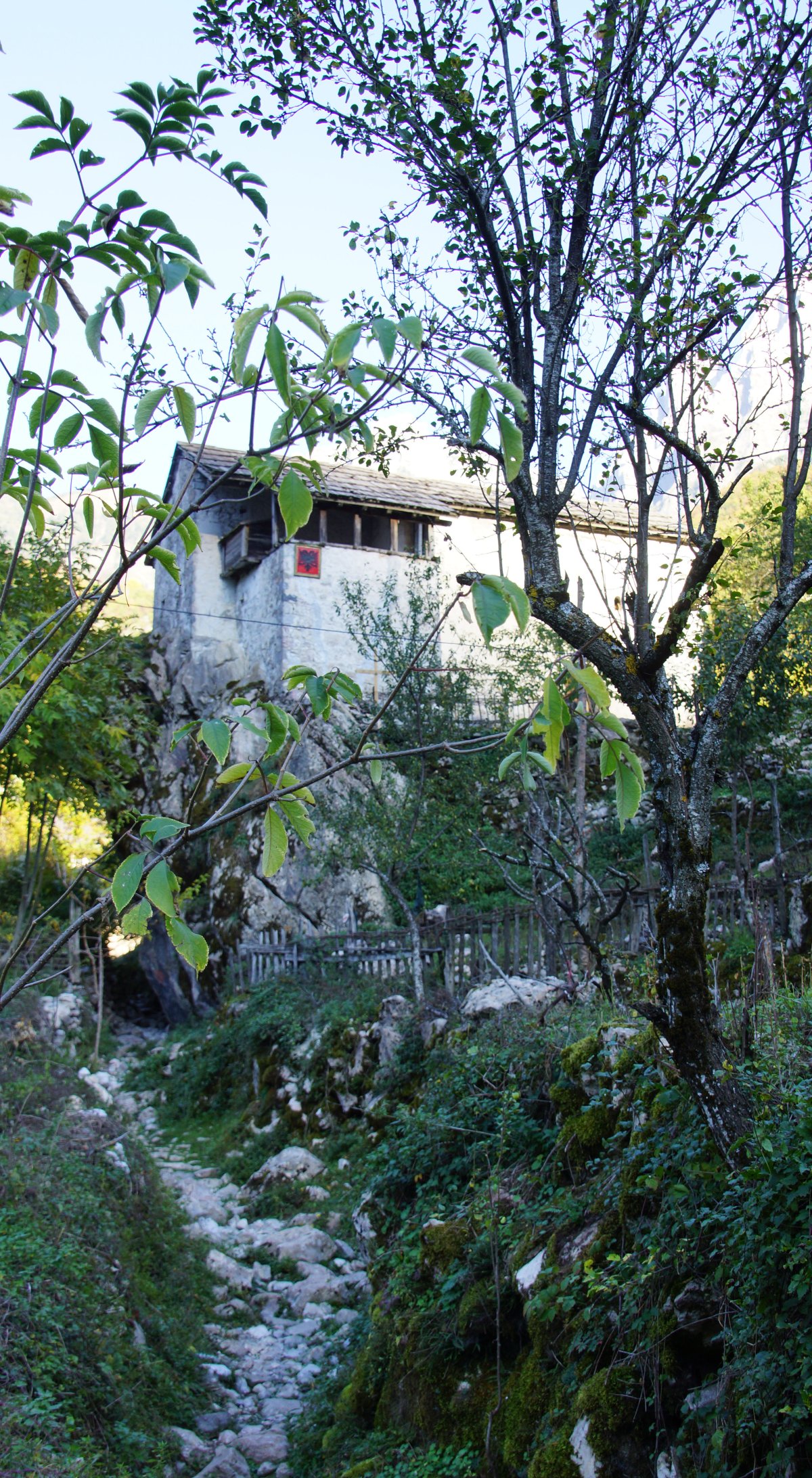
In the midst of this natural landscape stands one of the most unique architectural elements of the entire region: the Kulla of Theth, a stone tower built presumably in the 15th century and used as a refuge for men involved in blood feuds regulated by the Kanun, the Albanian customary code. Those who were the target of revenge could lock themselves in the tower — the thick walls and the narrow openings made it practically impregnable — and could only go out at night or never, depending on the severity of the dispute.
The tower is open to visitors and is just a few minutes' walk from the center of the village. From the outside, the narrow openings in the limestone wall are immediately noticeable, oriented to allow observation of the outside without exposing oneself. The interior is sober and dark, with barely enough space for a few men. It is one of those places where the natural landscape and human history unexpectedly overlap.
Walking among the waterfalls and canyons
The most traveled trail in the park leads to the Grunas Waterfall, a waterfall that during the rainy season and snowmelt — from April to June — reaches spectacular flows. The route is moderately challenging and takes about an hour and a half of walking round trip from the village. In summer, the water decreases but the canyon that the waterfall has carved into the limestone remains scenically remarkable.
For more experienced hikers, the connection between Theth and the Valbonë valley through the Valbonë Pass is considered one of the most beautiful treks in the Balkans. The route requires a full day of walking — on average six or seven hours — and traverses very different environments, from beech forests to high-altitude scree slopes.
How to get there and when to go
The best season to visit Theth is from June to September. In winter, the access road is often closed due to snow, and the village remains isolated for weeks. The most common way to get there starts from Shkodër, where shared vans — the furgon — depart, taking the mountain road in about three hours, sometimes longer in case of rain or traffic on the dirt road.
Accommodation is almost exclusively in family guesthouses run by the villagers: simple but authentic facilities, where dinner is often included in the price and the products come from the garden or family farm. Prices typically range from 20 to 35 euros per night with half board, although they can vary. It is advisable to book in advance between July and August, when spots fill up quickly.